
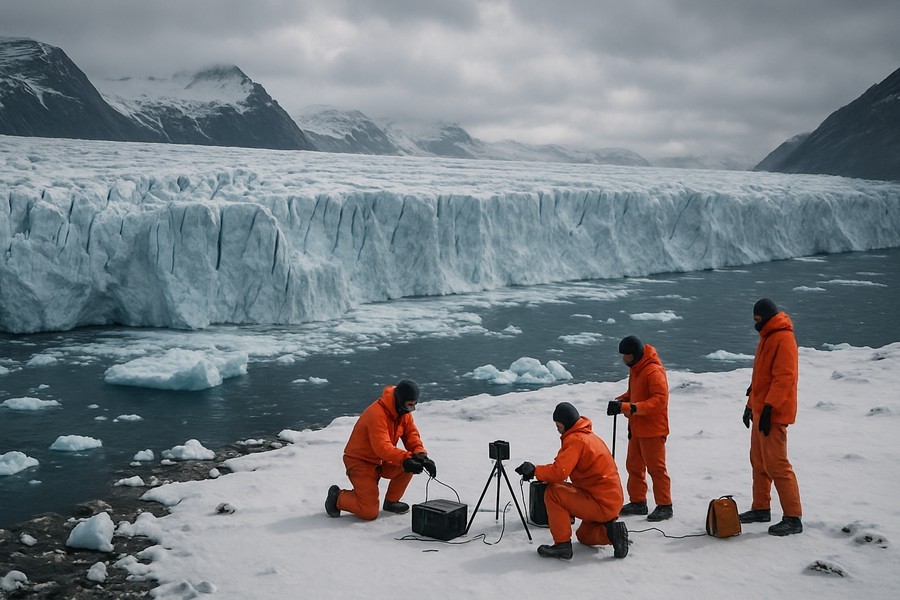
Seismic Activity Threatens One of Earth's Largest Glaciers
One of the most massive glaciers, often referred to as the Doomsday Glacier, is causing alarm amongst scientists. Its swift melting could result in a global sea-level rise of up to 10 feet if it were to collapse. Recent evidence reveals that this glacier is even more unstable than previously feared, with hundreds of glacial earthquakes rattling its massive structure over the past decade.
An Australian researcher made a startling discovery of hundreds of these glacial earthquakes that occurred over the past decade. The earthquakes had gone undetected due to the low-frequency seismic waves they emitted, raising further concerns about the increasing instability of the melting glaciers.
New Evidence of Glacial Earthquakes
The study, which was featured in a scientific journal, reported the detection of 362 glacial earthquakes. Of these, the majority, 245 to be precise, occurred in the area known as the Doomsday Glacier, likely triggered by toppling icebergs.
The Nature of Glacial Earthquakes
Glacial earthquakes are a relatively new phenomenon, first detected in 2003. They generate low-frequency waves, with a magnitude of around 5, primarily caused by the collapse of large icebergs. The majority of these earthquakes have been discovered along the coast of Greenland, home to the largest ice cap in the Northern Hemisphere. Scientists had suspected that similar seismic activities also occur in Antarctica, but these have been more challenging to detect due to their lower magnitude.
Using seismic stations located within Antarctica, the researcher was able to detect hundreds of these glacial earthquakes that had previously gone unrecorded. The majority of these earthquakes were located near Thwaites, the largest glacier in Antarctica. Recent evidence suggests that ice flow from Thwaites has doubled over the past few decades, contributing to the global rise in sea levels.
Unusual Patterns in Glacial Seismic Activity
Interestingly, the study found that these seismic activities do not align with the seasonal shifts in warm air temperatures in Antarctica. Instead, the earthquakes near Thwaites appear to occur concurrently with a period of accelerated flow of the glacier’s ice tongue towards the sea.
The remaining glacial earthquakes were detected near the Pine Island Glacier, another major ice stream in Antarctica. However, these occurred some 30 to 50 miles away from the waterfront and are, therefore, unlikely to have been caused by toppling icebergs. The cause of these earthquakes remains a mystery and calls for further investigation.
Call for Further Investigation
The researcher encourages more in-depth studies of the newly discovered glacial earthquakes in Antarctica. This will help in understanding their primary cause as well as their impact on the instability of the glaciers. The continuous seismic activity and accelerated melting rates of these glaciers could have significant implications for global sea levels, making further investigation a critical priority.
