
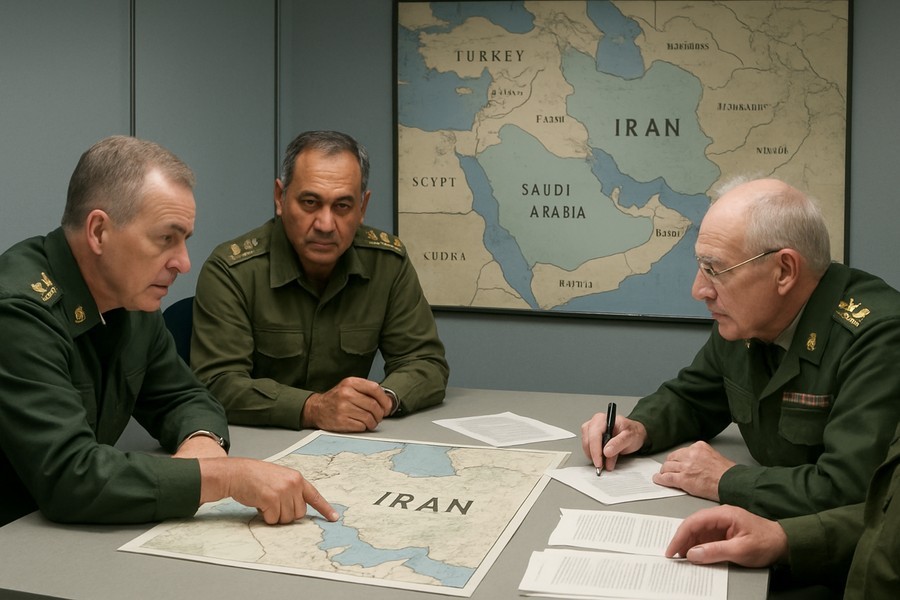
Shaping the Future of Iran: A Military Perspective
Recent events have brought about increased speculation concerning the possibility of a shift in power in Iran. Instead of focusing on inciting a regime change, the military strategy has been to foster an environment where such a change could naturally occur. This approach could be seen as more of a non-interventionist policy, encouraging internal forces within Iran to instigate changes when they are ready to do so.
Indeed, this strategy has always been the primary goal of the military in Iran. The intention is not to force an immediate regime change, but to create circumstances which could potentially lead to such an event. The hope is that, when the time is right, the citizens of Iran will rise up in significant enough numbers to instigate a shift in power.
A Helping Hand, Not a Forceful Push
Understanding this strategy is crucial. It demonstrates that the military's role is to aid the process of change rather than to guarantee its outcome. They believe it is important for the public to perceive the current war as a success based on these limited mission parameters. However, this approach might seem at odds with public statements made by the Prime Minister, who has alternated between calling for immediate public protests and discussing the possibility of a regime change in the more distant future.
The Military's Priorities
Despite the varying opinions on the matter, the military has remained steadfast in its objective. They aim to substantially lessen the threat posed by the current regime, rather than hasten a regime change. They believe that, by focusing on this goal, they can contribute to creating conditions conducive to a potential shift in power.
Targeting the Threat
Detailed in a key speech, the top military officer outlined the primary military objective: the destruction of the vast majority of the existing regime's ballistic missile launchers. They believe that this is a crucial first step in reducing the threat posed by the regime. Leaving the missile threat unaddressed could allow the danger to grow exponentially, with an increase in missile production from 150-200 a month to a potential 300 a month. Such a growth rate could double or even triple the missile arsenal within a year or two, posing a significant threat to the region.
Strategically Weakening the Regime
In the same address, the military officer also discussed plans to further "dismantle the regime and its military capabilities". The aim is to strategically isolate the regime, reducing its military strength to a point of unprecedented weakness. While this may seem like an endorsement of immediate regime change, it should be noted that the actual words chosen carefully avoided any direct commitment to instigating such change. Instead, the focus remained on weakening the regime's capabilities, suggesting that this could make a shift in power more likely in the future.
It is clear that the military, while supportive of a potential regime change, is not seeking to directly initiate such a transition. Rather, their goal is to strategically reduce the threat posed by the current regime and create an environment in which a shift in power could naturally occur.