
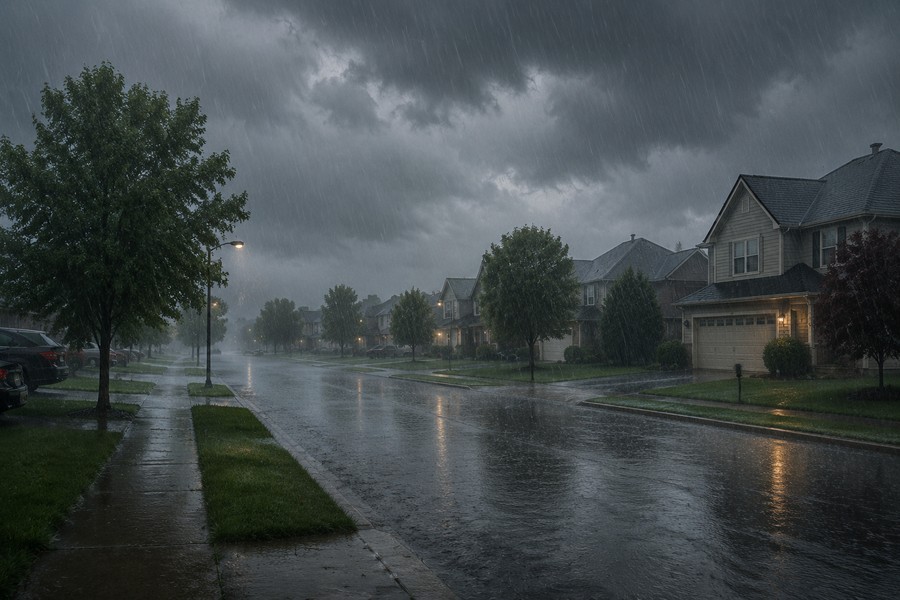
How Heavy Summer Storms Are Testing Local Infrastructure
One summer afternoon, a resident was sitting inside her suburban apartment when the sky began to darken. Within minutes, the wind picked up, blowing rain sideways against her windows. Water began to leak through the glass frames and pool on the windowsills.
Suddenly, the light fixture on her bedroom ceiling filled with water and began to overflow. One by one, the ceilings in her home collapsed. The storm was so strong that it ripped the roof off the building, leaving her with a view of the open sky from her living room. The storm destroyed more than $5,000 worth of her belongings and forced her to find a new place to live. She was just one of many local residents who suffered severe property damage from the sudden, powerful storm.
As summers become hotter and more humid, heavy downpours, flash floods, and destructive storms are becoming a regular part of life. These weather events knock down trees, flood roads, and damage bridges. Local families and town governments are now spending millions of dollars to clean up and repair the damage. The problem is that much of the local infrastructure was built for an older era, when these intense storms happened once every few decades rather than several times a single summer.
Rising Temperatures and Heavier Rain
The weather in the region is changing quickly. Historical data shows how much warmer the area has become:
- The average mid-summer temperature has risen by 4.4 degrees since 1940.
- In the early 1900s, the area averaged only four days per year with temperatures above 95 degrees.
- Recently, that number has started to rise, and some estimates suggest the area could see more than 50 days of extreme heat per year by the end of the century.
Warm air holds more moisture than cool air. In fact, for every 1.8 degrees of temperature increase, the atmosphere can hold 7% more water. This extra moisture leads to much heavier and more frequent rainstorms. Local leaders note that storms once considered rare, "100-year events" now seem to happen almost every year.
The Danger of Flooding in Developed Areas
Flooding is the most common and expensive problem that local communities face. When heavy rain hits, it can quickly turn streets into rushing rivers, making travel dangerous and trapping people in their homes.
High winds and wet soil also cause trees to fall, which crushes cars, blocks roads, and knocks down power lines. Losing electricity is especially dangerous during hot summer weeks when people rely on fans and air conditioning to stay cool. When these storms hit, local governments must spend extra money on emergency worker overtime and debris cleanup, while homeowners are left to pay for repairs out of their own pockets.
To handle heavy rain, towns rely on stormwater systems. These are networks of drains, pipes, and basins designed to carry water away from streets and buildings and guide it into local creeks. However, these systems face major challenges in modern suburbs:
- Hard Surfaces: Paved roads, parking lots, and shopping centers prevent rainwater from soaking naturally into the ground, creating massive amounts of fast-moving runoff.
- Aging Pipes: Many local drainage systems are old, too small, and in need of expensive repairs.
- Older Buildings: A large portion of the local housing was built before 1978, which was the year the state first began requiring communities to plan for stormwater management.
Some neighborhoods are much more vulnerable to flooding than others. Densely populated towns located close to rivers and creeks face the highest risk of damage. In contrast, greener, more rural areas with plenty of open soil and trees experience far fewer problems.
New Ways to Manage Excess Water
To protect homes and roads, communities are exploring different ways to manage heavy rainfall. Some simple solutions include planting more trees and building rain gardens, which are shallow, planted areas that help rainwater soak into the ground. On a larger scale, workers can restore damaged streams and maintain flat, open areas near waterways to give rising water a safe place to go.
However, small projects are not enough to stop major floods. Long-term safety requires changing local zoning laws to prevent building in flood-prone areas. Some planners are also interested in creating "safe to flood" spaces. These are parks, sports courts, or parking lots designed to safely fill with water during a storm and then slowly drain away once the rain stops, keeping the water away from homes and businesses.
Implementing these ideas in the suburbs can be difficult. The suburban landscape is split into dozens of independent boroughs and townships. Water does not stop at town borders, but local governments often struggle to coordinate flood control projects across these boundaries. Funding is another obstacle, as upgrading giant underground pipe networks is incredibly expensive for local taxpayers.
Working Together for a Safer Future
Despite these challenges, local communities are taking action to adapt to the changing weather. Several key projects are already underway to improve safety:
- Watershed Studies: Local counties have teamed up to study large river basins, identifying the areas most likely to flood and finding ways to protect them.
- Infrastructure Repairs: Workers have repaired 30 weak bridges and repaved miles of damaged roads over the past several years.
- Tree Maintenance: Crews have removed hundreds of dead and dangerous trees near roads, which has significantly reduced emergency calls during big storms.
- Local Planning: Individual townships are hiring sustainability managers and creating plans to transition to clean energy and reduce their carbon footprint.
State environmental agencies have also stepped in, providing over $17 million in funding for local stream restoration and water management projects. By working together across local, county, and state levels, communities are beginning to rebuild their infrastructure to withstand the stronger storms of the future.
