
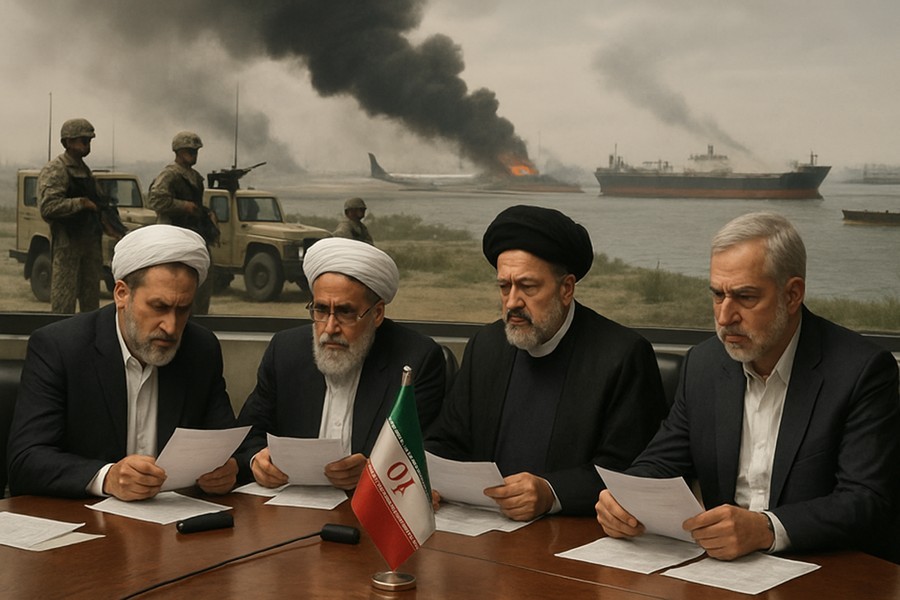
A Ceasefire Proposal Sent to Iran Amidst Ongoing Middle East Unrest
A proposal to halt the ongoing conflict in the Middle East has reportedly been forwarded to Iran. This comes as the region sees increased military deployments, including additional paratroopers and marine forces.
Despite the proposal, Iran has not publicly acknowledged its receipt and has continued to launch attacks against Israel and several Gulf Arab nations. This includes an assault that led to a massive fire at a major airport. Simultaneously, Iran itself has been a target of ongoing attacks.
Details of the Ceasefire Proposal
The 15-point ceasefire plan, delivered to Iran by Pakistan, reportedly covers a range of issues. These include relief from sanctions, a rollback of Iran's nuclear program, limitations on missile deployment, and reopening the vital Strait of Hormuz. This waterway is crucial to the global oil industry as it transports a significant portion of the world's oil.
However, the proposal may face resistance as some of its points have been stumbling blocks in past negotiations. Iran has previously refused to negotiate on its ballistic missile program or its support for regional militias. It also holds significant strategic advantage through its control of the Strait of Hormuz.
Impact on Global Energy
Iran's attacks on regional energy infrastructures and its control over the Strait of Hormuz have caused oil prices to surge dramatically, sparking fears of a global energy crisis. This has added pressure on the U.S. to find a solution to alleviate this chokehold and stabilize the markets.
Increasing Military Presence
There are plans to deploy at least 1,000 troops from the 82nd Airborne Division to the Middle East in the near future. These paratroopers are specially trained to secure key territories and airfields in hostile or contested areas. Additionally, approximately 5,000 more marines and thousands of sailors are also planned to be dispatched to the region.
The Challenges of Diplomacy
The 15-point plan, now with Iran, is seen as a comprehensive deal for achieving a ceasefire. Mediators are advocating for potential in-person talks between the U.S. and Iran. However, Iran has consistently dismissed the idea of talks, insisting that it will never negotiate with certain parties.
Additionally, Israeli officials, who have been urging for the continuation of the war against Iran, were taken aback by the submission of a ceasefire proposal. Any talks between the U.S. and Iran face considerable hurdles, especially considering Israel's promise to keep targeting Iran's leaders.
Israel and Iran Continue Attacks
Despite the proposal, Israel and Iran have continued their attacks. Israel has completed several waves of airstrikes in Tehran, while Iran's attacks on Israel have not ceased. The ongoing conflict has resulted in substantial casualties on both sides, with hundreds of deaths reported in Iran, Israel, and the U.S.
Energy Prices Experience a Drop
The news of potential negotiations has resulted in a decrease in oil prices. Despite this, the prices remain high due to Iran's control of the Strait of Hormuz. Iran has allowed a limited number of ships to pass through the strait, excluding those from the U.S., Israel, and their allies.
The sustained high energy prices could lead to far-reaching effects, such as increased prices for food and other basic necessities as well as higher mortgage and auto loan rates. The conflict has boosted oil prices by around 35% since its beginning, which has intensified concerns globally.