
An Unexpected Stirring: Long-Asleep Volcano Shows Signs of Life
A volcano located in the southeastern part of Iran has shown subtle signs of activity, having risen approximately 3.5 inches over a 10-month period. Although this change may seem minor, it could potentially have substantial implications.
A recent study leveraging satellite data has detected this shift, indicating that pressure is amassing near the volcano's summit. This volcano, known as Taftan, has not erupted in recorded human history. However, these new findings suggest that it may be waking from its long slumber.
Investigating the Taftan Volcano
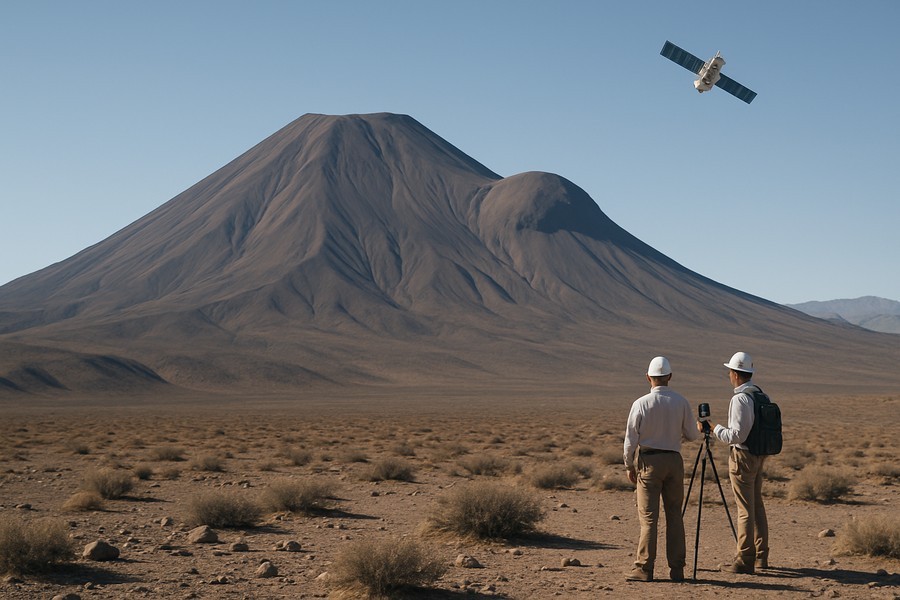
To monitor Taftan's movements, scientists employed InSAR, a radar technique that allows them to measure ground motion from space. This method uses satellites that operate around the clock and have the ability to see through cloud cover.
The slight uplift of the Taftan volcano persisted for just over ten months and was concentrated near the peak. This lift has not receded, hinting that the pressure has not yet been relieved.
Due to the volcano's remote location and the lack of continuous GPS receivers, space radar proves to be the most effective tool for monitoring this seldom-visited mountain. Despite its isolation, there are several towns in close proximity to Taftan.
Discovering the Source of Pressure
The research team located the source of this pressure to be only 1,600 to 2,070 feet beneath the surface. This shallow depth suggests the presence of gases moving within a hydrothermal system, where hot water and gas circulate beneath a volcano.
A number of potential triggers were examined and ruled out, including heavy rainfall and nearby seismic activity. The rising and decelerating pattern of the signal aligns with internal processes at work within the volcano.
Deep within the Taftan volcano lies a magma reservoir, a vast pool of molten rock underground. It is situated more than 2 miles down, indicating that the current pressure likely originates from gases above it, rather than fresh magma reaching the surface.
The observed pattern indicates a slow buildup of pressure. Initially, the ground rose, then stabilized as new fissures formed and some gas found escape routes.
Beware of Misleading "Extinct Volcano" Labels
Taftan is a 12,927-foot stratovolcano, a tall volcano composed of layers of lava and ash. It discharges gas through summit fumaroles, indicating that the system is still active.
Records of eruptions for the past 10,000 years are scarce, leading to the misconception that the volcano is dormant. However, this quiet period does not equate to a permanently inactive volcano.
Volcanoes can remain idle for long periods and then rapidly change within months. Therefore, scientists don't only look for ash plumes as early warning signs. They also monitor gas, heat, and ground motion.
While labels can be informative, actual measurements are more valuable. The recent deformation of Taftan is a measurement, not a label.
Identifying Taftan Volcano Risks
The primary immediate dangers are not lava flows, but rather phreatic blasts. These are steam-driven explosions that can occur when hot fluids rapidly turn into vapor near the surface.
Gas outbursts can temporarily affect eyes, lungs, and crops downwind. The city of Khash, about 31 miles away, is close enough to detect sulfur odors when the wind is right.
Scientists insist that this is not a call for panic, but rather a wake-up call for local authorities in Iran to allocate resources to monitor this volcano.
Future Steps for Scientists
Research teams aim to measure gases at the vents and on the slopes. Continuous monitoring of sulfur dioxide, carbon dioxide, and water vapor levels can provide insights into whether the pressure is increasing or decreasing.
They also advocate for a basic network of seismometers and GPS units to track vibrations and gradual stretching. Even a modest setup would enhance timing accuracy and reduce blind spots.
Local authorities can take proactive measures such as planning evacuation routes, creating hazard maps, and providing clear instructions to nearby communities. Taking these steps now can help prevent confusion if conditions change in the future.
Putting Taftan Volcano in Perspective
Taftan is situated in a subduction zone, where one tectonic plate slides beneath another. This setting generates magma at depth and gas-rich fluids higher up.
Many volcanoes worldwide display similar, slow changes that never culminate in an eruption. Others quickly escalate after a quiet phase, necessitating swift action.
The key takeaway is that consistent, unexciting monitoring can save lives. It turns unexpected events into known issues with planned responses.
The Importance of Satellite Observations
Radar satellites have the ability to see through clouds and smoke and can operate regardless of whether it's day or night. This is particularly useful in dry, elevated areas where weather is extreme and ground stations are prone to failure.
As more satellites are launched, scientists can receive faster updates when conditions shift.
Both space and ground observations are crucial. Satellites provide a broad perspective, while instruments on the ground add detail.
Looking Ahead: Taftan Volcano and What's to Come
If the ground starts to sink, it indicates that pressure is decreasing and gas has found new escape routes. If the uplift continues or accelerates, it suggests that pressure is still building and the likelihood of steam events increases.
If gas measurements spike and remain high, that's another red flag. Sudden changes in small tremors beneath the summit would also raise concern.
For local residents, simple precautions can help. Knowing the wind patterns, having masks available for sulfur smells, and following official guidance can be beneficial.