
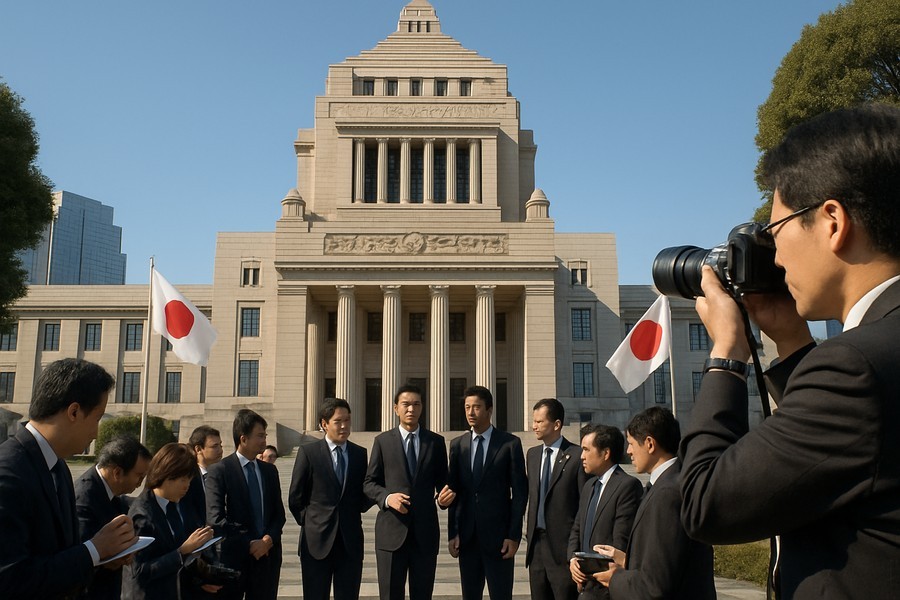
Japanese Prime Minister Announces Surprise Election
Only three months into her tenure, Japan's first female Prime Minister, Sanae Takaichi, has made the unexpected decision to dissolve the country's parliament. This move sets the stage for a fresh election on February 8, a move she hopes will leverage her popularity in the polls to secure a significant majority in the lower house.
A High-Stakes Game
This decision is a significant one for the country, and according to Takaichi, it's a choice that will shape Japan's future with the participation of its people. Despite her cabinet's popularity since her appointment in October, her political party isn't faring as well in the polls. This makes her decision a gamble, as Japan faces its second general election in two years.
On top of this, Takaichi's plans to increase public spending will be put to the test, especially as the cost of living is a major concern for voters.
Seeking Public Approval
Even though Takaichi was elected by lawmakers, she is now seeking a public mandate in the House of Representatives, which is the more influential house in Japan. Since her appointment, she has felt that her cabinet's legitimacy hasn't been tested in a public election. Now, she wants the people to decide if she is fit to lead the country.
Her party, the Liberal Democratic Party (LDP), has essentially been in power since the mid-1950s. It currently holds the most seats in the House of Representatives, including a few by independent partners. Despite this, the party's majority is fragile, barely holding enough seats to govern.
Takaichi's Promises and Challenges
Known as Japan's "Iron Lady," Takaichi is a protege of a former conservative leader and an admirer of Margaret Thatcher. She promised an economic revival during her campaign, advocating for heavy government spending to stimulate economic growth. This approach echoes previous stimulus measures in Japan's history.
In her few months as Prime Minister, her personal approval ratings have soared. However, she has faced criticism from China due to her comments on Japan's potential response to a Chinese attack on Taiwan. This has strained the relationship between the two countries.
Strengthening Ties with the U.S.
On the other hand, she has made efforts to build a stronger relationship with the United States. During a visit from a U.S. President, the two leaders exchanged praises and signed a deal regarding rare earths. They also announced a new era in U.S.-Japan relations.
Hope for the Future
Despite the unpopularity of the LDP, Takaichi and her government have approval ratings between 60-80%. She hopes to use this popularity to help the LDP secure a majority in parliament and implement more ambitious policies more easily. However, this sudden move towards an election is not without risks.
The LDP's leadership has been unstable with Takaichi being the fourth Prime Minister in five years. Previous leaders' terms were interrupted by falling public support and scandals. Her immediate predecessor also called for an election soon after taking office, which led to one of the LDP's worst-ever results.
Another challenge is the formation of a new opposition, the Centrist Reform Alliance. This group was created by Japan's largest opposition party and a former coalition partner of the LDP.
Despite these challenges, Takaichi is confident that the public will trust her to fulfill her promises. She is hoping to capitalize on her high approval ratings before they potentially decline.