
A New Chapter: Landmark Election Reshapes Kazakhstan's Government
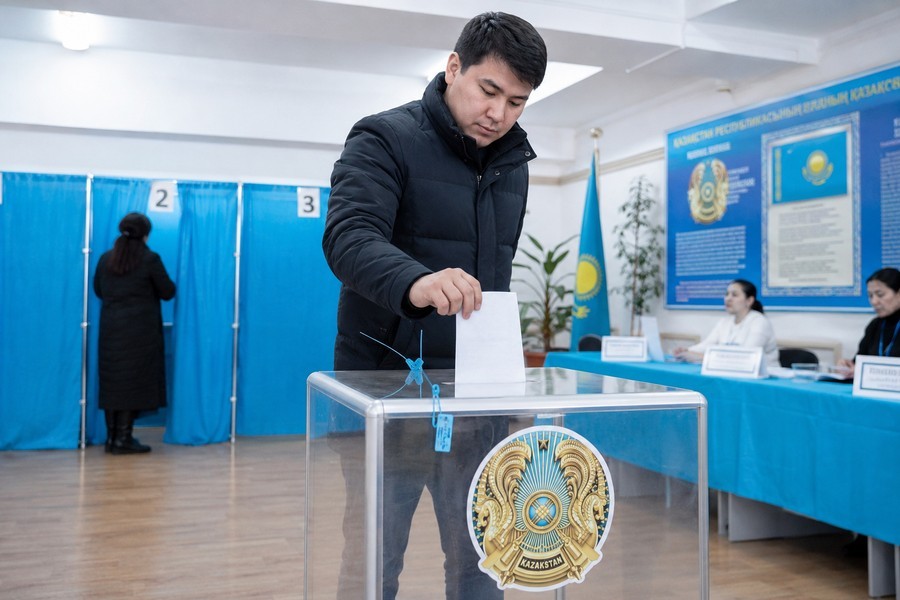
A major election has brought big changes to the government of Kazakhstan. Voters recently cast their ballots in the first election held under the country's new constitution. This vote officially changed the government's structure, replacing the old two-chamber lawmaking body with a single-chamber parliament called the Kurultai.
To win seats in this new 145-member parliament, political parties needed to secure at least 5% of the total vote. Early voting data shows that five different parties are on track to enter the new legislature.
A Massive Win for the Leading Party
Early voter polls show that the newly formed Adilet party has won a massive victory. The polls suggest the party secured between 70.7% and 72.3% of the vote. This strong showing is expected to give them about 109 seats, which is a dominant majority in the parliament.
The Adilet party was created earlier this year. Before the election, it joined forces with and absorbed the nation's largest political group, which had held power for nearly thirty years. Today, Adilet is the most powerful political group in the country. They strongly support the new constitution and placed 186 candidates on the ballot.
The leader of the winning party, Aibek Dadebay, shared his gratitude after the first poll numbers were released. He noted that during the campaign, party members traveled to every region of the country to meet with thousands of everyday citizens. He promised that the party would listen to the ideas and concerns raised by voters and use them to guide their future work.
How the Other Parties Performed
Under the updated voting rules, citizens chose from seven different political parties. Unlike in past elections, independent candidates were not allowed to run on their own. Instead, all candidates had to run as part of a political party list. In total, 545 candidates competed for seats. Here is how the other parties are projected to finish:
- Auyl: This agriculture-focused party is projected to win 12 seats with 6.2% of the vote.
- Respublica: A newer party focused on business and economic growth is projected to win 9 seats with 5.2% of the vote.
- Nationwide Social Democratic Party: This group is projected to take 8 seats with 5% of the vote.
- Ak Zhol: An older party that supports business reforms and a stronger parliament is projected to get 7 seats with 5.1% of the vote.
- People's Party of Kazakhstan: This worker-focused group received 2.8% of the vote and is not expected to win any seats.
- Baitaq: A green party focused on the environment received 0.9% of the vote and will not get any seats.
A legal and policy expert shared some thoughts on these early results. The expert explained that the leading party's victory was expected because they used all of their campaign tools very well. However, the drop in support for the People's Party was a surprise. The expert suggested this might be because younger voters do not share the party's older views, while the older generation of voters is naturally shrinking.
The expert also compared two business-friendly groups. While one of them had been active for over two decades, the newer business party, which was started just last year, ran a very smart and modern campaign that helped them succeed quickly.
Big Plans and a New Leader on the Horizon
On the day of the vote, President Kassym-Jomart Tokayev shared some major announcements about the future of the nation. Under the new constitution, the country will appoint its very first vice president. When asked when this leader would be named, the president said an official announcement would come within a week to ten days.
The president also plans to launch a new national council to help local communities. He shared his vision of turning the country into a giant construction zone, with new projects starting in every city and region. These plans include building:
- New medical clinics and children's rehabilitation centers.
- A brand-new bridge and a special cultural center called the Dombra Palace.
- A dedicated research center for water resources.
When asked if he would run for president again in the future, Tokayev said that the high court has ruled he has the legal right to run. However, he added that it is too early to say whether he will run or when the next presidential election will happen.
Building for the Future
These political changes come at a time when the nation is rapidly building new infrastructure. Just days before the election, several major projects opened up across the country:
- An airport reopened after being closed for over thirty years, bringing flights back to a key city. Another regional airport was also fully updated.
- A massive new indoor water park opened up, featuring seven pools and room for 500 guests.
- A large shipping and logistics hub was launched. This project cost 28.1 billion tenge in investment, covers more than 26.5 hectares of land, and can handle up to 100,000 shipping containers every year.
These projects are part of a larger plan to help the country grow its economy. By building better transport routes, the nation hopes to become a major trade bridge between Asia and Europe.
Watching the Voting Process
To make sure the voting was fair and open, a total of 777 international observers watched the election. An election official from another country praised the modern technology used during the vote. For example, voter invitations included digital codes that people could scan with their phones to get more information.
The observer also praised the efforts made to help voters with disabilities. Every voting location had a special booth equipped with audio instructions and physical templates. This allowed everyone to cast their ballots privately and easily.
The final, official election results must be shared within seven days of the vote. This election marks a major step forward as the country moves into its new, single-chamber government system where lawmakers will serve five-year terms.