
Kilauea Lava Fountain Ends After Nearly Six Hours
Latest Eruption Episode Comes to a Sudden Stop
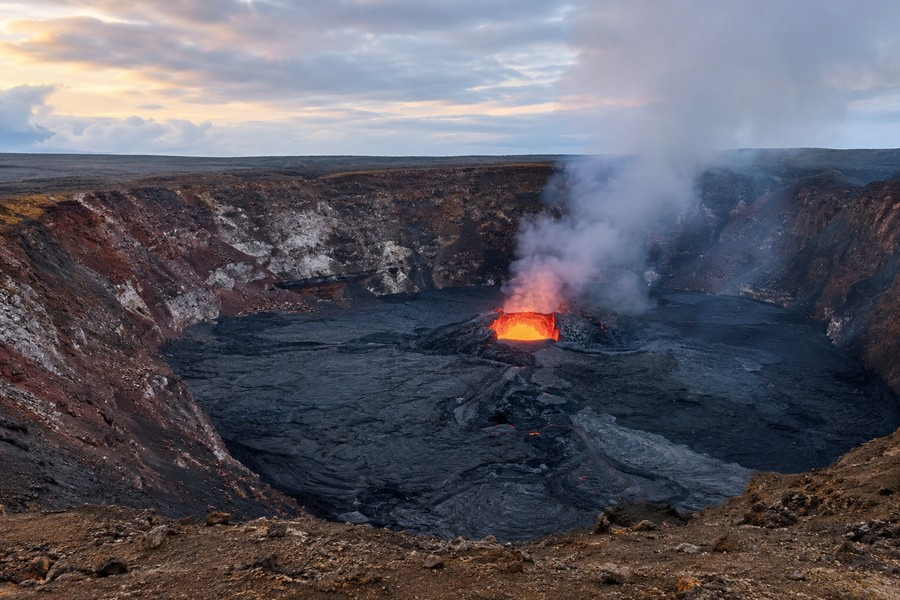
A new burst of lava erupted from Kilauea’s summit before coming to an end after almost six hours. The activity took place inside Halemaumau crater, where the volcano’s ongoing eruption has remained contained.
The latest episode began at 3:19 a.m. and stopped suddenly at 9:03 a.m. During that time, lava shot into the air from a vent on the north side of the crater. The fountain reached a height of about 720 feet by around 5 a.m.
This was the 55th lava-fountaining episode in the current eruption. All lava vents and flows remained inside Halemaumau crater. No lava moved beyond the summit crater during the event.
Ash and Volcanic Material Spread Around the Summit
The eruption sent a plume upward to about 25,000 feet above sea level. Wind was moving from the north-northeast, which could carry volcanic gases and other material toward the south-southwest of Halemaumau.
Most of the heavier volcanic fragments, known as tephra, fell within about three miles of the active vents. Smaller ash particles and thin strands of volcanic glass called Pele’s Hair can stay in the air longer and travel farther from the crater.
Radar images showed a noticeable amount of tephra in the plume, but most of it remained below about 8,000 feet above sea level. People near the summit area may still see haze, ash, or other signs of the eruption after the lava fountain has stopped.
Another Pause Is Expected
Lava fountains are not expected to return to the crater for the next several weeks. The eruption has followed an on-and-off pattern, with periods of powerful lava activity separated by pauses.
Each recent episode has taken place within Halemaumau crater. This has kept the visible lava activity limited to the summit area, although volcanic gas, ash, and fine material can still affect areas downwind.
- The latest lava fountain lasted nearly six hours.
- The activity stopped at 9:03 a.m.
- The highest lava jet reached about 720 feet.
- The eruption plume rose to roughly 25,000 feet above sea level.
- Most tephra landed within three miles of the vents.
- All lava flows stayed inside Halemaumau crater.
How the Eruption Has Changed
The current eruption began with repeated lava fountains that appeared every few weeks. The previous episode ended in late August, followed by a quiet period at the summit.
During the pause, magma beneath the summit shifted. Several new vents later appeared near the northwest wall of Halemaumau crater. These openings produced small lava flows across the crater floor, but they did not create the tall fountains seen during earlier episodes.
The return of high lava fountains marks a change in the volcano’s activity. Even so, the latest event remained within the same confined area as the earlier episodes.
What Visitors and Nearby Communities Should Know
Although the lava stayed inside the summit crater, volcanic hazards can extend beyond the area where the lava is visible. Ash and volcanic glass may be carried by wind, while volcanic gases can create poor air quality in locations downwind.
People who notice ash in the air should limit outdoor activity and protect their eyes and lungs. Drivers should also use care if ash reduces visibility or makes roads slippery.
For now, the main eruption activity has stopped, and another lava-fountaining episode is not expected soon. Kilauea remains an active volcano, however, and conditions at the summit can change as magma continues moving beneath the crater.