
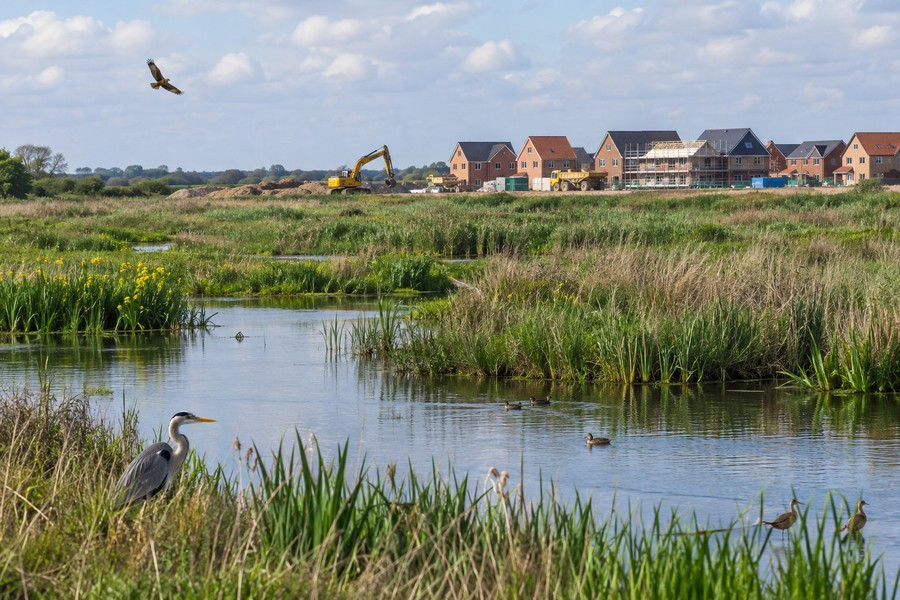
Critic Calls for Review of Norfolk Broads Housing Plan
Plan Would Allow Nearly 16,000 New Homes
A lawmaker is asking an environmental watchdog to stop a plan that could allow 15,780 homes to be built in the Norfolk Broads. The area is one of the United Kingdom’s most protected natural places and is home to more than a quarter of the country’s rarest plants and animals.
The plan is the first of a new kind of environmental program. Builders would pay £2,675 for each home, adding up to £42 million. The money would go into a central fund for nature projects. In return, builders could go ahead even if their projects harm protected habitats or species.
Supporters say this approach can make it easier to build homes while funding larger conservation projects. Critics call it “cash to trash.” They argue that paying into a fund does not prevent damage where it happens and weakens long-standing protections for nature.
Pollution Is a Major Concern
The plan was created by the government’s nature adviser. Its own review says building in the area could cause physical, chemical, water-related, and biological harm. It points to added nitrogen and phosphorus pollution as a threat to habitats and rare species.
The Broads are already in ecological decline. To recover, the area needs nutrient pollution to fall by 91% to 97%. But the conservation work funded by the plan would leave about 83% of the extra nitrogen and as much as 61% of the extra phosphorus entering the water each year, according to figures cited by the lawmaker.
The proposed plan does not include several steps that could directly reduce pollution from the new homes. These include improving septic tanks, installing small underground treatment plants for homes without sewer connections, and planting strips of vegetation along rivers.
Instead, the plan relies on other work, including cutting fen plants, controlling deer, improving drainage channels, removing one weir, and restoring one kilometer of river. The lawmaker says these steps would not deal with enough of the pollution from the development.
Lawmaker Wants Watchdog to Step In
A Labour member of Parliament representing North East Hertfordshire has asked the Office for Environmental Protection to intervene and prevent approval of the plan. He argues that it does not meet the requirements of the government’s planning law, does not use the best available science, and fails to address the pollution problem.
He has warned that approving the first plan could set a pattern for future projects. If the weaknesses are allowed to stand, he says, similar plans may repeat them elsewhere.
He also argues that leaving most of the added pollution in place would lock in the Broads’ poor ecological condition, rather than repair the harm caused by development.
Government Says Plan Can Help Nature and Housing
Ministers say the programs are needed to support growth as the government works toward building 1.5 million homes by the end of the current parliamentary term. They describe the approach as a way to help both the economy and nature.
The government says money from the restoration fund can pay for coordinated, large-scale conservation work. It argues that this can achieve more than separate projects designed to offset the impact of individual developments.
The government’s nature adviser says the Norfolk plan aims to protect important habitats while allowing sustainable building. Its proposed work includes restoring rivers and creating wetland habitat. The adviser has invited people and groups to comment and share their expertise.
A government representative says the plan is based on recent evidence and has been reviewed by a scientific panel that includes independent experts. The government has also encouraged public feedback on how to protect and restore nature.
Environmental Groups Warn of River Damage
A campaign against the plan is being supported by a wildlife presenter and a fishing conservation charity. The presenter says the Broads’ wetlands and wildlife are among Europe’s most valuable, but pollution is already putting them at risk. He argues the plan could add to that pressure.
A group of wildlife organizations has warned that phosphorus from new homes could increase pollution in the Yare, Bure, and Wensum rivers. The Wensum is a sensitive chalk stream. The group says builders are not being required to do enough to reduce the effects of their projects.
Even a small rise in pollution could further damage the rivers, the group warns, with serious consequences for the Broads.
Wider Nature Decline Adds to the Debate
The argument is taking place as wildlife across the United Kingdom faces serious challenges. Wild bird numbers are at their lowest level since records began, and nearly half of bird species are declining. Hedgehog numbers have fallen by 66%.
Sewage, farm runoff, and chemicals have also left rivers carrying a mix of harmful pollutants. The Norfolk plan remains open for public comment, giving people and organizations a chance to weigh in on how development and nature protection should be balanced.