
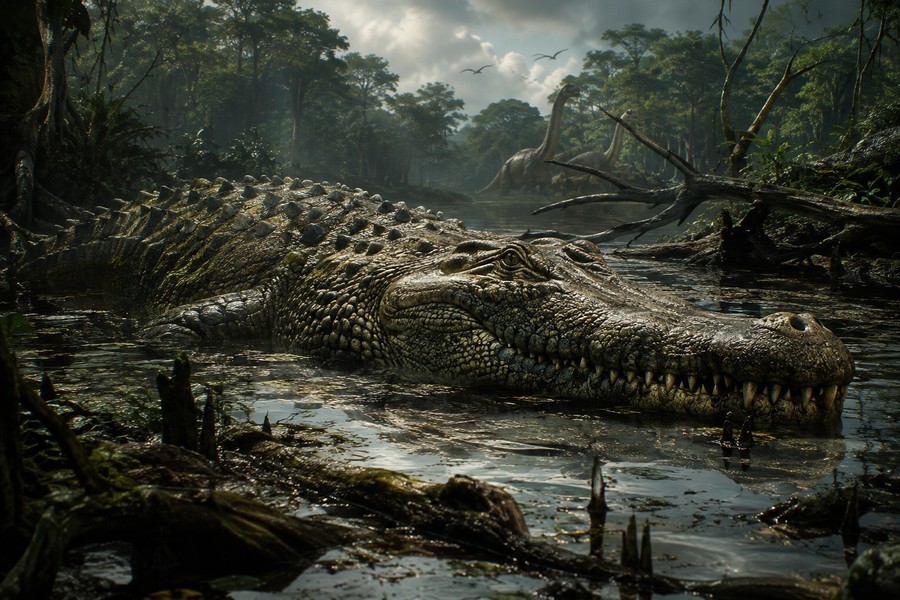
Ancient South America Was Home to Giant Predators
Long ago, the landscape of South America looked very different than it does today. More than 10 million years ago, the northwestern part of the continent was covered by a massive network of freshwater lakes and swampy rivers. This watery world was a perfect home for a wide variety of creatures, including some of the largest reptiles to ever walk the Earth.
At the very top of this ancient food chain were giant prehistoric crocodilians. These massive reptiles ruled the waterways, sharing their home with other terrifying predators. Even though they faced competition from saber-toothed marsupials, giant flightless birds known as "terror birds," and massive snakes, these ancient crocs had no trouble finding enough to eat.
The Colossal Prey of the Ancient Wetlands
The animals living in this wetland environment were incredibly large. The plant-eaters of the time included massive ground sloths, creatures related to modern rhinos, and two different species of ancient, elephant-like beasts. Some of the specific animals that roamed these shores include:
- Pericotoxodon platignathus, a heavy, rhino-like mammal.
- Xenastrapotherium kraglievichi, a large, extinct mammal resembling an elephant.
- Granastrapotherium snorki, another giant, trunked herbivore.
With so many giant plant-eaters walking around, there was plenty of food for the region's predators. In fact, the sheer volume of prey was more than enough to support a diverse group of meat-eaters.
Bones Reveal Violent Hunting Tactics
By examining the fossilized bones of these giant plant-eaters, clues have been uncovered about how they met their end. Many of the fossils show clear signs of predator attacks, featuring deep, circular puncture wounds. These bite marks are located mostly around the heads, necks, and jaws of the prey animals.
This pattern of injuries matches the hunting style of modern crocodiles. Today's crocodiles are ambush predators that hide quietly in the water, waiting for an animal to come close to the shore. Once the prey is within reach, the crocodile lunges, grabs the animal by the head or neck, and drags it underwater to drown it. The ancient bite marks suggest that prehistoric crocs used this exact same method millions of years ago.
The Bus-Sized Reptile That Ruled the Swamps
Only one predator in that ancient ecosystem had jaws strong enough to leave such massive puncture wounds on giant bones. That creature was Purussaurus neivensis, an ancient relative of the modern caiman. This reptile was truly enormous, growing to the length of a school bus and weighing nearly two tons.
With its immense size and powerful bite, this giant caiman relative was the undisputed king of the wetlands. The frequent bite marks on fossil bones show that this predator was highly active and played a major role in keeping the populations of large plant-eating animals in check.
A Helping Hand for Scavengers
The hunting habits of this giant predator did not just affect its prey. It also helped support other meat-eaters in the food chain. Because the giant caiman hunted such massive animals, it often left behind large amounts of leftover meat.
Other smaller predators, such as Sebecids, benefited from these leftovers. Sebecids were land-dwelling crocodilians with longer legs that allowed them to walk easily on the shore. These land crocs likely followed the giant wetland predators, scavenging the remains of the massive meals left behind on the riverbanks.
The prehistoric wetlands of South America were a dangerous place to live. Survival was a daily struggle for the giant plant-eaters that had to share their home with some of the most powerful predators the world has ever seen.