
Cosmic Treasures: Ancient Elites Wore Jewelry Crafted From Fallen Stars
Space rocks are often associated with massive explosions and the end of prehistoric eras. However, these fallen rocks also brought valuable materials to our planet. Long before humans figured out how to melt and shape iron from the ground, meteorites provided a rare and precious source of metal.
Many ancient cultures around the globe recognized the value of these celestial treasures. People transformed pieces of fallen space rocks into practical tools and beautiful ornaments. For example, ancient people in Greenland crafted scrapers, while communities in China made special axes. In the Americas, people created stunning jewelry, and in Egypt, protective charms made of space iron helped desert travelers. Even famous royal treasures, like a specific dagger found in an Egyptian pharaoh's tomb, were made from this otherworldly metal.
The Missing Clues of Ancient Greece
For a long time, there was a missing piece in this global puzzle. While many ancient societies used space iron, very few examples had been identified from the Bronze Age in Greece. This era was famous for powerful cultures like the Minoans and the Mycenaeans, who were known for their legendary stories and grand palaces. Researchers wanted to find out if these ancient people also used meteorites, and they wanted to learn when these societies first started making their own iron tools.
To find answers, a team of experts spent five years examining more than 100 ancient metal items found in Greece. They focused on 91 iron objects, which included:
- Finger rings and bracelets
- Knives and other small tools
- Items dating back 3,000 to 3,800 years
To study these ancient treasures without damaging them, the experts used a special type of X-ray technology. This tool allowed them to look closely at the chemical makeup of the metal. They discovered that 13 of the items contained high levels of nickel, which is a key sign that the metal came from a meteorite rather than from the earth.
Rings Fit for Royalty
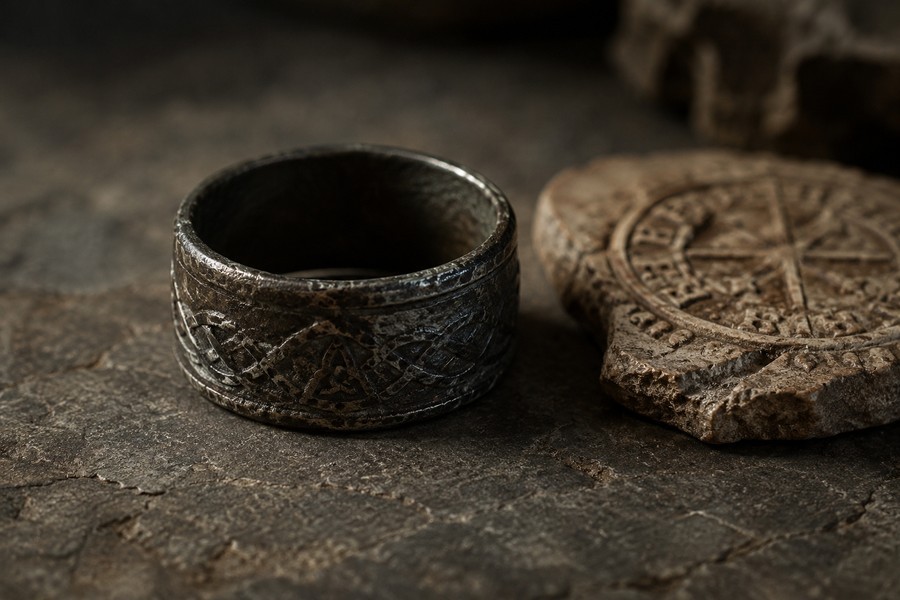
Interestingly, all 13 of the space-metal objects were fancy finger rings. These were not ordinary pieces of jewelry. They were highly crafted items that combined the space iron with precious metals like gold and silver. The rings also featured flat areas called bezels, which were likely used to hold royal seals or official stamps.
The locations where these rings were found also tell an interesting story. Most of them were discovered in wealthy burial chambers, such as the famous tombs of Mycenae. One particularly remarkable ring was found in an ancient Minoan cemetery, still resting on the finger of a person believed to have been a high priest. This suggests that wearing jewelry made from meteorites was a way for the most powerful and wealthy leaders of the time to show off their high status.
A Long-Distance Import
The space iron used to make these rings probably did not fall in Greece. The local landscape, with its many islands and wet climate, is not a good place to find meteorites. Space rocks that land there often fall into the sea or break down quickly due to moisture.
Instead, the metal was likely brought in from Egypt. The dry, sandy deserts of Egypt are excellent at preserving meteorites, keeping them safe from rust and decay for thousands of years. This suggests that the ancient Greeks traded with other nations to get their hands on this rare cosmic material.
The Shift to Human-Made Iron
The study also revealed secrets about how metalworking evolved. While 13 items came from space, the other 78 iron objects examined were made from smelted iron, which is iron extracted from rocks mined on Earth.
The analysis showed that humans in this region began smelting iron as early as 1400 BCE. However, this technology was slow to catch on. Only two of the smelted iron items found—a small pendant and a ring—were made before 1200 BCE. Compared to neighboring regions like Anatolia, the use of human-made iron in Greece seemed to happen much later. It is highly possible that these early human-made iron items were imported from other places, such as Cyprus.
Eventually, the trend of wearing space-rock rings came to an end around 1200 BCE. There are a few reasons why this might have happened. It may have become too difficult to import the space iron, or perhaps the supply simply ran out. However, it is also possible that the trend died out for a very simple human reason: fashion tastes changed, and the elites moved on to new styles.