
Technical Issues Force End to Space Telescope Rescue Mission
A bold plan to rescue a dying space observatory has been called off. The federal space agency and a private aerospace startup have announced they are stopping their joint effort to save a valuable scientific instrument before it falls back to Earth and burns up in the atmosphere. The robotic rescue vehicle, which was designed to catch the telescope and push it into a safer orbit, has experienced critical steering problems that make the rescue impossible.
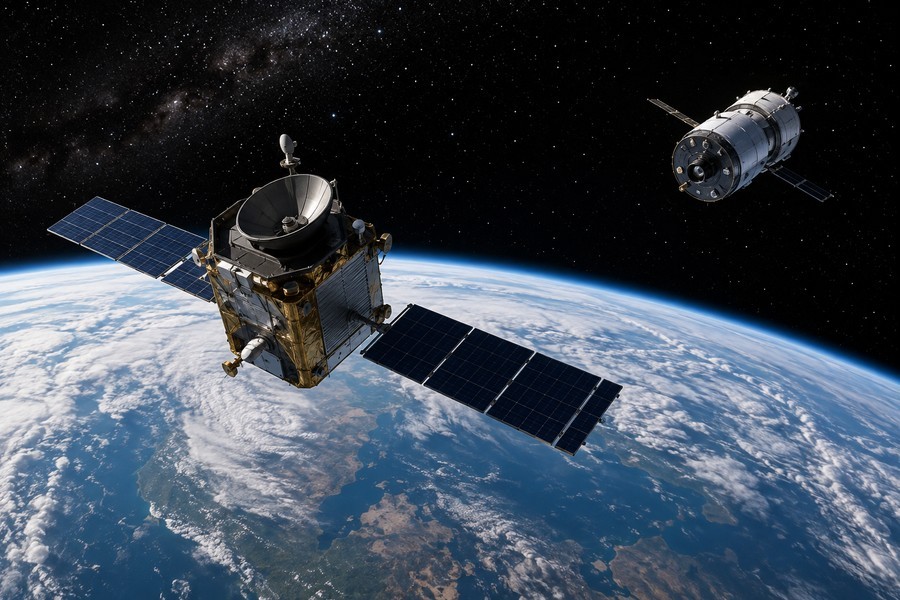
The rescue spacecraft, which is about the size of a household refrigerator, was equipped with two solar panels for power and three robotic arms. Its goal was to latch onto the drifting observatory and use its electric thrusters to boost the telescope to a higher altitude. However, steering failures have left the rescue vehicle unable to complete its primary task.
What Went Wrong in Orbit
The rescue ship ran into trouble shortly after entering space. Engineers discovered that the spacecraft was spinning out of control. The issue was traced to the vehicle's steering systems. Specifically, two out of the three reaction wheels—which are heavy spinning discs used to point the satellite in the right direction—stopped functioning. Additionally, the small gas thrusters used for precise pointing also failed.
This left the spacecraft traveling at nearly five miles per second with only three low-power plasma thrusters to try and regain control of its orientation. Ultimately, these thrusters were not enough to stabilize the vehicle for a delicate docking maneuver.
Despite the setback, the rescue vehicle is still operating. The private company plans to use the remaining power and control to guide the spacecraft as close to the telescope as possible. This will allow them to test its close-range navigation systems, turning the failed rescue into a valuable technology demonstration.
A High-Risk, High-Reward Project
The rescue mission was always a gamble. The space agency funded the private startup with a $30 million contract to build and launch the rescue vehicle. To save the telescope before its orbit decayed too much, the team had to work on an incredibly tight schedule.
- Typical satellite development: Usually takes several years of planning, building, and testing.
- The startup's timeline: Completed the entire design and build process in just nine months.
This rapid timeline forced engineers to accept higher levels of technical risk than they normally would. While the first few weeks of the flight went smoothly, the steering systems eventually gave out under the pressure.
The head of the space agency explained that taking smart risks is necessary for progress. Even though the mission did not succeed, the official emphasized that the potential reward made the attempt worthwhile.
The Loss of a Scientific Workhorse
With the rescue mission canceled, the aging space telescope is now on a path to a fiery end. It is expected to fall back into the atmosphere and burn up in the coming months.
The observatory was a highly successful scientific instrument. It was originally designed to last for only two years, but it managed to operate for more than two decades. During its long life, astronomers around the world relied on it to study the most violent events in the universe.
The telescope's main job was to find and track gamma-ray bursts, which are incredibly powerful cosmic explosions. The telescope was uniquely suited for this work because of its ability to quickly spin around and point its multiple sensors at sudden flashes of light, sharing the coordinates with other observatories on the ground and in space.
Because the $500 million observatory does not have its own engine or thrusters to maintain its altitude, it had no way to save itself. The robotic rescue mission was its only hope of survival.
Lessons for the Future of Space Repairs
While the telescope will be lost, both the space agency and the private company believe the project was not a total waste. The startup's chief executive expressed pride in what the team accomplished in such a short time. The lessons learned from building and operating this experimental spacecraft will help create a guide for future missions to repair, refuel, and upgrade satellites in orbit.
The director of the agency's astrophysics division also praised the team for their rapid work and innovative problem-solving. The director noted that the project has strengthened the domestic space industry and advanced the technology needed for servicing satellites in the future.