
Two Rockets Launch in Under Forty Minutes to Set a New Record
A private spaceflight company continues to push the limits of rocket travel. The company already conducts more launches than any other organization in the world. It also operates the largest group of satellites ever put into space. This massive network of satellites provides high-speed internet to people all over the globe and currently includes nearly 11,000 active spacecraft in orbit.
Recently, the company achieved another major milestone. It set a new record for the shortest amount of time between two consecutive orbital rocket launches. The team successfully sent two of its signature rockets into space just 38 minutes apart. This accomplishment beat the company's previous record by 27 minutes. The prior record had been set during two internet satellite missions.
The First Journey Into Space
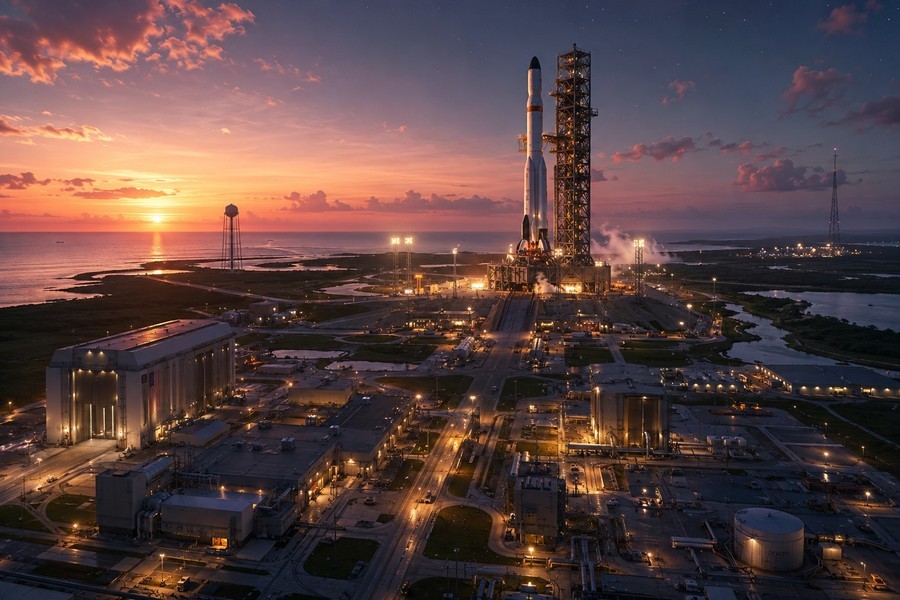
The first of the two missions began on the East Coast of the United States. A reusable rocket lifted off from a launchpad at Cape Canaveral Space Force Station in Florida. The main goal of this flight was to deliver eight communication satellites into low Earth orbit. These satellites belong to a telecommunications company based in Louisiana.
Low Earth orbit is a zone close to our planet where satellites can travel quickly and send clear signals back to the ground. The launch went smoothly, and all eight satellites reached their proper positions. They were released from the rocket one by one over a six-minute window. This deployment process began about 56 and a half minutes after the rocket first took off from the ground.
A Second Rocket Takes Off From the West Coast
While the first rocket was still climbing toward its final destination in space, another team was preparing a second launch on the opposite side of the country. This second liftoff took place at Vandenberg Space Force Base, which is located on the central coast of California.
This second flight was a special mission for the United States military. Known as USSF-366, the flight was conducted on behalf of the U.S. Space Force. Because this was a classified national security mission, many of the details about what the rocket was carrying have not been shared with the public.
What We Know About the Secret Cargo
Even though the details of the military mission are secret, people who watch rocket launches closely have made some educated guesses about the cargo. Some observers believe the rocket may have carried a batch of highly classified national security satellites. These satellites are thought to be modified versions of the company's standard internet satellites, built specifically for government use.
This guess is based on the flight path of the rocket and where the empty rocket parts were scheduled to fall back to Earth. These locations matched the patterns of previous internet satellite launches. It is still not known exactly when or where the upper part of the rocket released its secret cargo. The company ended its live video broadcast of the launch shortly after the first part of the rocket landed, which is standard procedure for military flights to protect secret information.
Bringing the Boosters Back Home
A key part of these missions is the ability to land and reuse the main rocket boosters. This helps lower the cost of space travel and allows for more frequent launches. Both of the flights ended with successful landings.
- The Florida Booster: The first stage of the rocket that launched from Florida returned to Earth about eight minutes after takeoff. It touched down safely at Cape Canaveral. This marked the 14th successful flight and landing for this particular booster.
- The California Booster: The booster from the California launch returned to Earth about eight and a half minutes after liftoff. It landed on a special floating platform in the Pacific Ocean. This booster has now completed 18 successful missions.
A Busy Year in Space
These two rapid launches brought the company's total number of rocket flights for the current year to 96. The vast majority of these flights—about 75 percent—have been dedicated to launching more satellites for the company's global internet network. By launching rockets so quickly and reusing the parts, the company is making space travel more common and efficient than ever before.