
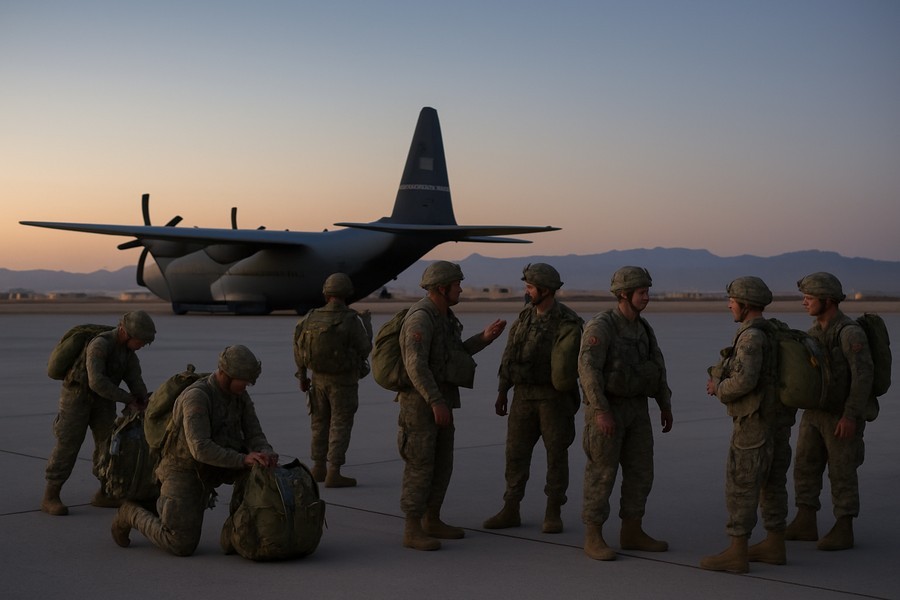
US Military Readies Additional Troops for Middle East Deployment
As the conflict in the Middle East nears its first month, the American government is taking a two-pronged approach. They are preparing to send up to 3,000 paratroopers to the region while simultaneously proposing a ceasefire plan to Iran.
Despite these potential peace negotiations, Iranian officials have repeatedly denied that any such discussions are taking place. This denial comes at the same time as the United States readies a sizeable deployment of paratroopers to join the 50,000 troops already stationed in the Middle East.
In the midst of these developments, military forces in Israel keep hitting targets in Tehran, Iran's capital, and Iran continues to launch missiles at Israel.
Increased Military Presence in the Middle East
It has been reported that between 2,000 and 3,000 paratroopers from the Immediate Response Force, known for their ability to mobilize worldwide within 18 hours, are set to be deployed to the Middle East. This deployment, in conjunction with two Marine Expeditionary Units already en route to the Persian Gulf, could bring an additional 6,000 to 8,000 US ground troops closer to Iran. This build-up comes amidst conflicting messages from the US administration regarding potential ground warfare in the region.
Proposed Ceasefire to End Conflict
A draft 15-point ceasefire proposal has been presented to Iran, which includes demands for Iran to commit to never pursuing nuclear weapons and to dismantle any existing nuclear capabilities. It is reported that Iran has indeed received this proposal, and the government of Pakistan has expressed readiness to facilitate talks between the US and Iran to bring an end to the conflict.
Iran's Denial of Negotiations
Iran remains firm in denying that any negotiations are underway, even in the face of public assertions from the US about ongoing talks concerning the ceasefire plan. Iranian military spokesperson, Lt. Col. Ebrahim Zolfaghari, has said there are no talks between the United States and Iran and cast doubt on the US's global superpower status.
Strait of Hormuz: Passage for "Non-Hostile" Ships
Iran has stated that it will allow the "safe passage" of "non-hostile" ships in the Strait of Hormuz, a key global oil supply route, but has excluded vessels from the United States, Israel, and other nations involved in the conflict. This announcement comes amidst increased efforts from Washington to discuss an exit strategy from the current conflict and coincides with the order to deploy additional US Marines in the Middle East.
The Iranian blockade of the Strait of Hormuz and continuous attacks on energy infrastructure in the Gulf countries have caused a surge in global oil prices, with officials warning of the biggest global energy security crisis.
Lebanon Faces Casualties from Overnight Strikes
Israel's military continues its operations in Lebanon, citing targets belonging to the Iran-backed militant group Hezbollah. These operations have resulted in significant casualties, with more than 1,000 people reportedly killed this month and over 1 million displaced, according to Lebanese authorities. Lebanon's relationship with Iran has significantly deteriorated due to tensions over Hezbollah, leading Lebanon's government to seek international assistance in disarming the group.
Economic Impact of the Conflict
The ongoing conflict has also had a tremendous economic impact on the region. The United Nations estimates that the war has already caused approximately $63 billion in economic losses across the Arab region. This includes attacks on airports and energy and water infrastructure in various countries, resulting in significant damage and disruption.