
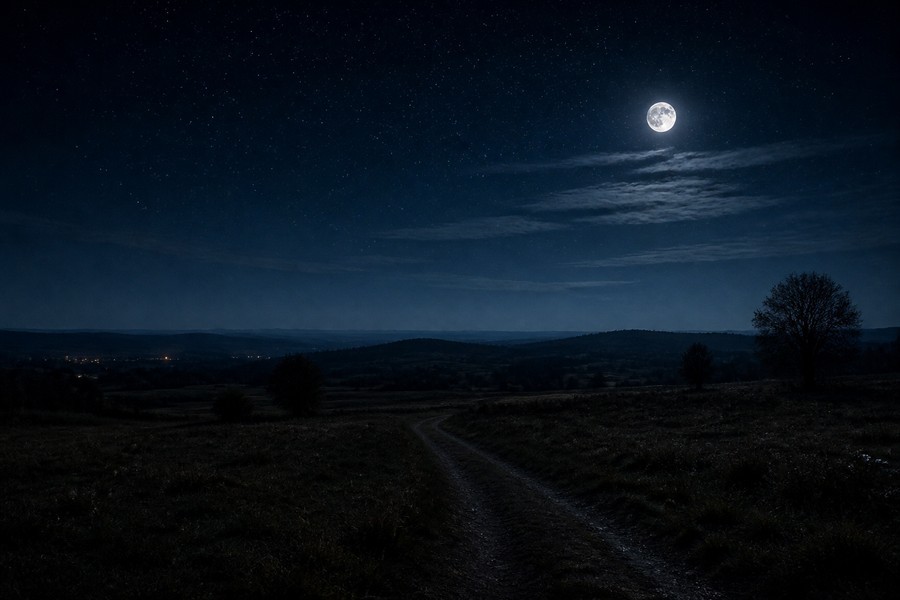
A Double Feature in the Night Sky: How to Watch the Year's Best Meteor Shower
One of the most exciting events for stargazers is returning to the night sky. This annual light show is known for putting on a dazzling display, but this time, skywatchers are getting a double treat. Two different astronomical events will take place within just a few hours of each other, creating a wonderful night for anyone who loves looking up at the stars.
Before the sun goes down and the stars come out, a deep partial solar eclipse will be visible in the UK during the early evening. While the eclipse and the meteor shower are not related to each other, having them happen on the same night is a rare and exciting coincidence. Space experts describe this timing as a wonderful cosmic accident that makes for an unforgettable night of stargazing.
Understanding the Spectacular Light Show
The event that many people are waiting for is the annual meteor shower. These celestial events happen when our planet travels through the dusty trails left behind by comets or asteroids. Comets are essentially giant, dirty snowballs made of frozen rock, ice, and gas that travel around the sun.
As the Earth passes through this leftover debris, the tiny pieces of rock and dust enter our atmosphere at extremely high speeds. The friction heats them up, causing them to burn up and create bright, glowing streaks of light across the night sky. These streaks are what we commonly call shooting stars, though they are actually meteors.
This particular summer shower is named after the constellation Perseus because the meteors appear to shoot out from that part of the sky. The debris that creates this show comes from a massive comet known as Swift-Tuttle. This comet is huge, with a solid icy core that is about 16 miles wide. It takes 133 years for this comet to complete just one trip around the sun. Because its orbit is so long, some of the tiny rocks burning up in our atmosphere tonight were actually left behind by the comet more than a hundred years ago.
When and Where to Catch the Best Views
While this meteor shower is active for several weeks from mid-summer through late August, you will only see a few scattered meteors on most nights. To get the absolute best experience, you need to watch during the peak nights. During the peak, which occurs in mid-August, the number of shooting stars increases dramatically.
If you watch during the peak hours—specifically between midnight and dawn—you will have the best chance of seeing a spectacular show. Under perfect conditions, lucky viewers can spot more than 100 meteors per hour.
To get the most out of your stargazing experience, keep these helpful tips in mind:
- Find a dark spot: Get as far away from city lights and streetlamps as possible. Light pollution from cities makes the sky too bright, which hides the fainter meteors and leaves only the brightest ones visible.
- Check the moon phase: This year, the sky conditions are expected to be excellent because there is a new moon. With no bright moonlight to wash out the sky, the stars and meteors will look much brighter.
- Let your eyes adjust: Step outside and give your eyes about 20 to 30 minutes to get used to the darkness. Avoid looking at your phone screen during this time, as the bright light will ruin your night vision.
- Look at the big picture: Do not use telescopes or binoculars, as they limit your view. Instead, lie on your back and look at the widest, clearest patch of sky you can find.
What to Expect From the Weather
Of course, the weather plays a major role in whether or not you will be able to see the show. For many areas, the forecast is looking very positive. Southern and central regions, including most of England and Wales, are expected to have mostly clear skies throughout the night, with only a very small chance of light mist forming in some places.
However, those living further north may need to be a bit more patient. The northernmost areas, such as northern England, Northern Ireland, and much of Scotland, are likely to experience larger patches of clouds moving through, and there is even a small chance of rain showers. If you live in these cloudier regions, you might have to wait for gaps in the clouds to catch a glimpse of the shooting stars. In some far northwestern areas of Scotland, the thick cloud cover might make it best to skip the late-night vigil and try again another night.
Can You Spot a Shooting Star During the Eclipse?
With both a solar eclipse and a meteor shower happening on the same day, many people wonder if they can see both events at the exact same time. During a solar eclipse, the moon blocks out the sun, causing the daytime sky to turn dark for a brief period. This sudden darkness does create a very short window where meteors could theoretically be visible.
However, this rare sight is only possible in regions that experience a total solar eclipse, such as Spain. In areas that only get a partial eclipse, like the UK, the sky will not get dark enough to reveal the faint streaks of meteors. Even in the path of totality, the chances of seeing a shooting star at that exact moment are incredibly low. You would have to be extremely lucky to spot a meteor during those brief minutes of daytime darkness. Still, the close timing of these two events makes this a truly special time for anyone who enjoys the wonders of the universe.