
A Milestone in the Skies: Reusable Rocket Achieves Historic Flight
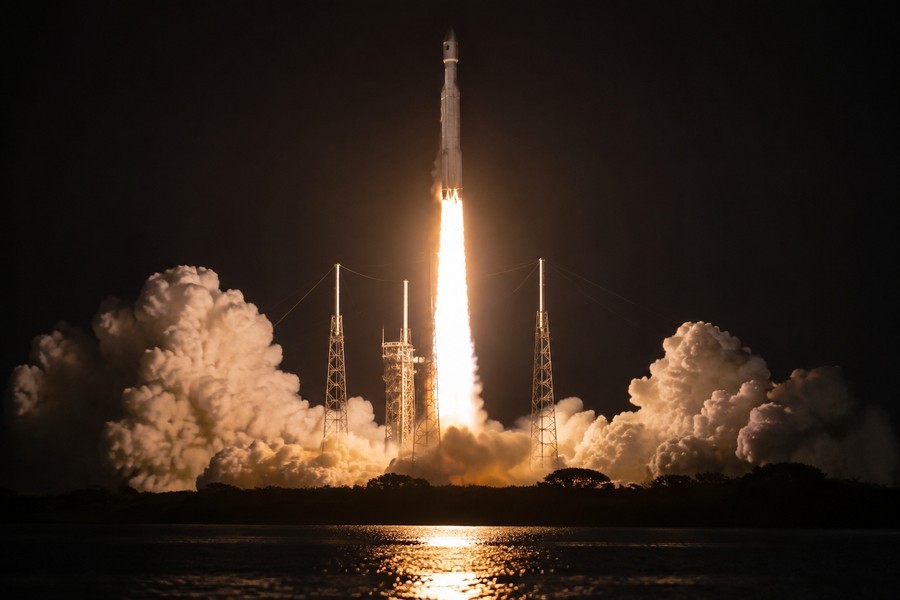
In the early morning darkness, a powerful rocket lit up the Florida sky as it headed toward space. The vehicle lifted off from the launch pads at Cape Canaveral Space Force Station, carrying a payload of 29 internet satellites. While these types of launches happen quite often now, this particular flight was a historic event that showed just how far space technology has come.
This mission marked the 100th flight of this specific type of rocket within a single year. Even more impressive, the lower portion of the rocket—known as the booster—set a brand-new record by completing its 37th trip into space and back. This achievement highlights a major shift in how humans reach orbit, making space travel much more common and affordable.
Why Reusing Rockets is a Game Changer
For decades, going to space was an incredibly expensive journey. Every time a rocket launched, the entire vehicle was lost in the ocean or burned up in the atmosphere. This meant engineers had to build a brand-new, multi-million-dollar machine for every single mission. Today, that is no longer the case.
The secret to this rapid launch schedule is rocket reusability. By landing the largest and most expensive part of the rocket back on Earth, the spaceflight company can clean it up, check it for safety, and fly it again. This process saves millions of dollars and allows for launches to happen just days apart rather than months.
The rocket used in this launch is currently the busiest rocket in the world. In the previous year alone, this model flew 165 times. That is more launches than all other space rockets from every other country combined. Most importantly, every single one of those 165 flights was completely successful.
The Elite Fleet of Repeat Flyers
While other organizations are trying to build their own reusable rockets, they are still working to catch up. For example, two different rockets designed in China recently managed to land safely after reaching space. However, neither of those new rockets has actually flown a second time yet. Landing is only the first step; being able to fly the same machine over and over again is the real challenge.
The leading aerospace company now has a whole fleet of highly reliable, frequently used boosters. In fact, there are six different boosters that have each completed at least 30 flights. This includes the record-breaking booster from this mission, which has now flown 37 times, as well as others that have flown 30, 32, 34, and 35 times.
A Step-by-Step Look at the Mission
This recent morning launch went exactly as planned from start to finish. Here is how the mission unfolded step-by-step:
- The Liftoff: The rocket fired up its engines and roared off the pad in Florida at 5:33 a.m., carrying 29 internet satellites.
- The Separation: A few minutes into the flight, the main booster finished its job and separated from the upper part of the rocket.
- The Landing: Just eight and a half minutes after leaving the ground, the booster guided itself back down through the atmosphere. It landed gently on a waiting robotic drone ship named "A Shortfall of Gravitas" floating in the Atlantic Ocean.
- The Deployment: Meanwhile, the upper section of the rocket continued traveling deeper into space. Exactly 61.5 minutes after liftoff, it safely released all 29 satellites into their proper orbits.
Building a Giant Network in Space
The 29 satellites delivered during this mission are part of a massive, global internet network. This network is designed to beam high-speed internet down to people all over the world, especially in remote areas where traditional cables cannot reach.
This launch was the 77th flight of the year dedicated entirely to building this network. With this latest batch of hardware in place, the network now has more than 11,000 active satellites orbiting the Earth. This makes it by far the largest group of satellites ever assembled in human history, and it continues to grow with regular launches.
The Next Generation of Space Travel
Even with these incredible achievements, engineers are already working on the next big step. The rocket used in this launch is only partially reusable. While the giant booster at the bottom lands safely, the top part of the rocket is still lost during every flight.
To solve this, a new, much larger spacecraft is currently being tested. This next-generation mega-rocket is designed to be fully and rapidly reusable. The goal is to create a vehicle where both the booster and the upper spacecraft can land, refuel, and take off again multiple times in a single day. If successful, this new technology will make traveling to space as common and affordable as commercial airplane flights.