
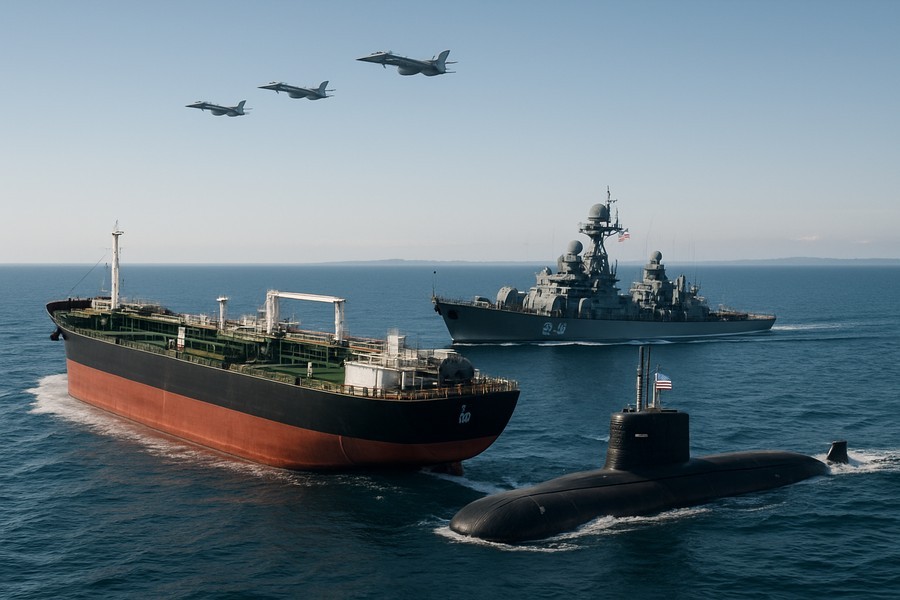
Atlantic Chase: American Military Pursues Oil Tanker
The American military is on the trail of an oil tanker, which is allegedly tied to Venezuelan oil. The tanker, which was once known as Bella 1, has been renamed Marinera and it's believed that it has changed its flag from Guyana to Russia.
Oil Tanker On The Move
Reports suggest that Russia has sent a submarine and other vessels to accompany the oil tanker across the Atlantic Ocean. The tanker, now located between Iceland and the British Isles, is accused of violating American sanctions and transporting Iranian oil. In the past, it has been known to carry Venezuelan crude oil, although currently, it's said to be empty.
Interestingly, the tanker seems to have changed its course dramatically and is now heading towards Europe. This has coincided with the arrival of approximately 10 American military transport aircraft and helicopters.
Russia’s Stance
Meanwhile, Russia has expressed its concern over the situation. The foreign ministry has stated that their ship is navigating through international waters in the North Atlantic under the Russian Federation flag, in full compliance with international maritime law. The ministry has also expressed confusion over the heightened and seemingly disproportionate attention given to the ship by the U.S and NATO military, despite its peaceful status.
According to some officials, American forces have plans to board the ship and would prefer to seize it rather than sink it.
Identifying The Vessel
Footage allegedly taken onboard the oil tanker has surfaced, showing a distant ship that resembles an American Coast Guard Legend-class cutter. The last reported location of the Marinera, according to AIS location data from a ship-tracking platform, was in the North Atlantic Ocean, approximately 300km south of Iceland's shoreline.
Previous tracking data indicates that the vessel traveled north, past the western coast of the UK within the past two days.
Response from the U.S Military
The American military's Southern Command has stated on social media that they are ready to support their government agency partners against sanctioned vessels and actors transiting through the region. They have assured that they are on alert and prepared to track vessels of interest, promising to act when called upon.
Considering International Law
Under international law, vessels flying a country's flag are under the protection of that nation. However, changing a ship's name and flag doesn't necessarily change much, according to a senior risk and compliance analyst at a maritime intelligence firm. He explains that U.S action is driven by the vessel's underlying identity, ownership/control networks, and sanctions history, not by its painted markings or flag claim.
A maritime intelligence analyst has stated that changing to a Russian registry could "complicate U.S enforcement efforts". She explains that under the UN Convention of the Law of the Sea, stateless vessels can be boarded by authorities. But, by reflagging to Russia, the vessel can no longer be boarded under this provision.
Increasing Tensions
This potential stand-off over the oil tanker comes shortly after the surprising arrest of Venezuela's Nicolás Maduro in Caracas by U.S officials. Maduro and his wife were taken into custody on suspicion of weapon and drug offences. Since his arrest, three U.S-sanctioned tankers have switched to a Russian registry, including the Marinera.
