
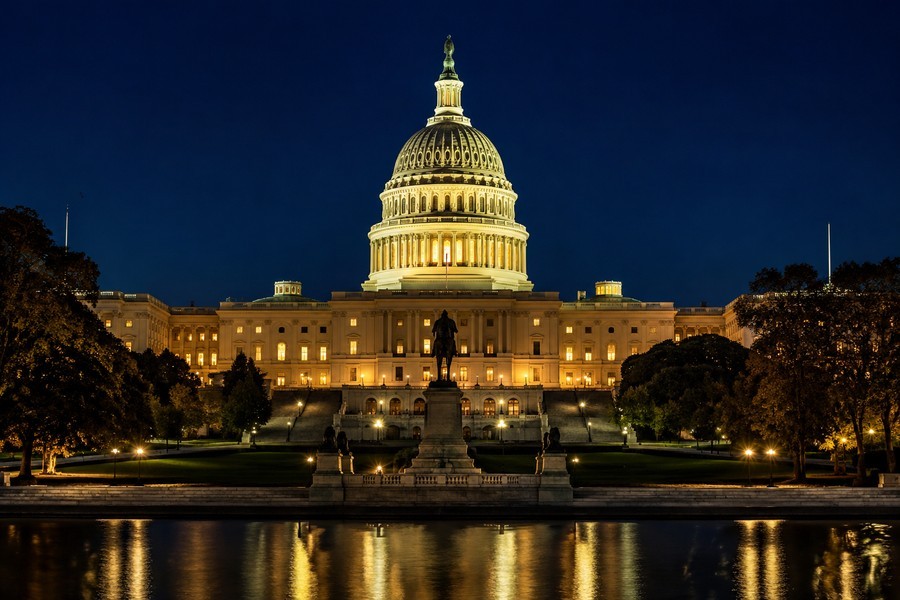
Late-Night Senate Battle Ends with Government Funded but Voting Bill Put on Hold
Lawmakers in the Senate finally headed home after a marathon late-night session. The long meeting resolved a major standoff over the President's demands for a strict new voting law. While senators managed to pass several important measures, the President's signature voting proposal did not make the cut before the summer break.
A Night of High Stakes and Long Votes
The Senate chamber was filled with tension during a session that lasted nearly 20 hours. Lawmakers worked through the night to address several major priorities. By the time they finished, they had successfully completed several key tasks:
- Approved a temporary funding plan to keep the federal government running into the winter, successfully avoiding a shutdown.
- Confirmed the new Attorney General, Todd Blanche, approving the President's choice for the nation's top law enforcement official.
- Passed a major sanctions package aimed at Russia to provide assistance to Ukraine.
The Push for New Voting Rules
For weeks, the President had been pushing Senate Majority Leader John Thune to pass the voting measure, known as the SAVE America Act. The proposed law would require people to show proof of citizenship before they could register to vote in federal elections. The President even suggested that the Senate should change its voting rules to bypass the usual 60-vote requirement needed to advance major bills. However, Thune and most other senators resisted changing these rules.
The political reality in the Senate made passing the bill very difficult. The majority party holds only a slim lead, and they did not have the support needed to pass the measure. This challenge was made tougher because former leader Mitch McConnell was absent while recovering at home after staying in a rehabilitation center.
To try to find a middle ground, lawmakers voted on a simpler version of the voting bill. This smaller version would have required voters to show photo identification before casting ballots. However, this effort also failed to pass, with lawmakers voting strictly along party lines.
A New Plan for the Fall
As the standoff deepened, Thune met with his party members to find a way forward. He encouraged a small group of senators to speak directly with the President to discuss a compromise. Three senators—Ron Johnson of Wisconsin, Mike Lee of Utah, and Rick Scott of Florida—held a long phone call with the President late in the evening to discuss their options.
During the call, they agreed on a new strategy. Instead of forcing a vote immediately, they would try to pass parts of the voting bill in the fall. The plan is to attach these voting rules to a larger budget package when lawmakers return to work in September. This upcoming budget package will focus on military funding and replenishing defense supplies.
Johnson, who serves as the budget committee chairman, explained that the President agreed to this new path after their discussion. While Lee expressed disappointment that the voting bill did not pass immediately, he acknowledged that they simply did not have the votes to succeed at this time.
Lawmakers Depart for Recess
With the new plan in place, the Senate finally moved to end the session. Even though some lawmakers still protested and voted against leaving, the majority agreed to adjourn.
The agreement allows lawmakers to return to their home states for the summer break, with plans to restart the debate over the budget and voting rules later in the year.
