
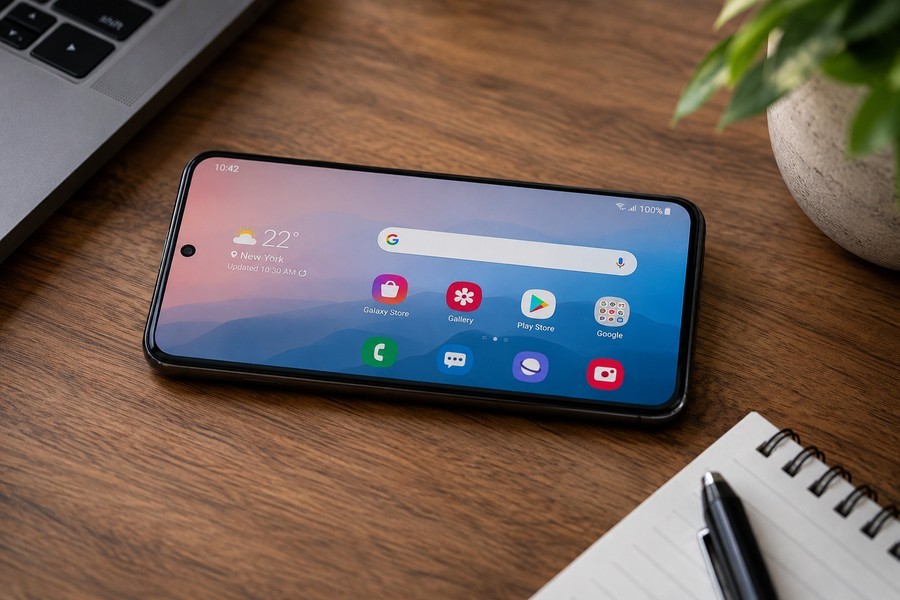
New Smart Camera Technology Aims to Prove Which Photos Are Real
In a world where computer programs can create realistic pictures in just a few seconds, it is becoming harder than ever to tell if a photo is real. A simple text description can now generate a lifelike image that looks like a real photograph. To help solve this problem, a major smartphone manufacturer is testing a new way to prove that a picture was actually taken by a real phone camera.
This new technology was recently discovered in the test version of the company’s upcoming mobile phone software. It aims to give users a secure way to show that their photos are genuine and have not been created or altered by artificial intelligence.
The Battle Against Computer-Generated Pictures
The challenge of fake images is not new, but it has grown much faster recently. Today, anyone can make a convincing fake image without needing advanced editing skills. Because of this, several large technology companies have been trying to find ways to label digital creations.
Some companies have developed invisible watermarks that are hidden inside computer-generated files. These marks help other software recognize that the image was made by a machine. Other social media networks have started putting labels on posts that contain artificial content, though these systems are not always perfect and can sometimes miss altered media.
Now, this smartphone maker is taking a different approach. Instead of just labeling fake images, they want to prove which images are completely authentic from the moment they are captured.
A New Way to Verify Your Photos
The upcoming feature uses a special system to confirm where a photo came from. It works by linking the photo to the unique hardware parts inside the phone’s camera. This creates a secure digital stamp that proves a real lens and sensor captured the scene.
To keep user information safe, the company designed this system with privacy in mind. The technology works through a series of secure steps:
- Private Processing: The system does not let the company view your personal photos. Instead, the image is sent to highly secure, private cloud servers to be verified.
- Limited Data Sharing: Only basic camera sensor details and file information are sent back to the company, keeping the actual image private.
- Security Safeguards: If the company discovers that a phone's camera parts have been tampered with, it can cancel any past verifications linked to that specific phone.
How the Photo Verification Works
When the new software is released, this feature will be turned off by default. Users who want to use it will need to turn it on manually in their phone's settings menu. They can do this by navigating to the camera settings and turning on the new verification mode.
To make sure a photo can be verified later, it must be taken while using this special camera mode. If a user takes a picture normally, the photo will not contain the hidden tracking details needed to prove its origin later on.
Simply taking the photo does not automatically verify it. Instead, the user can choose to verify the image at a later time. When they decide to do so, the raw image and its history data are sent to the secure private cloud. Once the system confirms the details are correct, the photo is given a unique identification code.
Sharing Verified Photos Safely
The system also makes sure that sharing these verified photos does not ruin your privacy. When you send a verified photo to a friend who has a compatible device, their phone can check the photo’s status locally. This means the phone maker does not track which specific images you are sharing or looking at.
Depending on how you send the photo, the amount of shared information might change. For example, sending a photo through wireless sharing or text messages might include different details. If you choose to share all data associated with a photo, the transfer may include unique hardware codes and uncropped video clips connected to the image.
There is also a new option for transferring files to computers using a cable. When this option is enabled, photos saved to a computer will keep their verification history. Even if a photo has not been verified, transferring it this way might still carry some hardware codes and original, unedited footage.