
Paper Straws May Create More Environmental Harm Than Plastic
Paper straws are often promoted as a cleaner choice than plastic. However, a detailed environmental study from South Korea reached a different conclusion. When the full life of each straw was examined, from production to disposal, ordinary plastic straws created the smallest environmental impact in many important areas.
A Comparison of Four Types of Straws
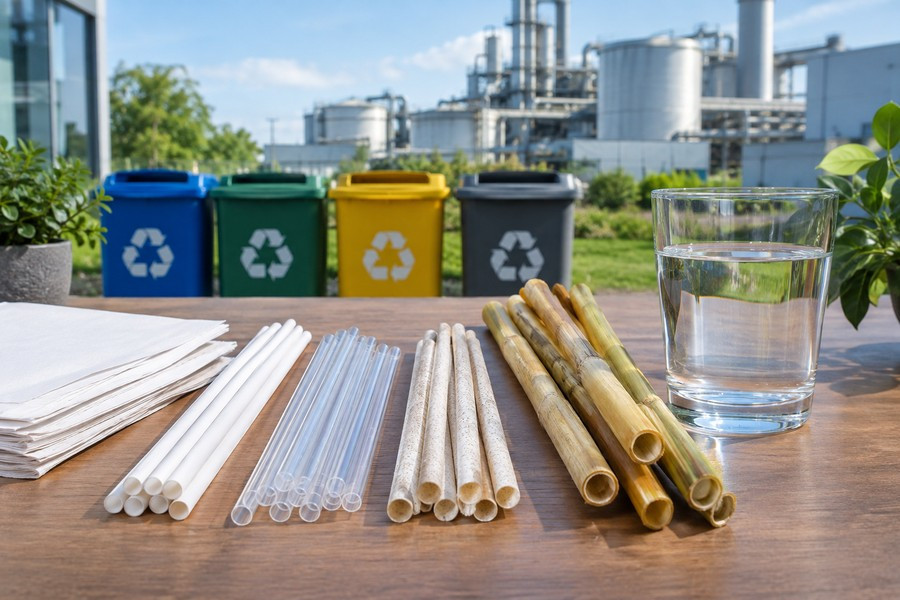
The research compared four kinds of drinking straws:
- Traditional plastic straws
- Paper straws
- Biodegradable plastic straws
- Straws made from sugarcane-based materials
Researchers reviewed the products across 16 different environmental categories. These categories included climate change, human health risks, air pollution, and damage caused by changes in soil and water acidity.
Traditional plastic straws had the lowest environmental impact in 10 of the 16 categories. Their results were better than the other options in areas such as human toxicity, airborne particles, and overall climate effects.
Paper Straws Had Higher Pollution Levels in Some Areas
The results raised concerns about the common belief that paper is always better for the environment. Paper straws produced more than six times the amount of carcinogenic material compared with standard plastic straws. Carcinogens are substances that may increase the risk of cancer.
Paper straws also caused about twice as much environmental acidification. This measurement looks at how products can change the chemical balance of soil and water. Too much acidification can harm plants, animals, and aquatic life.
These effects can come from several parts of the manufacturing process. Producing paper requires trees, water, energy, and chemicals. The straw must also be treated so it does not fall apart as soon as it touches a drink.
Plant-Based Plastic Was Not Automatically Safer
Straws made from renewable materials did not perform well in the comparison either. Bio-based plastic made with materials such as sugarcane created 16 times more carcinogenic impact than ordinary plastic straws.
These straws also produced about six times more acidification damage. Although sugarcane is a renewable crop, growing and processing it still requires land, fuel, water, and industrial equipment. A material can come from a plant and still create serious environmental costs during production.
Biodegradable plastic may sound like a simple answer, but its environmental benefits depend on how it is made and how it is thrown away. Some products need special industrial conditions to break down. Those conditions are not available in many regular waste systems.
Why Most Paper Straws Are Not Recycled
Paper straws are sometimes viewed as a better option because paper can be recycled. In practice, their small size creates a major problem. Many straws pass through the machines used to sort recyclable materials, so they often never reach the recycling process.
Paper straws also contain coatings, adhesives, and other treatments that help them resist water. These materials make the straws harder to process and prevent them from breaking down quickly.
The extra coating can also create another concern. When treated paper is processed, tiny plastic particles may remain in the recycled material. This means a straw labeled as a paper product may still contribute to plastic pollution.
Public Opinion Has Shifted
The findings have fueled criticism of environmental policies that focus on replacing one disposable item with another without examining the entire product life cycle. Some critics argue that public campaigns have placed too much attention on the material itself and not enough on energy use, manufacturing pollution, transportation, recycling, and disposal.
Public frustration is also clear. A survey of 1,001 people in South Korea found that 87.5 percent disliked paper straws. Complaints often include their weak texture, unpleasant feel, and tendency to become soft during a meal.
The results do not mean that plastic straws are harmless. Plastic waste can remain in the environment for a long time and may injure wildlife. Instead, the research shows that replacing plastic with paper does not always produce the environmental gains people expect.
Reusable Straws Offer Another Choice
A reusable straw may reduce waste when it is used many times. Stainless steel and silicone are two durable options. Both can be rinsed after use, and many are safe to clean in a dishwasher.
The best choice depends on how often the straw is used, how it is cleaned, and how long it lasts. For people who do not need a straw, the simplest option may be to drink directly from the cup. The larger lesson is that environmental claims should be judged by the full life of a product, not just by the material listed on its label.