
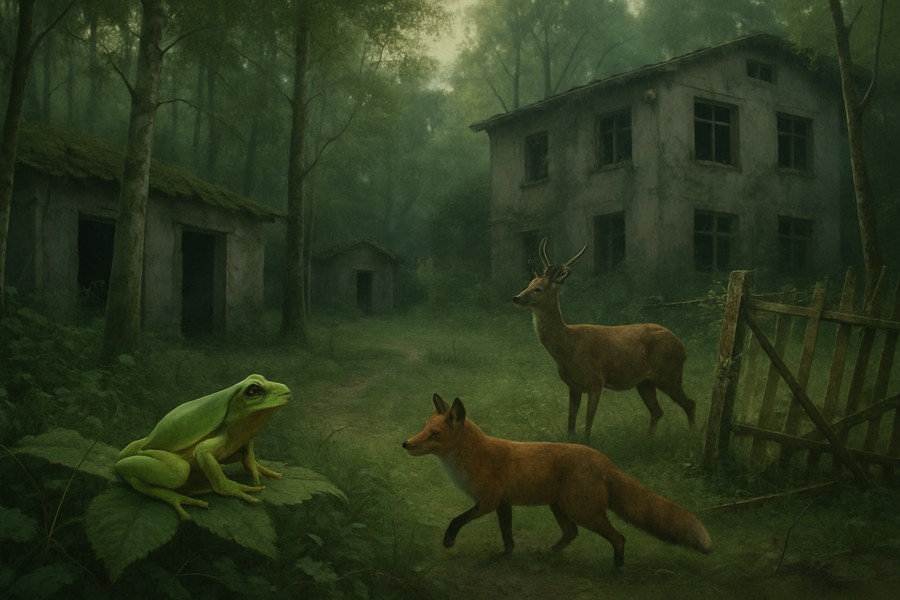
A Glimpse Into the Unexpected Life in the Radioactive Aftermath of Chernobyl
Decades have passed since the nuclear disaster that shook the world to its core. The place in question is Chernobyl, the site of the worst nuclear catastrophe in history. The surrounding area, for miles around, was evacuated, leaving behind a desolate, irradiated landscape. However, the wildlife tells a different story.
One fine example is the experience of a scientist who, while exploring the eerie silence of the Chernobyl night, was startled by the mating call of a small male tree frog. This seemingly insignificant creature raised an important question: Has radiation from the nuclear disaster altered the animals living in its vicinity?
The Aftermath of the Disaster
The nuclear blast at Chernobyl sent radioactive materials far and wide. The winds carried radioactive dust across the UK, Norway, and even as far as North Africa. However, the immediate surroundings of the power plant in northern Ukraine bore the brunt of the radiation. Even today, intense radioactive hotspots persist.
Many believed that the radioactive contamination would be devastating for the plants and animals living nearby. Humans in the surrounding area swiftly evacuated, leaving the local wildlife behind. As time passed, it became clear that many species were still thriving within the exclusion zone set up around the ruined power plant. But that's not to say that nature hasn't changed here, sometimes for the worse.
Researchers have reported strange phenomena, such as deformed trees, tumor-ridden swallows, and an uncanny black fungus thriving in the radioactive ruins of the reactor building. Some creatures might have adapted to cope with the contamination, but proving this theory remains challenging and controversial.
Studying the Effects of Radiation on Wildlife
The scientist who discovered the tree frog and his colleagues have made several trips to Chernobyl and its surrounding areas, studying more than 250 tree frogs in the process. They found that frogs inside the exclusion zone were, on average, darker than those outside the zone. The scientists hypothesized that the dark color of some frogs, a result of higher levels of melanin in their bodies, might somehow act as a protective barrier against the effects of radiation. But concrete proof of this theory remains elusive.
Not everyone agrees with these findings. Some argue that the frog sampling was not comprehensive enough to show a distinction between those inside and outside the exclusion zone. Others maintain that the occurrence of melanisation does not correlate with current levels of radioactivity around the Chernobyl disaster site.
Changed Environment, Changed Wildlife
Many of the pine trees, which are particularly sensitive to radiation, died after exposure to the fallout. This led to birch trees taking over, creating a completely different kind of forest. The animals living there have naturally responded differently to this changed environment, and this alone could explain differences in the animals, rather than radiation alone.
Interestingly, the sudden absence of human activity in the area may have had a significant effect on wildlife near Chernobyl. Wolves, bears, bison, deer, wild boar, and elk are now roaming freely in areas that were once populated by people. The number of wolves is estimated to be seven times higher in the exclusion zone compared to surrounding nature reserves, perhaps due to the abundance of prey. Some species have even returned to the area after vanishing long before the accident.
Adapting to Survive?
Could it be possible that plants and animals near Chernobyl have evolved to cope with radiation? Some unusual characteristics of these organisms could be seen as true adaptations that give them an advantage in their environment. For instance, a study found evidence that soybeans grown in the Chernobyl area had adapted to better cope with both radioactivity and heavy metal stress.
However, not all species are thriving. Recent research has found that the combination of heat emitted from radioactive contamination and rising temperatures from climate change is placing growing strain on barn swallows living around Chernobyl, potentially making it more difficult for them to survive as global warming continues.
Chernobyl's Lasting Influence on Wildlife
The story of how Chernobyl has affected wildlife is complex. It isn't as simple as saying nature in the exclusion zone is thriving or dying. There are numerous subtle effects and responses. An entire ecosystem experienced a terrible disaster but continued to live and grow. It's no surprise that this landscape, decades after the disaster, continues to raise more questions than answers.