
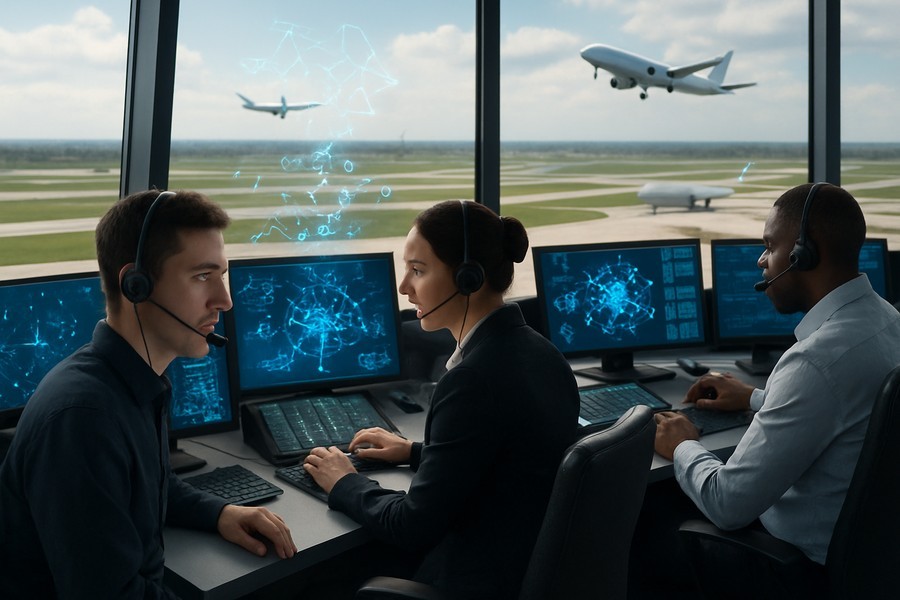
AI in Air Traffic Control: A Tool, Not a Replacement
The nation's air traffic control system is on the brink of a major overhaul, a massive project estimated to cost $12 billion. A key part of this redevelopment plan is the integration of artificial intelligence (AI) in future operations. However, this has sparked concerns among many that this advanced technology might entirely replace human air traffic controllers. The country's Transportation Secretary has dispelled these fears, stating firmly, "that's not gonna happen."
AI As An Assistant, Not A Substitute
The Transportation Secretary made it clear that while AI might be an invaluable tool, it will not take over the humans' role in managing airspace. He expressed his strong conviction that air traffic controllers won't be replaced by AI. When questioned if AI would be given control of the airspace, his emphatic response was a resounding no.
AI, in the Secretary's view, will be a valuable assistant to air traffic controllers. It will help them avoid flight delays by effectively merging airline timetables with the Federal Aviation Administration's system. This sophisticated software, he explained, would be capable of foreseeing potential issues 45 days in advance. It could then suggest minor adjustments, like delaying or advancing certain flights by a few minutes, to avoid these issues and prevent delays.
The 'Big Beautiful Bill' and the Future of AI in Air Traffic Control
Last year, the Big Beautiful Bill passed in Congress, providing the Department of Transportation with $12.5 billion for air traffic control system enhancements. The Department is now actively working on implementing these upgrades across the country's airports. The improvements already accomplished include replacing nearly half of all copper wires, updating around 270 radio sites, installing new ground awareness systems in 54 airports to boost controllers' ability to track ground planes and transitioning 17 towers to digital flight strips, thus eliminating the use of paper strips for flight tracking.
However, the proposed AI software still needs to be funded, and it comes with a hefty price tag of between $6 billion and $10 billion. This call for additional funding comes in the wake of several high-profile incidents linked to apparent mistakes by air traffic controllers, including a fatal collision at a major New York airport last month.
The Transportation Secretary emphasized the importance of human involvement in airspace management, acknowledging that humans, being fallible, can make errors. His solution is to arm air traffic controllers with more tools to support their work, which is where AI comes into play.