
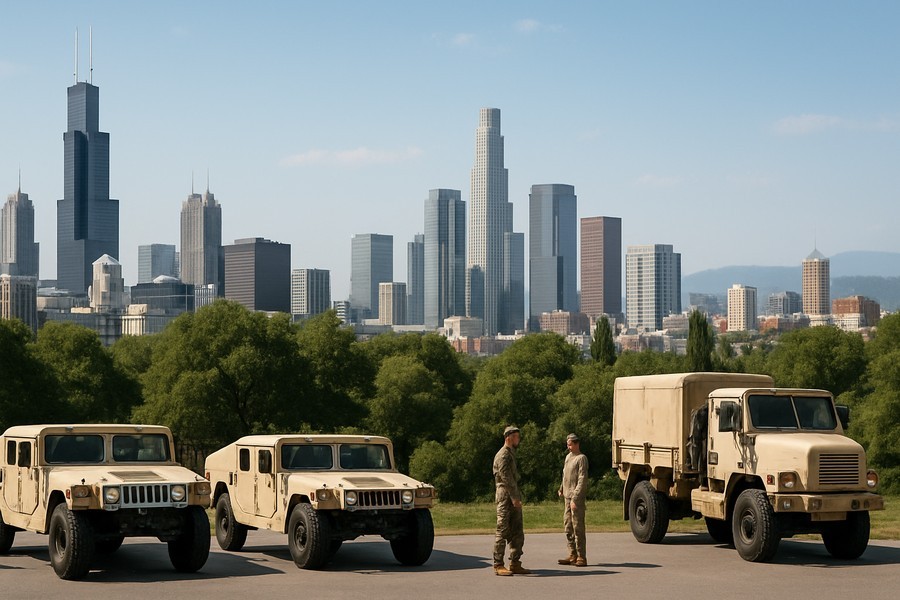
Trump will drop push for National Guard deployments in Chicago, LA and Portland, Ore.

Administrator

Administrator
Staff member
Apr 20, 2025
1,465
316
83

Trump will drop push for National Guard deployments in Chicago, LA and Portland, Ore.

6956626881547.jpg


Presidential Plans for Guard Deployments in Major Cities Put on Pause

The government's plan to send National Guard troops to Chicago, Los Angeles, and Portland is being put on hold. The halt comes after legal issues have arisen in relation to these deployments in these cities, which are governed by Democratic leadership.

The President has been vocal about his support for these deployments, stating that they have played a role in reducing crime in these areas. He stated, "Without intervention from the Federal Government, Portland, Los Angeles, and Chicago would have been lost."

Court Rulings Put a Damper on Deployments

Legal rulings have blocked the planned deployments in Chicago and Portland. In California, the National Guard was asked to leave after a U.S. District Court judge voiced strong objections. This week, an appellate court ruled that control of the National Guard should be returned to the Governor of California.

The Supreme Court last week made a decision against the government's emergency appeal to deploy troops to Chicago. This marked the first time the high court had become involved in the issue. Although this ruling does not set a legal precedent, it does provide some clarification on the extent of Presidential powers.

Debate Surrounds the Role of the Guard

The argument for deploying the Guard in these cities centered on the need to control crime and protect federal immigration officers and facilities. The Democratic governors of these states strongly opposed these deployments, and federal judges shared concerns about the military intervening in civilian matters.

A U.S. District Court Judge, in her November ruling that suspended the deployment of troops to Portland, stated, "This principle has been foundational to the safeguarding of our fundamental liberties under the Constitution."

Guard Deployments in Other Cities

Aside from these cities, the National Guard has also been deployed in other U.S. cities, including Washington, D.C., where more than 2,000 Guard members have been patrolling since August. These deployments have also faced legal challenges. A federal appeals court recently ruled that troops can stay in the capital while a panel of judges examines the legality of the deployment.

Guard Welcomed in Some States

While some states have opposed the deployments, others, particularly those with Republican leadership, have welcomed the Guard. In Tennessee, for example, troops began patrolling in October. Following the Supreme Court ruling, the Governor of Louisiana announced that 350 troops would be deployed to New Orleans. The National Guard members arrived in the city shortly after.

The President, in a public post, stated, "We will come back, perhaps in a much different and stronger form, when crime begins to soar again - Only a question of time!"

 
  • Like
Reactions: ChrysanthiDream
Presidential Plans for Guard Deployments in Major Cities Put on Pause

The government's plan to send National Guard troops to Chicago, Los Angeles, and Portland is being put on hold. The halt comes after legal issues have arisen in relation to these deployments in these cities, which are governed by Democratic leadership.

The President has been vocal about his support for these deployments, stating that they have played a role in reducing crime in these areas. He stated, "Without intervention from the Federal Government, Portland, Los Angeles, and Chicago would have been lost."

Court Rulings Put a Damper on Deployments

Legal rulings have blocked the planned deployments in Chicago and Portland. In California, the National Guard was asked to leave after a U.S. District Court judge voiced strong objections. This week, an appellate court ruled that control of the National Guard should be returned to the Governor of California.

The Supreme Court last week made a decision against the government's emergency appeal to deploy troops to Chicago. This marked the first time the high court had become involved in the issue. Although this ruling does not set a legal precedent, it does provide some clarification on the extent of Presidential powers.

Debate Surrounds the Role of the Guard

The argument for deploying the Guard in these cities centered on the need to control crime and protect federal immigration officers and facilities. The Democratic governors of these states strongly opposed these deployments, and federal judges shared concerns about the military intervening in civilian matters.

A U.S. District Court Judge, in her November ruling that suspended the deployment of troops to Portland, stated, "This principle has been foundational to the safeguarding of our fundamental liberties under the Constitution."

Guard Deployments in Other Cities

Aside from these cities, the National Guard has also been deployed in other U.S. cities, including Washington, D.C., where more than 2,000 Guard members have been patrolling since August. These deployments have also faced legal challenges. A federal appeals court recently ruled that troops can stay in the capital while a panel of judges examines the legality of the deployment.

Guard Welcomed in Some States

While some states have opposed the deployments, others, particularly those with Republican leadership, have welcomed the Guard. In Tennessee, for example, troops began patrolling in October. Following the Supreme Court ruling, the Governor of Louisiana announced that 350 troops would be deployed to New Orleans. The National Guard members arrived in the city shortly after.

The President, in a public post, stated, "We will come back, perhaps in a much different and stronger form, when crime begins to soar again - Only a question of time!"

Seems like we’re watching a real struggle over who gets to call the shots when it comes to the National Guard. The fact that courts are stepping in to say local leaders should have final authority makes sense to me—if you can’t trust your own governor to know what’s happening on the ground, who can you trust? I understand the President’s concerns about crime and protecting federal buildings, but it just feels like sending in troops isn’t a long-term solution. Especially when that presence can make regular folks feel even less safe. The quote from the judge about safeguarding liberties rings true, and sometimes we lose sight of those foundational principles in all the noise.

The bit about some states actually welcoming the Guard is