
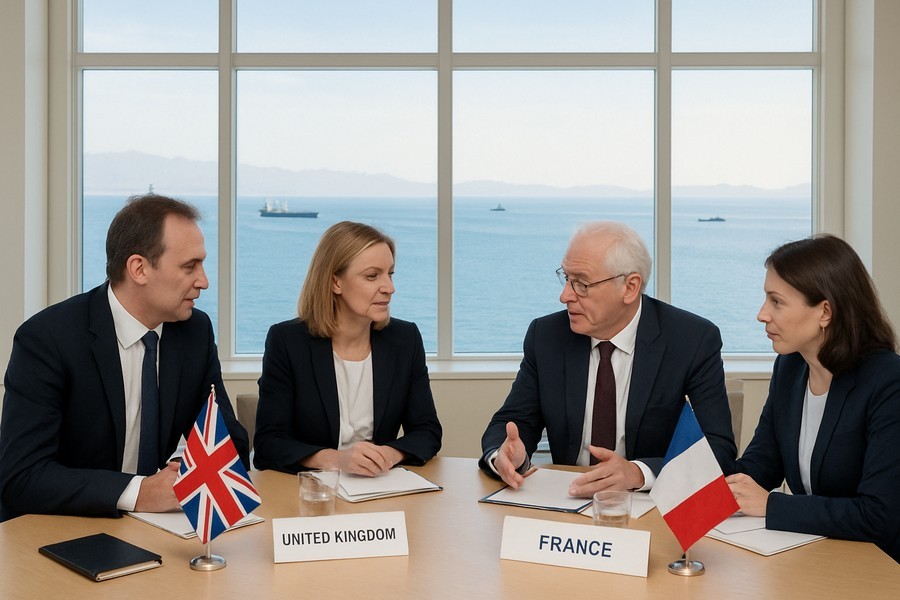
UK and France Strive for Peace Amidst Iran Tensions
The UK has taken a clear stand, stating that it will not back the US in its blockade against Iranian ports. The Prime Minister has insisted that the nation will not be compelled into the conflict with Iran.
This announcement emerged on the same day as the French President confirmed that France and the UK plan to jointly host a conference. The focus of this gathering will be to re-establish free navigation in the important waterway, the Strait of Hormuz.
France's Role in the US Blockade: Unclear, but Peace-Oriented
The French President has not clarified France's position concerning the US blockade. However, he expressed that the upcoming conference aims to foster a "peaceful multinational" and "strictly defensive" mission. This mission is expected to be independent of the conflict parties.
Elaborating on the UK's stance, the Prime Minister informed that the country isn't endorsing the blockade. He added that the UK is investing its diplomatic, political, and other resources to ensure the Strait is fully open. The country also possesses mine-sweeping capabilities, a detail he refrained from discussing further.
Efforts to Maintain Open Waterways
He stated, "What we've been doing over these weeks is rallying countries to keep the strait open, not closed." This statement was a part of the discussion he had with Gulf states the previous week. The intention is clear - to bring nations together to maintain open waterways, rather than shutting them.
This announcement comes in the wake of the US President indicating that other countries would assist the US in implementing its blockade. This move was scheduled to commence, affecting ships entering or exiting Iranian ports.
Unsuccessful Talks and Escalating Conflict
The decision to initiate the blockade follows unsuccessful talks between the US and Iran. The goal of said dialogue was to reach an agreement to end the ongoing conflict in the Middle East. Unfortunately, no such accord was reached.
The US President, addressing reporters, stated that the blockade would take effect and other nations were collaborating to prevent Iran from selling oil. Despite this statement, he did not reveal which countries would be assisting in this endeavor.
Clarification is being sought from various governments in Europe and the Middle East about their intentions to support the US. Until now, both European and Gulf states have shown hesitancy to get involved in the conflict. These nations are apprehensive about aggravating a conflict they perceive to be a 'choice,' rather than a necessity.
In conclusion, the situation remains uncertain with the UK and France seeking a peaceful resolution, while the US continues its blockade against Iran. The world watches as these power dynamics unfold and impact the geopolitical landscape.