
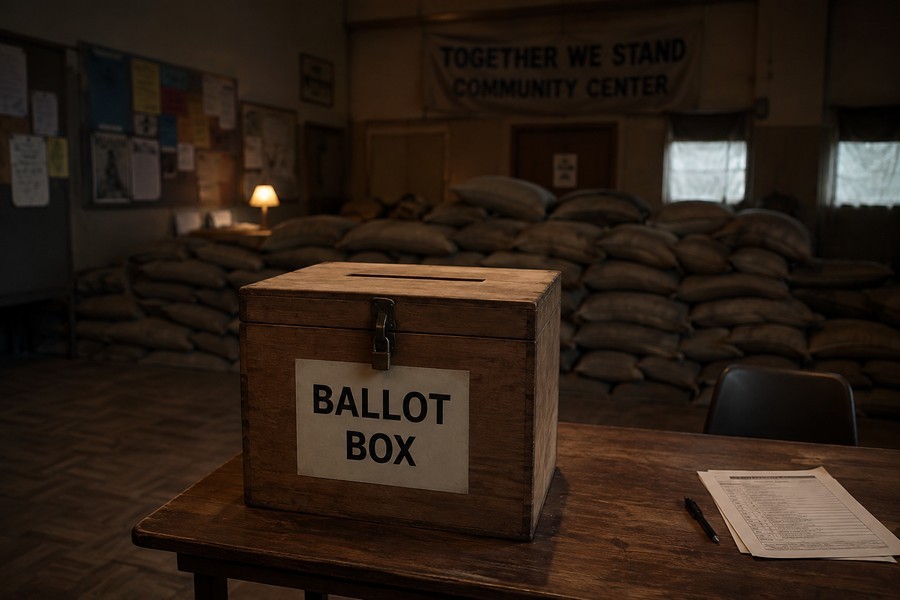
A Call for Democracy: Former Defense Leader Pushes for Elections Despite Ongoing War
A major debate is heating up in a nation currently defending itself from an invasion. The country's former defense minister, Mykhailo Fedorov, has publicly called for national elections to be held. This demand represents the most significant political challenge to President Volodymyr Zelenskyy since the conflict began.
When the invasion first started, the president put martial law into effect. Under these emergency rules, holding any political elections is strictly banned. The goal of the ban was to keep the entire nation focused on survival and defense. However, the former defense minister believes that waiting for the conflict to end before holding a vote is the wrong path forward. He argues that maintaining democratic systems is a key part of the fight.
The Push for Wartime Voting
In a video message shared online, the former defense leader explained his belief that a nation's freedom and its democratic habits must be protected together. He argued that the democratic process should not be put on hold because of the actions of an invading force.
He called on leaders to design a safe, legal, and practical system that would let citizens vote even during a long-term conflict. He explained that the main reason the country is fighting is to protect its identity as a free, democratic European nation. Without elections, he fears that the very freedom they are defending could be damaged.
A Popular Leader Removed from Office
Before he was removed from his government post, the former minister was highly respected for his modern approach to warfare. He was a key designer of the country's defense plan, which relied heavily on technology to balance the playing field against a much larger opponent.
Some of his most notable achievements in office included:
- Emphasizing technology: Shifting the military strategy to focus on unmanned aerial drones and combat robots.
- Striking back: Increasing deep military strikes into enemy territory tenfold.
- Boosting local production: Expanding the country's domestic factories to manufacture more weapons locally.
Despite these successes, the president dismissed him from his role. The decision followed a long-running and serious disagreement between the defense minister and the nation's top military general, Oleksandr Syrskyi. The president decided the feud between the two leaders could not be resolved, leading to the minister's sudden removal.
Public Protests and Support for Change
The decision to fire the defense minister caused immediate backlash among the public. Across the nation, thousands of citizens gathered to protest the decision. For weeks, people voiced their anger over the loss of a leader they trusted to guide the military.
In an interview shortly before making his public call for elections, the former minister spoke about the public demonstrations. He stated that the protests are a clear sign that the population deeply values democratic principles. In his view, the public outcry proves that citizens want a voice in their government and are truly committed to fighting for their personal freedoms.
The Major Obstacles to a Wartime Vote
Organizing a national election during an active war presents massive logistical problems. The former minister openly acknowledged that making a vote happen safely would be extremely difficult.
Several major challenges would need to be addressed:
- Active-duty soldiers: Finding a secure way for troops fighting on the front lines to cast their ballots.
- Front-line residents: Ensuring that citizens living near active combat zones can vote without facing physical danger.
- Displaced citizens: Creating a system to reach the millions of people who have been forced to flee their homes or leave the country entirely.
While these issues are highly complex, the former minister insisted that they can be solved. He stated that just because a task is complicated does not mean it is impossible to achieve.
Looking to the Future
The former defense minister has not yet shared his specific plans if an election is successfully scheduled. He did not say whether he would run for office himself. However, he has previously stated that the only government position he would be willing to take in the future is his old job leading the defense ministry.
This public push for voting has started a serious national conversation about how a country can balance its immediate security needs with its core democratic values during a long crisis.