
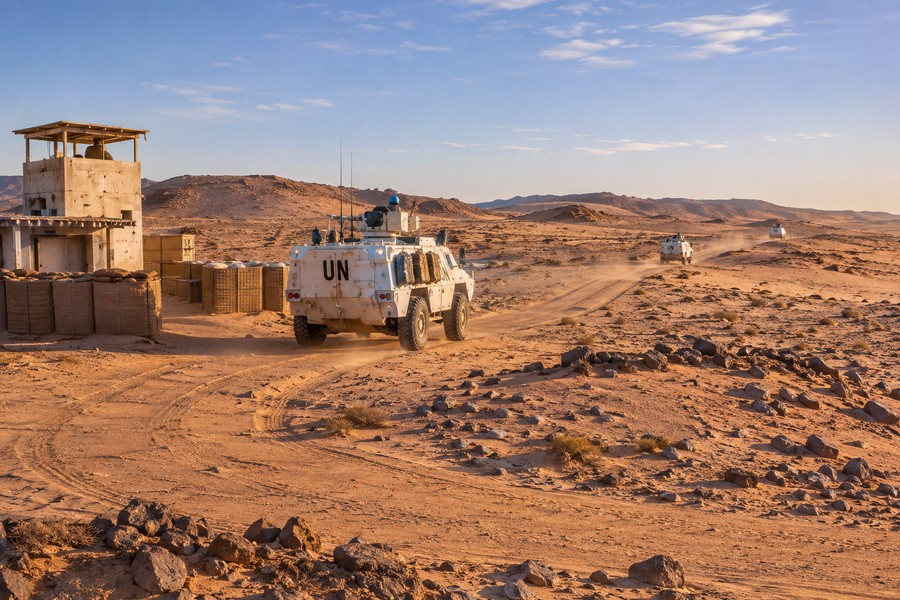
Western Sahara Peacekeeping Mission Ends Amid Rising Tensions
The United Nations has ended its long-running peacekeeping mission in Western Sahara, a disputed area in northwest Africa. Secretary-General Antonio Guterres warned that the change could raise the risk of fighting and urged all sides to avoid actions that might make tensions worse.
The mission had worked to watch over a ceasefire and help prepare a vote on the territory’s future. Its work has now stopped because the Security Council did not agree to extend its authority. The council also rejected a competing proposal, leaving the mission without a new mandate.
A Dispute Over the Territory’s Future
Morocco considers Western Sahara part of its territory. The dispute began after Spain withdrew from the area, a desert region roughly the size of Britain.
The Polisario Front, a movement backed by Algeria that represents the Indigenous Sahrawi people, wants the territory to become an independent country called the Sahrawi Republic. The two sides have not reached an agreement on its future.
The United Nations created the peacekeeping mission to monitor a ceasefire and help set up a referendum. The mission’s name included a reference to that planned vote. Its duties also involved efforts to keep the conflict from growing.
Security Council Proposals Fail
The United States put forward a proposal to extend the mission’s work. The plan supported the idea that people in Western Sahara should have a say in the territory’s future. It also called for removing the word “referendum” from the mission’s name and using Morocco’s plan for autonomy as the only starting point for future talks.
Eleven of the council’s 15 members supported the proposal. France and the United Kingdom, both permanent members, were among those in favor. Russia used its veto to block it, arguing that the plan favored Morocco and that the council should not decide questions of sovereignty in advance.
The council then voted down a separate proposal from Russia. With neither plan approved, the peacekeeping mission’s authority ended.
Reactions to the Decision
Morocco’s royal palace described the mission’s non-renewal as an important step toward taking the Western Sahara issue away from the Security Council’s attention.
Algeria’s Foreign Ministry said it deeply regretted the decision. It accused the United States of showing too much support for Morocco’s position. The Polisario Front also expressed concern about the council’s failure to agree on a path forward.
The United States argued that its proposal could have helped move the long-running conflict forward and said the current situation could not continue unchanged. Russia said its objection was based on the plan’s tilt toward one side and the council’s role in matters involving sovereignty.
What Happens Next
The mission has entered a closing phase. Its equipment and other property are being sent back to the countries that provided troops. Although its peacekeeping work has stopped, Guterres said the United Nations remains ready to support talks and efforts to reach a peaceful settlement.
The end of the mission does not resolve the disagreement over who should control Western Sahara or what political future its people should have. The main positions remain far apart:
- Morocco regards Western Sahara as part of its territory and has proposed autonomy for the region.
- The Polisario Front seeks an independent state for the Sahrawi people.
- The United Nations says it is prepared to keep supporting dialogue, even though the peacekeeping mission has ended.
Guterres urged all parties to show the greatest possible restraint and avoid steps that could increase tension or weaken regional stability. Without the mission in place, the risk of renewed hostilities remains a central concern as efforts to find a peaceful solution continue.