
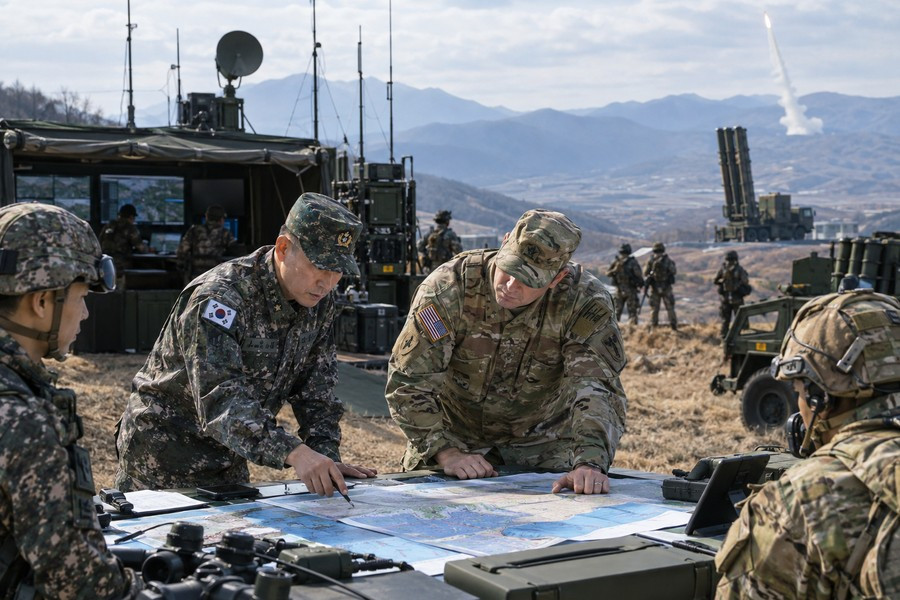
South Korea and the United States Weigh Conditions for Wartime Command Transfer
The United States and South Korea continue to discuss when South Korea should take control of military operations during wartime. American officials say the basic requirements for the transfer have stayed the same, but they also warn that security threats on the Korean Peninsula are changing at a rapid pace.
Threats Are Changing Quickly
A senior American official said both countries must remain ready to prevent and defeat threats that could affect their alliance. The official pointed to the growing danger created by North Korea’s missile tests and nuclear weapons program.
The United States has not said that the standards for the transfer have been replaced. Instead, American officials say the changing military situation must be considered as both nations review their plans.
The main concern is whether South Korea and the United States can respond effectively to all possible threats in the region. These threats include North Korea’s expanding weapons programs and other dangers that could affect the countries’ shared defense plans.
Transfer Depends on Specific Conditions
The wartime command transfer is based on conditions agreed upon by both governments. South Korea would take control only after the required standards are met.
Those standards are part of a joint review process. The United States says it will not decide the result in advance. Both countries are expected to examine their military abilities, command systems, readiness, and capacity to deal with threats before making a final decision.
- The transfer must follow conditions accepted by both countries.
- South Korea must show that it can lead military operations during a serious conflict.
- The two nations must remain prepared to protect their alliance from regional threats.
- No final result has been announced before the review is complete.
This approach has created a difference in emphasis between Seoul and Washington. South Korean leaders want the transfer to happen as soon as possible. American officials continue to stress that the decision must be based on military conditions rather than a fixed schedule.
South Korean President Calls for Early Action
South Korean President Lee Jae Myung has said that wartime operational control should return to South Korea soon. He argued that the country has enough military ability to take on the responsibility and that discussions with the United States are moving in that direction.
Lee’s administration would like the transfer to happen before the end of its term, or possibly sooner. The president’s position has increased attention on the timing of the process and on whether the two governments share the same view of South Korea’s readiness.
South Korean leaders believe the country has developed strong military forces and advanced technology. They also see the return of wartime command as an important step toward greater national responsibility for defense.
American Commander Points to New Challenges
An American military commander serving in South Korea recently said that the conditions surrounding the transfer had changed. The commander referred to North Korea’s latest missile launches and suggested that the new security situation may require updated standards.
That statement caused concern in Seoul. South Korea’s defense ministry warned that the transfer could be delayed indefinitely if the standards continue to change. Officials there said both sides need a clear understanding of what South Korea must accomplish before control can be returned.
The disagreement does not mean that the alliance has ended its cooperation. American and South Korean forces continue to train together and prepare for possible conflict. However, the debate shows how difficult it may be to balance political goals with military concerns.
A Command Structure Built Over Many Years
South Korea originally placed wartime operational control under an American-led international command during the Korean War. Later, control moved to a combined command operated by South Korean and American forces.
South Korea regained control of its forces during peacetime after the military command structure changed. Wartime control, however, remained with the combined command led by the senior American commander in South Korea.
The planned transfer would change that arrangement. South Korea would take the leading role during wartime, while the United States would continue to work with its ally under the defense agreement between the two countries.
What Happens Next
The review process will continue as military leaders from both countries study South Korea’s capabilities and the growing risks in the region. The two governments must also decide how to respond to North Korea’s weapons development while keeping their joint forces ready.
South Korea wants a clear path toward taking wartime control. The United States wants proof that every required condition has been met. The timing of the transfer will depend on whether both governments agree that South Korea is fully prepared for the responsibility.