
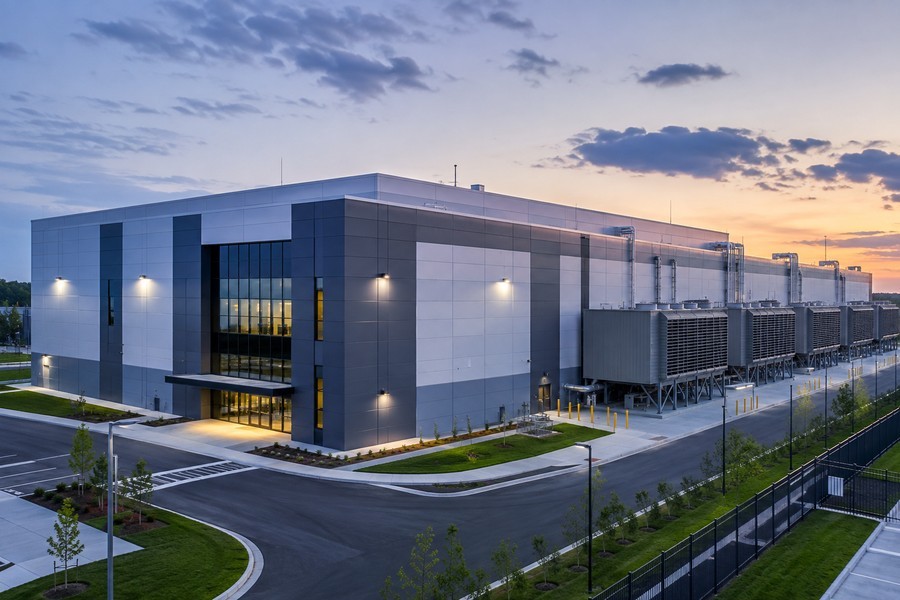
How the Rapid Growth of Data Centers Impacts Our Environment
Every time we stream a video, search the internet, or use smart devices, we rely on data centers. These are massive warehouses filled with rows of powerful computers. Across the country, especially in the Midwest, these facilities are popping up at a rapid pace. While they bring jobs and technology to local communities, they also raise serious questions about how they affect our natural world.
Many people feel anxious about this sudden growth. Environmental health researchers point out that the impact of a data center depends on many things. These include where it is built, how it stays cool, and where it gets its electricity. Because these facilities are being built so quickly, there is not yet enough long-term research on how they affect the health of nearby residents, including their impact on noise, air quality, and drinking water.
Some experts suggest a creative solution: using the very computers inside these data centers to study their own environmental footprint. By using advanced computer modeling, researchers could find new ways to protect human health and develop cleaner energy technologies.
The Mid-American Tech Boom
The growth of these computing facilities is concentrated heavily in a few states. For example, Ohio has more than two hundred planned or active facilities, placing it fifth in the nation. This growth is centered around major metropolitan areas like Columbus, Cincinnati, and Cleveland. Neighboring states are also seeing this trend, with Kentucky hosting about sixty facilities and Indiana home to around one hundred and twenty-five.
These facilities range from small rooms using very little power to massive campuses. One planned project in a rural Ohio county is designed to be incredibly large, far exceeding the size of a typical facility. This project could become one of the largest in the entire country. Billions of dollars are currently being spent on these construction projects, and industry groups say this expansion is only in its early stages. The boom is driven by our constant need for more digital power, from processing credit cards to running artificial intelligence.
Heavy Demands on the Power Grid
Keeping thousands of computers running all day and night requires an immense amount of electricity. Collectively, these facilities use a massive share of the nation's power. Recently, their total energy consumption matched the entire annual electricity usage of a medium-sized state. This represents about four percent of all electricity used nationwide, a number that is expected to more than double in the coming years.
This surge in energy use strains the local power grid. The regional organization that manages electricity across several states reports that these computing facilities are the main reason energy demand is rising. This high demand is also driving up electricity bills for everyday families. To put the energy use in perspective, consider these comparisons:
- A medium-sized facility uses as much electricity as a small town.
- A very large facility can use as much power as a major city.
While the current power supply is still enough to meet peak demand, projections show that within fifteen years, peak demand could far exceed what the current grid can handle. To solve this problem, some planners suggest that facilities should generate their own electricity on-site instead of drawing from the public grid.
Air Quality Concerns
Most of the electricity used by these facilities still comes from power plants that burn fossil fuels. This burning creates air pollution, which is linked to lung diseases like asthma and contributes to global warming. A single average-sized facility is linked to tens of millions of kilograms of greenhouse gases every year.
Whether future facilities will be cleaner depends on where they get their power. While many new green energy projects, like solar farms, are being proposed, only a small fraction of these proposals are actually built. Currently, the local grid still relies on fossil fuels for the vast majority of its power generation.
There are also worries about backup power. These facilities keep large diesel or gas generators on-site to keep the computers running during power outages. These generators are tested regularly, which can cause noise and air pollution. Some cleaner alternatives are starting to emerge, such as:
- Battery backup systems that are quiet and do not release emissions.
- Hydrogen fuel cells to generate clean power.
- Small nuclear power plants, which produce virtually no greenhouse gases, though they raise other questions about waste and safety.
Massive Water Consumption
Computers get very hot when they work. To keep them from overheating, many facilities use vast amounts of water for cooling. This has become one of the biggest local environmental concerns.
A single large facility can use billions of kilograms of water each year. This is roughly equal to the annual water needs of tens of thousands of people. When you add up all the facilities in a single state, their total water footprint is comparable to the water needs of millions of residents.
This heavy water use poses a risk to underground aquifers, which supply drinking water to millions of people. Local water managers warn that we must protect these resources, as there are no easy alternatives if an aquifer is ruined or dried up. Key concerns include:
- How much water the facilities will pull from the ground.
- The impact of releasing warm wastewater back into local rivers, which can harm fish and plants.
- What happens when multiple large facilities are built close to each other in the same watershed.
Newer facilities are trying to use less water by switching to hybrid systems that use cool outside air, or closed-loop systems that recycle the same water over and over. However, there is a catch: systems that use less water often require more electricity. Furthermore, about eighty percent of a facility's total water footprint actually occurs at the power plant that generates its electricity, rather than at the facility itself.
Planning for the Future
Because water and power resources vary by location, there is no single rule that works for every community. Local leaders and planners must study their own water and energy resources before approving new projects. Finding a balance between economic growth and environmental protection is a delicate task. To protect public health, communities need to have a voice in how these facilities are designed and built.