
Wisconsin to Review Data Centers’ Environmental and Economic Effects
Statewide study follows legal agreement
Wisconsin will study how the planned growth of artificial intelligence data centers could affect the state. The review is part of a legal agreement between state environmental regulators, conservation groups, and a company that develops data centers.
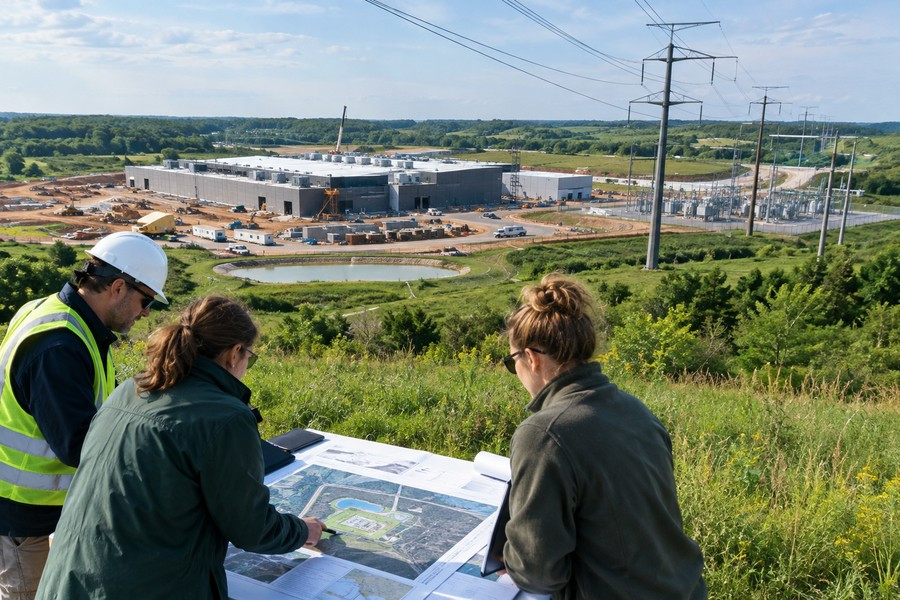
The dispute began after regulators approved permits for a large data center campus in Port Washington without requiring a full environmental impact statement. The campus is valued at $15 billion and is planned to support artificial intelligence services.
Instead of requiring a new impact statement for that project, the agreement calls for a broader review across Wisconsin. The study will examine expected construction of data centers and the infrastructure needed to power them. It will consider direct effects, indirect effects, and the combined impact of many projects.
The review will look at agriculture, air and water quality, climate, energy, the economy, cultural resources, and other areas. It will also examine how data center growth could affect household energy bills.
Permits will stay in place
The statewide study will not stop permits for new data center projects while the review is underway. Permits for the Port Washington campus will remain valid, and the agreement does not require another environmental review of those approvals.
The project’s first phase is expected to use 1.3 gigawatts of electricity. Later phases could raise its total power needs to as much as 3.5 gigawatts. The agreement gives the state a chance to study the effects of the campus’s future phases along with other planned development.
The state agency will lead the study and keep full control over it. It will decide whether future projects meet Wisconsin law. The agency must finish its analysis by January 31, 2028, seek public input, and hold at least one public hearing.
Company will cover study costs
The data center developer has agreed to pay the full cost of the statewide review. The state says the work will provide useful information for future policy decisions without adding costs for Wisconsin taxpayers.
The conservation groups will withdraw their request for a formal hearing to challenge the original permits. The state agency will also provide records the groups had asked to see. Those records include emails about an earlier discussion of whether an environmental impact statement would be needed for the Port Washington project.
A conservation group attorney said the broader review could give Wisconsin a fuller picture of both the environmental and financial effects of artificial intelligence data centers. The attorney also said the public should still be able to learn why regulators did not require an impact statement for the original permits.
Debate over a pause in construction
Some political leaders have called for stronger rules before more data centers are approved. Democratic candidate for governor David Crowley supports pausing new projects while the state completes its study and sets firm requirements. He says he would work with lawmakers to put that pause in place.
Republican candidate Tom Tiffany has also called for new standards. His campaign has said those standards should include ending financial subsidies for data centers and banning agreements that keep information secret. Tiffany has said projects must meet Wisconsin’s environmental rules and have support from the local community to move ahead. His campaign did not address the statewide study in its response.
The settlement itself does not create a construction pause. A future governor could choose to support one, but that is separate from the agreement.
Power demand and public opinion
A state energy assessment found that electricity demand in Wisconsin could rise by more than 40 percent by 2032, with large data centers contributing to the increase. The statewide review is expected to help decision-makers understand how projects could affect energy use and costs.
In a poll of Wisconsin voters, 74 percent of those surveyed said data centers would cost the state more than they would benefit it. The study will give state leaders and communities more information as they weigh those concerns against the economic effects of continued development.