
Can Eating Invasive Species Help Protect Nature?
Some fish and shellfish are causing serious damage in American waters. They spread quickly, have few natural enemies, and compete with native animals for food and space. In response, fishers, chefs, and conservation groups are trying a creative idea: turn invasive species into food.
The hope is simple. If people will pay to catch and eat these animals, more of them may be removed from the environment. But the strategy has limits. A new food market can help conservation only when reducing the invasive population remains the main goal.
Lionfish Move From Reef Threat to Dinner Plate
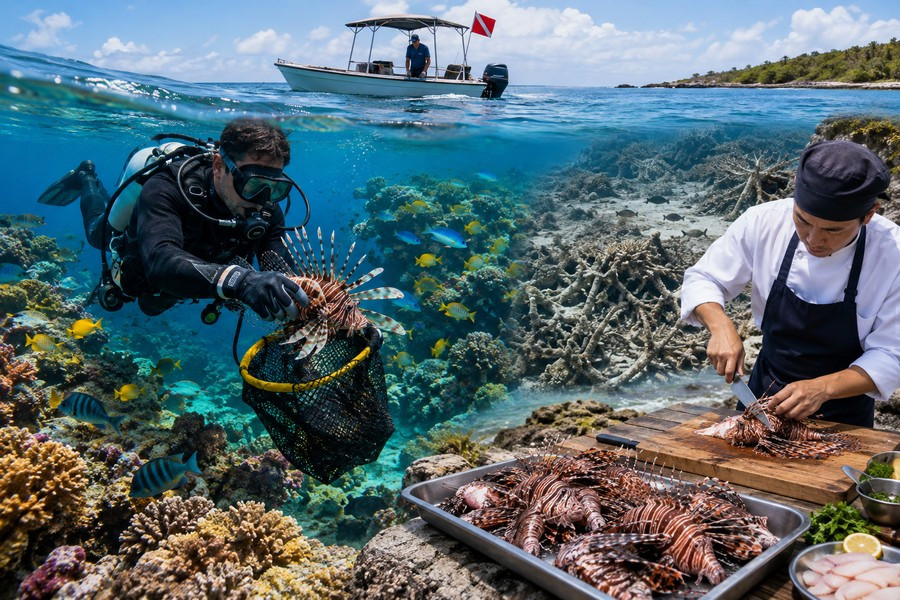
Lionfish are native to tropical waters in the Indo-Pacific. They later spread through the western Atlantic, the Caribbean, and the Gulf of Mexico. The first one was recorded near Miami after likely being released from the aquarium trade.
In their new environment, lionfish face few predators. A single fish can produce more than 2 million eggs each year. Research has found that one lionfish can reduce the recovery of native fish populations on some reefs by almost 80 percent.
At first, selling lionfish for food was difficult. Customers were not used to seeing the colorful, spiny fish on menus or in stores. Prices were low, and sellers had to explain why people should try it.
That changed after a major grocery chain began selling the fish in South Florida. The move helped convince shoppers that lionfish was safe and worthwhile to eat. The price paid to fishers rose from about $2 per pound to roughly $10 per pound almost overnight.
Today, lionfish is available through seafood suppliers and appears on restaurant menus throughout the Florida Keys. Every fish removed from the reef is one less predator hunting native reef animals.
Green Crabs Spread Along Coasts
The European green crab is considered one of the most damaging invasive species in the world. It has spread to every continent except Antarctica. The crab attacks oysters, clams, mussels, lobsters, other crabs, and many other animals.
One green crab can eat more than 40 young soft-shell clams in a single day. It can also damage seagrass beds, which provide shelter for many marine species. A single female may produce as many as 185,000 eggs each year. Young crabs can drift long distances in ocean currents, helping the species move from one invaded area to another.
In some states, green crabs were once classified only as bait. That meant people could trap them but could not legally sell them for human consumption. Changes to state rules later allowed green crabs and other bait-listed species to be harvested and sold as food.
Suppliers in New England now carry green crab for chefs and seafood buyers. Warmer winters may make the problem worse because cold weather once helped limit crab populations. As temperatures rise, that natural control becomes weaker.
Green crabs are also threatening coastal areas in British Columbia. After the species was found on Haida Gwaii, local crews began a large trapping program. Over five years, nearly 2 million crabs were removed, including more than 1.3 million from two major estuaries.
Trapping has been difficult because the invasion is so large. A commercial market could help create more interest in catching the crabs, but selling them will not solve the problem by itself. Better traps and continued public funding may still be needed.
Hawaiian Reefs Face an Overabundance of Ta’ape
Ta’ape, also called bluestripe snapper, was introduced to Oahu to create new fishing opportunities and provide another food source. The fish came from the South Pacific, but it never became a lasting part of the local seafood market.
Over time, ta’ape became extremely common on Hawaiian reefs. Divers describe seeing large groups covering the seafloor. In their native habitats, these fish often live in smaller numbers. Their abundance in Hawaii may put pressure on native fish and reef communities.
Local conservation and food groups are now promoting ta’ape as a seafood choice. The goal is to support fishers while encouraging the removal of an invasive species.
The idea is gaining support in the tourism industry. Hotels serve ta’ape to workers and guests, and one large resort buys about 500 pounds each month. Commercial fishers sold about 42,000 pounds statewide, with an average of 27 fishers taking part. That amount was 47 percent higher than earlier levels.
A single weekend fishing contest removed more than 1,200 pounds of invasive reef fish from Maunalua Bay. Ta’ape made up nearly 90 percent of the catch. Fishers who once received about 65 cents per pound can now earn as much as $6 per pound in some parts of Oahu.
Asian Carp Become a Growing Business
Asian carp were brought to the United States to control algae in wastewater plants and fish farms. Some were also intended for human consumption. The fish escaped into rivers and spread through the Mississippi River basin and its major tributaries.
They now disrupt food webs, compete with native fish, and interfere with commercial and recreational fishing. There are also concerns that they could reach the Great Lakes.
For some entrepreneurs, the fish is an overlooked food rather than waste. One Kentucky processor grew up eating carp and recognized that the species already had a strong market in many Asian countries.
The company began selling carp overseas and later focused more on American customers after shipping problems, fuel costs, and international tariffs made exports harder. The processor uses nearly every part of the fish, making meatballs, patties, dumplings, pet food, fish meal, and fertilizer. Skin and bones are also put to use.
The processing plant can handle up to 40,000 pounds of carp each day. The fish is now sold in Asian grocery stores across the United States.
Markets Must Serve Conservation
Eating invasive species may help remove animals from damaged ecosystems, but a busy market does not automatically mean the environment is improving. The most important question is whether the invasive population is actually shrinking.
That requires regular monitoring of population size and total biomass. More restaurants, higher sales, and larger harvests may show that a business is growing, but they do not prove that native ecosystems are recovering.
There is also a risk that a profitable fishery could give people a reason to keep an invasive species available. For that reason, commercial demand should support control efforts rather than become the main purpose.
In Kentucky, incentives for removing carp from two large lakes have increased after evidence showed that fishing efforts were lowering local populations. About 30 million pounds of invasive carp are removed from Midwestern waters each year.
Prevention remains the best protection. Once an aquatic invasion is established, however, carefully managed fishing and food markets may offer another useful tool. The goal is not simply to put an ecological problem on a plate. The goal is to make sure that eating it helps reduce the damage.