
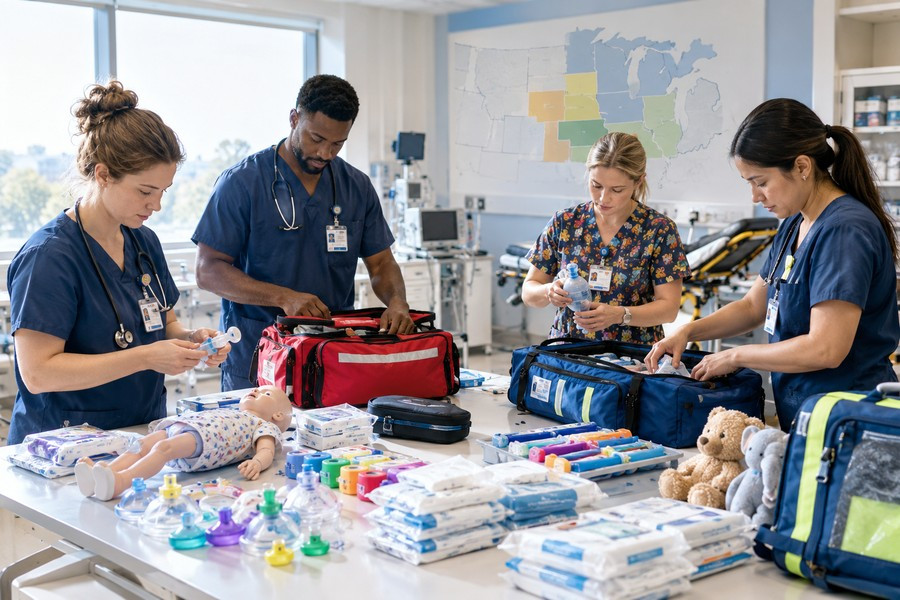
Children’s Hospital Receives Federal Support to Improve Disaster Care Across Six Midwest States
A leading children’s hospital in Cleveland has received $1.2 million in federal funding to help protect children during emergencies and disasters across six Midwest states.
The hospital leads Region V for Kids, a regional program focused on pediatric disaster care. The new award allows the program to continue its work as one of only four Pediatric Disaster Care Centers of Excellence in the country. The funding covers one year and could grow to $6 million over five years.
A Regional Plan Built Around Children
Region V for Kids serves nearly 12 million children in Illinois, Indiana, Michigan, Minnesota, Ohio and Wisconsin. The program was created to address a major weakness in emergency planning: Many disaster plans are designed mainly for adults, even though children make up almost one-quarter of the nation’s population.
Children need special care during disasters because their medical, emotional and developmental needs are different from those of adults. Infants, young children and teenagers may need different medicines, equipment, treatment spaces and support services during an emergency.
The program helps hospitals and emergency teams prepare for these needs before a disaster happens. It also supports care during an emergency and helps communities recover afterward.
Training, Planning and Emergency Support
Region V for Kids works with hospitals, emergency medical teams, public health agencies, emergency managers, caregivers and government partners. Its efforts reach local, state, regional and tribal communities.
The program’s work covers every part of disaster planning:
- Risk reduction: Helping communities lower the possible effects of disasters.
- Preparedness: Training health care workers and building emergency plans for children.
- Response: Coordinating medical care and support during a crisis.
- Recovery: Helping children, families and health systems return to normal after an emergency.
Disasters can take many forms, including severe weather, disease outbreaks, large accidents, infrastructure failures and other threats. A coordinated plan helps hospitals respond more quickly and prevents families from facing gaps in care.
Large Health Care Network
Region V for Kids includes nine partner hospitals with a combined total of 3,115 pediatric beds. These hospitals handle about 630,000 emergency visits each year.
The network also includes two collaborating hospitals, along with 49 health care coalitions, emergency medical service agencies, public health departments and emergency management offices. State health agencies, state emergency management departments, pediatric emergency care partners and a national children’s hospital association are also part of the larger group.
This broad network allows hospitals and public agencies to share information, coordinate plans and make better use of medical resources during a regional crisis.
Preparing for the Full Disaster Cycle
Medical leaders involved in the program stress that disasters are an ongoing risk. Hospitals, government agencies, private organizations and health care systems must work together before an emergency occurs.
That cooperation can help communities identify vulnerable children, prepare staff, organize transportation, protect medical supplies and create safe spaces for young patients. It can also help families receive clear information and continued care when normal services are disrupted.
The Cleveland children’s hospital is also leading a new national pediatric prevention program. The program is designed to strengthen the country’s ability to protect children before, during and after disasters. It will serve as a national resource for preparedness, prevention, emergency response, recovery and long-term resilience.
Sharing Knowledge Across the Country
Region V for Kids is part of a nationwide group of federally supported pediatric disaster centers. The other regional centers serve the western United States, the Gulf region and the Atlantic region.
These centers share training, tools, experience and lessons learned. Their combined work is intended to improve emergency planning for children across the country.
By continuing this regional and national cooperation, the program aims to make sure children receive the right medical care, emotional support and protection during every stage of a disaster.