
Recent Discoveries and New Challenges in the Night Sky
Our understanding of the universe is changing rapidly. From unexpected collisions in our solar system to distant planets that might support life, scientists are uncovering new secrets every day. At the same time, changes on our own planet are affecting how we study the stars. Here is a look at some of the most interesting recent events in space science and nature.
An Unexpected Crash on the Moon
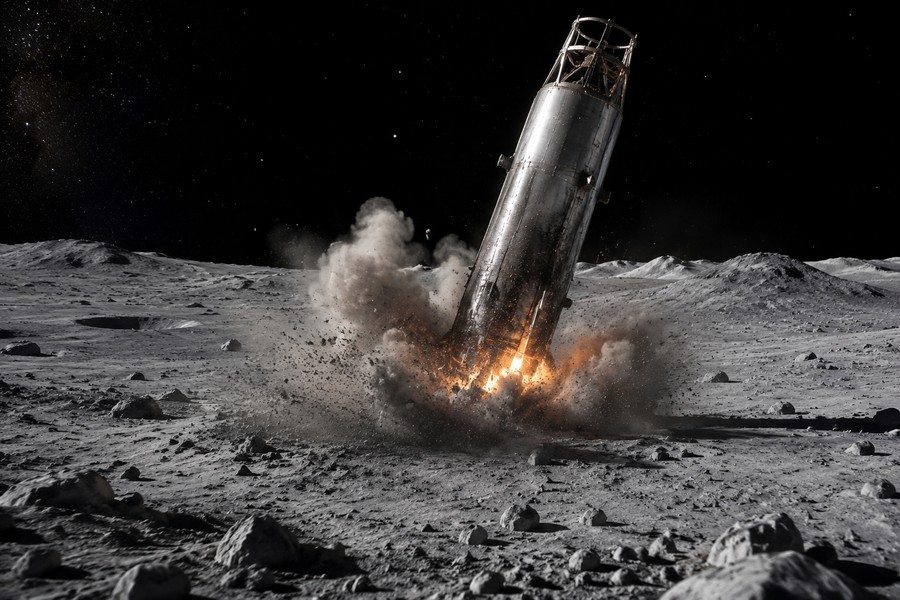
A discarded rocket booster from a private space company is currently on a collision course with the Moon. Scientists who track space debris realized that the old rocket stage will slam into the lunar surface. While this was not part of the original mission plan, it presents a unique opportunity for science.
The crash is expected to kick up a massive cloud of dust and rocky debris high above the Moon's surface. Because of the size of the impact, experts believe the resulting plume of dust might be large enough to be seen from Earth. People with high-quality backyard telescopes should be able to spot the cloud as it rises, and professional observers will be watching closely to see what materials are stirred up from beneath the lunar soil.
A Close Encounter with a Near-Earth Asteroid
A robotic probe launched by an Asian space agency has successfully caught up with a small asteroid that orbits close to Earth. This space rock is considered a "quasi-moon" because its path around the Sun keeps it very close to our planet. The space probe has already sent back the very first close-up images of this rocky neighbor.
The mission is far from over. The next steps for the robotic spacecraft include:
- Safely landing on the bumpy surface of the asteroid
- Collecting physical samples of dust and rock
- Launching back into space to return those samples to Earth for laboratory study
Wildfires Threaten Critical Space Communication Site
On Earth, extreme weather and natural disasters are posing new threats to space exploration. A major deep space communication facility located in southern Europe was recently threatened by raging wildfires. The site houses massive antenna dishes that the American space program uses to send commands to far-off robotic explorers and receive data from deep space.
Flames swept directly through the complex, forcing workers to evacuate. Because the region is still dealing with an active wildfire emergency, teams have not yet been able to safely return to the site to inspect the equipment and find out how much damage has been done to these vital communication tools.
First Moon Found Outside Our Solar System
For decades, astronomers have been finding planets orbiting other stars, but they had never successfully spotted a moon orbiting one of those distant planets. That has finally changed. Researchers have detected the first-ever exomoon in a solar system located about 73 light-years away from Earth.
This discovery is exciting but also puzzling. The object is so large and unusual that it is blurring the lines between what scientists define as a star, a planet, or a moon. This find is forcing astronomers to rethink how solar systems form and grow.
A Promising New Planet in the Habitable Zone
The search for a second Earth has taken a major step forward. Astronomers have found a rocky planet orbiting a distant star in its habitable zone. This zone is the area around a star where temperatures are moderate enough for liquid water to exist on a planet's surface.
Even more exciting is that this newly discovered world appears to have its own atmosphere. Having both a rocky surface and an atmosphere makes this planet one of the most promising targets yet for scientists looking for signs of life beyond our solar system.
Unlocking the Secrets of Growing Black Holes
Black holes are famous for their ability to swallow up gas, dust, and even stars. However, they also release powerful jets of energy that blow away the very gas clouds they need to feed on. This created a mystery: if black holes push away their food, how do they keep growing so large?
New research is starting to explain this puzzle. Scientists are finding that while the energy jets push some gas far away, complex gravity patterns eventually pull other material back in, allowing the black holes to maintain a steady supply of cosmic fuel over billions of years.
Extreme Heat Creates "Fire Clouds" in Europe
Unprecedented heatwaves in Europe have led to historic wildfires in France. The fires burned with such intense heat that they actually changed the local weather. For the first time in the nation's recorded history, scientists observed the formation of fire clouds.
These rare clouds form when intense heat and moisture from giant fires rise rapidly into the atmosphere. They can produce lightning, strong winds, and even more fires, creating a dangerous cycle that makes the blazes on the ground much harder to control.
Mysterious Chemicals on Pluto and Titan
Scientists studying the cold, outer regions of our solar system have run into a chemical mystery. They detected an unknown compound on both the dwarf planet Pluto and on Saturn's frozen moon, Titan.
This substance absorbs light in a way that does not match any known chemical in scientific databases. Researchers are now working to identify this mystery compound, which could help explain the unique chemistry of these icy worlds.
The Hidden Danger of Super Solar Storms
Our Sun constantly releases a stream of charged particles known as solar wind. Scientists used to believe there was a natural limit to how strong these solar storms could get by the time they reached Earth. However, new studies suggest that there may be no upper limit to their intensity.
An extremely powerful solar storm could be far more damaging than previously thought. Such an event has the potential to knock out power grids, damage satellites in orbit, and disrupt communication systems all over the globe.
Sweet Discoveries in Deep Space
In a sweet surprise, astronomers have detected a type of sugar molecule floating in deep space for the first time. The molecule, a simple sugar called erythrulose, was found thousands of light-years away from Earth.
Finding sugar in space shows that the complex organic molecules needed for life can form in the harsh environment of deep space, long before planets are even created.
New Mirror Satellites Spark Controversy
A new type of technology is causing a debate between business innovators and astronomers. Federal communications regulators in the United States have approved a plan for a private company to launch a satellite equipped with giant mirrors.
The satellite is designed to reflect sunlight back down to Earth, illuminating specific areas of the ground during the night. While this could help light up dark areas for work or safety, international astronomy groups are highly concerned. They warn that reflecting bright light into the night sky poses a major threat to optical astronomy, making it much harder for telescopes to view distant stars and planets.