
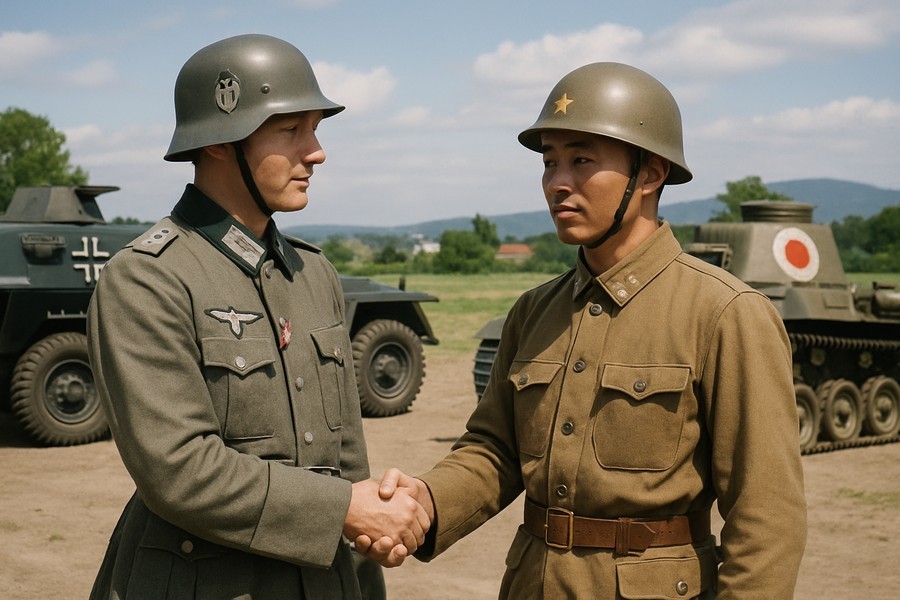
A Fresh Start: Germany and Japan Unite for Enhanced Military Collaboration
Germany has expressed its intention of forging a stronger defense bond with Japan. The proposed plan involves creating a new agreement that would simplify procedures for soldiers from both countries to operate on each other's territory.
Germany's Defense Minister put forth the idea, highlighting how such a deal would ensure more fluid movement of soldiers across borders and significantly cut down on red tape. This type of accord has been traditionally used to make it easier for allied nations to station troops on each other’s land for purposes like training, exercises, or operations by eliminating legal and administrative complexities.
Japan, with its already established similar agreements with nations such as the United Kingdom and Australia, has been actively strengthening its security alliances in the face of escalating regional disputes.
Progressing Past Temporary Engagements
The new proposal signifies a progression from Germany's recent interactions with the Indo-Pacific region. Instead of focusing solely on short-term deployments and joint exercises, Germany appears to be gravitating towards a more organized military cooperation with its regional allies.
This move is seen as a part of a larger reaction to escalating global instability. The Defense Minister underscored the importance of this partnership by referring to the current state of affairs in Iran and the Middle East, emphasizing Japan's heavy dependence on energy imports via the Strait of Hormuz. He asserted the importance of ensuring the security of sea routes.
Shared Goals and Commitments
Germany and Japan have a mutual interest in safeguarding global trade routes. The minister highlighted both countries' enduring commitment to maintaining a rules-based international order. Together, they stand firm in their belief that the rule of law must take precedence.
Both nations are also facing mounting pressure from autocratic powers. From Russia's ongoing aggression in Ukraine to the tensions in East Asia due to China and North Korea, they are increasingly seeing their security issues as interlinked. These shared concerns are being transformed into stronger bilateral defense cooperation.
A Broader Strategic Shift
The proposal also signifies a wider strategic shift in both Berlin and Tokyo. As they navigate the complex and multifaceted challenges posed by rising authoritarian powers, they are turning towards a more collaborative approach to security. This move towards interconnected defense strategies is reflective of the shifting global landscape and the pressing need for nations to band together to ensure collective security.
While the proposal is still in its early stages, it marks a pivotal step in the ongoing evolution of Germany's and Japan's defense strategies. As the world continues to face a myriad of security challenges, such cooperative efforts between nations are increasingly vital for maintaining global peace and stability.