
Military Testosterone Testing Raises Medical and Mission Concerns
A New Policy Draws Questions
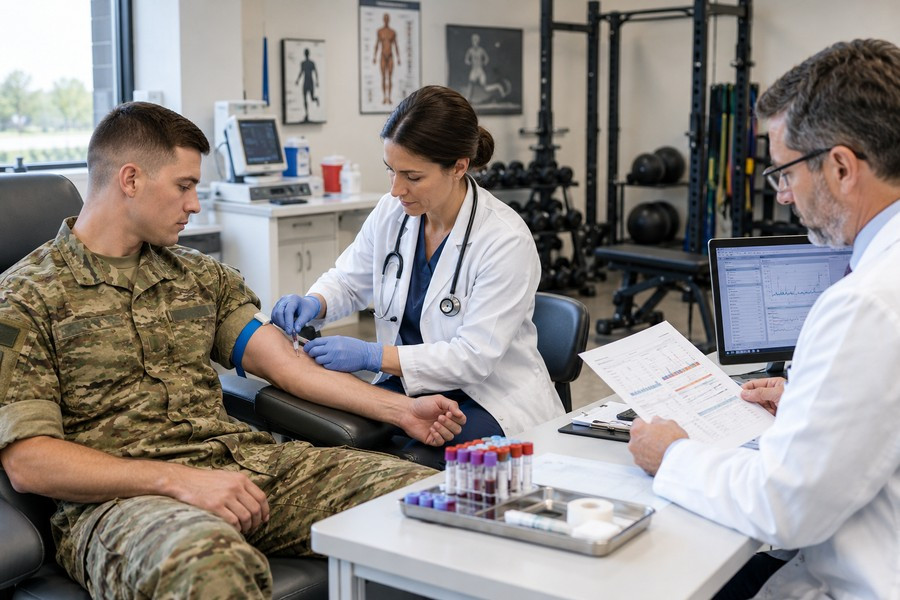
A military plan to test testosterone levels is raising concerns among medical experts and service members. The policy is meant to find troops with low testosterone, a condition that can cause serious health problems. But critics worry that broad testing could lead to treatment for people who do not need it.
For men with a true hormone deficiency, testosterone treatment may reduce tiredness and help build muscle. However, men whose levels are normal for their age may face serious risks from taking extra testosterone. These risks include blood clots and infertility.
One medical warning given to a healthy 35-year-old service member was direct: taking testosterone could make it impossible to have children. The advice was not to begin treatment if the person was passing fitness tests and hoped to start a family.
Treatment Can Be Difficult in Military Life
Testosterone replacement therapy often requires regular medical care. A service member with more than two decades in the military has used the treatment for several years. The routine includes monthly appointments, blood tests several times a year and weekly injections.
That schedule can be hard to follow during military operations. The medicine must travel with troops wherever they are sent, including countries where testosterone is treated as a controlled drug.
Last-minute travel can create a difficult choice. A service member may have to carry the medication across an international border or leave it behind. Skipping the treatment can cause hormone levels to fall for weeks.
Conditions in the field create another problem. Troops may go for long periods without access to showers or clean medical spaces. Injecting medication through dirty skin can increase health concerns, while skipping doses may affect how a person feels and performs.
“In the field is where I need to perform the most,” one service member said.
Questions About Long-Term Costs
Testosterone treatment is often a lifelong commitment. A service member who starts therapy at age 30 could still need the medication for decades after leaving active duty.
That raises questions about future medical coverage. A service member asked whether the government would continue paying for required injections over such a long period. The concern is especially important because treatment may continue after a person becomes a veteran.
Another service member, who has spent nearly two decades in uniform, said testosterone therapy can provide real help for people with a confirmed medical deficiency. But the treatment should not become a shortcut or a way to remove troops from service because of a low test result.
The service member said decisions should follow accepted medical standards and should be based on a full evaluation of each person.
Low Levels Do Not Always Affect Duty
Military guidance says a diagnosis of low testosterone does not automatically prevent a service member from working or deploying. Still, some jobs may be affected. These include aviation, diving, submarine duty and positions connected to nuclear operations.
Those career fields already have some of the military’s strictest health rules. New diagnoses and medications often require extra reviews before a service member can continue in the role.
That could create major career problems for troops whose test results show low hormone levels but who are otherwise healthy and able to meet physical demands.
Doctors Warn Against Treating Test Results Alone
A retired Army general and physician who spent many years on active duty said the policy may violate a basic medical principle. Doctors should treat the patient, not simply react to a laboratory number.
A low testosterone reading does not always mean a person needs medication. Test results can be affected by health conditions, stress, sleep, exercise and other factors. A proper diagnosis usually requires more than one test and a review of symptoms.
The retired physician also questioned who would be allowed to see the results. He raised concerns about whether the information would remain private or whether commanders could gain access to a service member’s medical data.
The policy materials do not clearly explain how that information would be protected or when it could be shared.
Training and Implementation Problems
Putting the plan into practice would require medical workers across the military to receive training. Physician assistants, medical officers and flight surgeons would need to understand what low testosterone means, when treatment is appropriate and how the diagnosis could affect a person’s job.
The retired physician said the system would be difficult to carry out properly. Medical staff would need clear rules, enough time and strong privacy protections. Without those safeguards, the program could produce confusion and unfair decisions.
Critics Say Resources Should Go Elsewhere
Some medical experts believe the testing program could cost more than it provides in value. The military would have to pay for tests, follow-up visits, blood work, medication, training and long-term care.
Critics also warn that unnecessary treatment could create medical complications, disrupt careers and increase pressure on service members who have low test results but no meaningful symptoms.
The central question is whether the military should focus on wide testing or on careful treatment for people with clear medical needs. Critics say time and money would be better spent on programs that improve readiness in proven ways and directly support the health and performance of troops.