
Fresh Magma Is Rebuilding One of Earth’s Largest Volcanoes
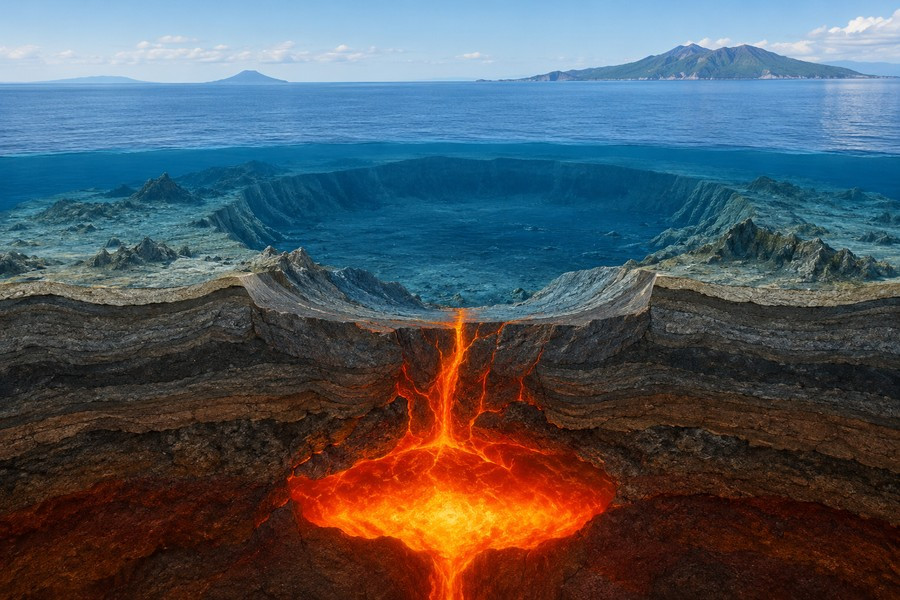
Deep beneath the waters near Japan, a huge underground store of molten rock is being filled with new magma. The discovery gives scientists a rare view of how a supervolcano can rebuild its magma supply after a massive eruption.
The finding may also help researchers understand other giant volcanic systems, including Yellowstone in the United States and Toba in Indonesia. Learning how these volcanoes gather magma could make it easier to identify warning signs linked to future eruptions.
How Supervolcanoes Create Giant Calderas
Some volcanic eruptions are powerful enough to change entire landscapes. They can release enormous amounts of magma, enough to bury New York City’s Central Park under a layer of rock several miles thick.
When a large underground magma chamber empties, the land above it may collapse. This creates a wide, shallow crater called a caldera. Some of the largest calderas on Earth were formed this way.
Well-known examples include Yellowstone, Toba, and Japan’s Kikai caldera. Much of Kikai is hidden beneath the ocean. Its massive eruption was the largest known volcanic event of the current geological period.
Scientists know that caldera volcanoes can erupt more than once. However, they still have many questions about how these systems collect the huge volumes of magma needed for another major eruption.
That gap in knowledge makes it difficult to understand the long-term behavior of supervolcanoes or judge when a large eruption might become possible.
The Ocean Makes Kikai Easier to Study
Kikai’s location beneath the sea creates challenges, but it also gives researchers a useful advantage. The seafloor around the volcano can be surveyed across a broad area, allowing scientists to study the entire volcanic structure.
To look below Kikai, researchers used large underwater air guns to send seismic waves through the Earth’s crust. Devices placed on the ocean floor recorded the waves as they moved through the rock below.
Seismic waves travel in different ways through solid rock, partly melted rock, and areas containing large amounts of magma. By studying changes in the waves, researchers can map underground structures that cannot be seen directly.
The survey revealed a very large area beneath the site of Kikai’s major eruption. The zone appears to contain a high amount of magma, and its shape and location match the underground storage system connected to the earlier event.
This suggests that the same enormous magma reservoir still exists beneath the caldera.
New Magma Has Entered the Reservoir
The most important part of the discovery is that the magma under Kikai does not appear to be only leftover material from the ancient eruption.
A new lava dome has formed near the center of the caldera. A lava dome develops when thick lava piles up around a volcanic opening instead of spreading far across the ground.
Tests of the dome’s volcanic material found that it has a different chemical makeup from the material released during Kikai’s earlier giant eruption.
That difference points to a major conclusion: fresh magma has entered the old underground reservoir from deeper inside Earth. The magma may have risen from the lower crust or the mantle and slowly mixed into the existing volcanic system.
The seismic data and chemical evidence support the same picture. After the giant eruption emptied much of the magma chamber, new molten rock gradually began filling it again.
Recharging Does Not Mean an Eruption Is Near
The presence of new magma does not mean Kikai is about to produce another catastrophic eruption. The rebuilding process can take a very long time, and the discovery does not provide a timetable for future volcanic activity.
Instead, it shows how a supervolcano may recover after a major eruption. New magma can enter an older underground chamber and slowly restore the system’s supply.
Understanding this process is important because the size, movement, and chemistry of magma can affect how a volcano behaves. More information could help scientists recognize changes that matter during the long life cycle of a giant caldera.
Possible Clues for Yellowstone and Toba
The process found beneath Kikai may also occur beneath other large calderas. Yellowstone and Toba both have broad underground magma systems located relatively close to Earth’s surface.
A model based on repeated magma injections could explain how these reservoirs remain active long after a major eruption. Fresh magma may slowly rise from deeper layers, collect beneath the caldera, and change the pressure and chemistry of the system.
This does not mean Kikai, Yellowstone, or Toba is close to another supereruption. It means that the same basic process may help explain how such volcanoes remain capable of activity over very long periods.
Better Monitoring in the Future
Researchers plan to improve the seismic methods used at Kikai. More detailed surveys could show how magma moves, where it collects, and how the underground reservoir changes over time.
Future monitoring may focus on:
- The size and shape of the magma reservoir
- New movements of molten rock below the caldera
- Changes in pressure beneath the volcano
- Chemical differences in newer volcanic material
- Signals that could reveal changes in the system
By studying how fresh magma rebuilds a giant volcanic reservoir, scientists are gaining a clearer understanding of the forces that can eventually lead to enormous eruptions. Kikai offers an important natural example of a supervolcano slowly restoring its underground supply.