
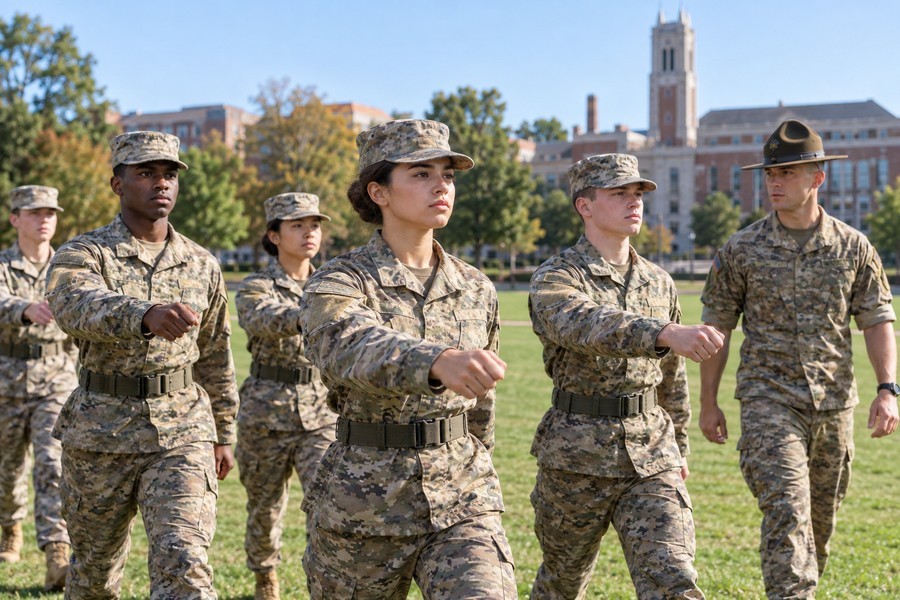
Record ROTC Enrollment Brings More Future Officers to Tennessee
The University of Tennessee, Knoxville, has welcomed record numbers of new students into its Army and Air Force Reserve Officers’ Training Corps programs. This fall, 80 first-year students joined Army ROTC and 82 joined Air Force ROTC. Together, the programs have more than 400 cadets preparing for military service and leadership.
The increase comes as the Army, Air Force and Space Force exceed their recruiting goals. At the university, cadets balance military training with classes, campus activities and other parts of college life.
Personal Outreach Helps Army ROTC Grow
The Army ROTC program, called the Rocky Top Battalion, has 240 cadets. It is the largest ROTC program in the country outside of senior military colleges and service academies. It is also the nation’s second-oldest ROTC program.
Leaders say a personal approach has helped bring in new students. Recruiting staff and cadets call applicants and their families to learn about each student’s interests and background. When students visit campus, the team can connect them with cadets who have similar experiences or goals.
The program recently brought in 53 new cadets with national scholarships, one of the largest such groups in the country. These students include athletes, strong scholars and young people interested in serving. Among scholarship cadets, 93% graduate and become commissioned officers.
The Army ROTC graduating class expected to receive commissions in the spring of 2026 has 51 cadets, the largest group in the program’s history. Sixteen earned the title of Distinguished Military Graduate, placing them among the top 20% of cadets nationwide.
Leadership Beyond Military Training
Zack Duncan, a senior from Signal Mountain, Tennessee, once hoped to attend a military academy. A medical decision first kept him from doing so. He enrolled in Army ROTC at Tennessee with encouragement from his parents, who are university graduates, and a program recruiter.
After he later received a medical waiver and an offer to attend the Naval Academy, Duncan chose to remain at Tennessee. He said he had found a community and a sense of purpose in the Rocky Top Battalion. He also valued being able to train as a military leader while taking part in the wider college community.
Duncan studies physics and astronomy, with additional studies in military science and geography. He serves as the Army ROTC cadet battalion commander and takes part in several campus groups. After college, he hopes to serve overseas with the Army’s infantry. He may later earn a law degree and consider a career in politics.
He credits ROTC with giving him support and helping him handle difficult experiences. He said those challenges helped him become more thoughtful when making decisions.
Air Force ROTC Prepares Cadets for New Fields
About 175 students are part of the university’s Air Force ROTC program, known as Detachment 800 or the Tri-Star Wing. Its commander, Kelly Womble, is a lieutenant colonel in the Air Force and a university graduate. She became the program’s first woman commander.
Womble studied communication at Tennessee and later returned to lead the program where she had once trained. She said the detachment had about 60 cadets when she was a senior. She sees the recent growth as part of a wider interest in military careers and leadership development.
The detachment ranks among the top 17% of ROTC programs nationwide and has been named the state’s ROTC Detachment of the Year. Its training includes paths to specialized Space Force careers, such as cyber defense, satellite operations and space-based intelligence. Cadets also take part in community outreach.
Womble and Army ROTC commander Michael Wellock both returned to Tennessee after becoming military leaders. They say they are proud to help prepare cadets to face difficult challenges. The university’s buildings may have changed since their student days, but they say the campus spirit and pride in the ROTC programs remain strong.
A Family Tradition of Service
Avery Gates-Sell, a senior from Gettysburg, Pennsylvania, grew up hearing how military service shaped her grandfather’s life. She wanted to join Air Force ROTC and felt welcome when she visited the university’s program. She studies geology and environmental studies and now serves as cadet wing commander.
Gates-Sell said adapting to the program took effort. At first, she questioned whether she could meet its demands. Support from fellow cadets helped her keep going. She said ROTC asks students to show deep commitment, while also challenging and encouraging them to grow.
After graduating in 2027, she plans to begin intelligence training at an Air Force base in San Angelo, Texas. She said ROTC has helped her build discipline and become a stronger leader, student and worker.
Tuition and Campus Support
Scholarships from Army and Air Force ROTC can help eligible students pay for college as they prepare for military careers. The university also allows ROTC cadets, veterans, active-duty service members, reservists and members of the state National Guard to pay in-state tuition, no matter where they live.
Students at Pellissippi State Community College can also take part in Tennessee’s ROTC programs if they attend full time and plan to transfer to the university to finish their degrees.
The university has earned a Gold ranking as a Military Friendly School, recognizing its support for student veterans and others connected to the military.