
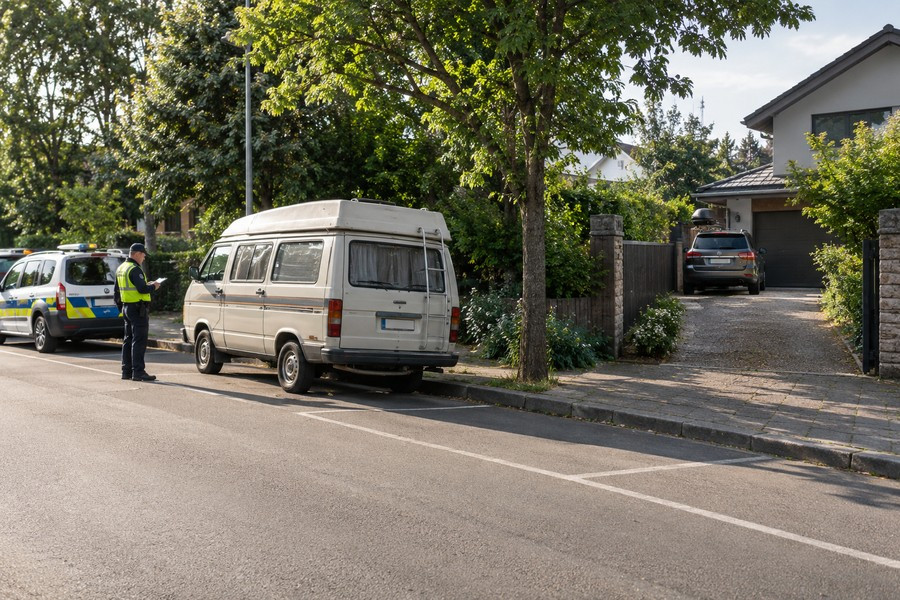
Rules for Vehicles Used as Homes
Local governments may be able to restrict or remove vehicles that people use as homes. The rules depend on where the vehicle is parked. Public property and private property are treated differently, and each situation can involve legal and practical limits.
Vehicles on Public Property
State law and local rules give cities, towns, and counties power to regulate parking on public streets, alleys, and parking lots. They can set limits on where and how long vehicles may park. They can also tow vehicles that break those rules.
Some local governments ban overnight parking or camping in vehicles on public land. Others allow overnight or longer parking only with a permit. General time and location limits may also make it difficult for someone to live in a vehicle parked on public property.
When a government tows a vehicle from a public place, it must follow required steps for notice, hearings, and giving the owner a chance to reclaim it. Local towing rules must include these protections before they are enforced.
Does Living in the Vehicle Change the Rules?
Using a vehicle as a home does not, by itself, prevent a local government from enforcing parking rules on public property. A state court upheld local limits on how long recreational vehicles, trailers, and similar vehicles could stay in public parking areas. A person who lived in a trailer argued that the rules violated a state right to travel, which he said included a right to live indefinitely in a vehicle on city land. The court rejected that claim. Federal courts also rejected his separate arguments about free association and protection from cruel and unusual punishment.
However, towing a vehicle used as a home can create special costs and legal limits. One court decision found that an impounded vehicle serving as its owner’s main home may qualify for homestead protection. If the vehicle’s value is below the amount protected by state law, the government may not be able to keep it until towing and impound fees are paid or sell it to collect those fees.
This protection does not completely prevent towing. It can, however, make it harder for a local government to recover its costs after removing a vehicle from public property.
Vehicles on Private Property
Public parking rules usually do not govern vehicles parked on private land. Instead, local governments may act when a vehicle meets the legal definition of a nuisance, such as a junk vehicle or a health or safety problem.
State law allows local governments to create rules for removing junk vehicles and vehicle parts from private property. To qualify, a vehicle must meet certain standards related to its age, condition, and value. Local removal rules must provide notice and a chance for a hearing.
There is also an important limit: these junk-vehicle rules cannot apply to vehicles that are lawfully and fully stored inside a building, out of view from streets and other properties. In other cases, local governments may use health and safety rules to address vehicles that create a nuisance. A city, for example, successfully used its nuisance rules to remove three visible junk vehicles from private property.
What Local Governments Should Consider
Removing a vehicle used as a home may affect more than the vehicle itself. People may live inside it, and their belongings may be stored there. Before taking action, a local government should identify which rules apply to the location and follow the required process for notice, hearings, towing, and reclaiming the vehicle.
- On public property: Check local parking limits and required towing procedures.
- On private property: Determine whether the vehicle meets the legal standard for a nuisance or junk vehicle.
- For an occupied vehicle: Consider whether homestead protections limit the collection of fees or a sale.
- For stored vehicles: Confirm whether the vehicle is fully and lawfully enclosed and out of public view.