
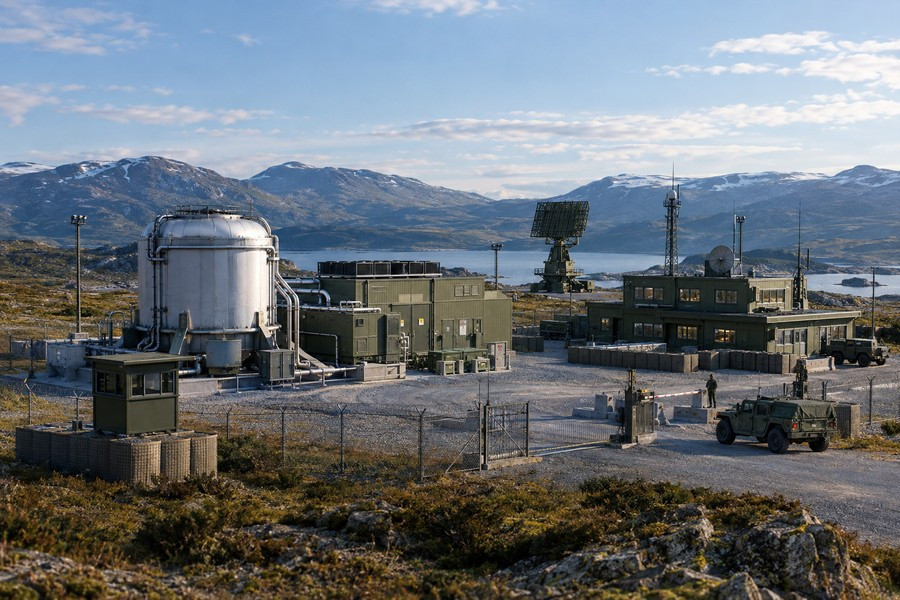
Small Nuclear Reactors Could Change the Risks of Military Attacks
Military bases often depend on fuel deliveries, power grids, and diesel generators. Each can be disrupted or attacked. A different option is a small nuclear reactor built to provide power on site. Such a reactor could supply electricity to radar, air defenses, electronic warfare equipment, counter-drone systems, directed-energy weapons, or command centers that use artificial intelligence.
This shift could make military energy supplies more reliable, but it also raises hard questions about the laws of war. A reactor-powered base may include several different targets, each with its own role and risks. Treating the whole site as one ordinary military target could overlook the danger of radioactive release.
Military Programs and a Legal Question
The United States is pursuing a transportable reactor that could produce one to five megawatts of electricity for military use. Another defense effort is aimed at secure, dependable power for military sites, key infrastructure, and important missions. Other countries are also exploring small reactors for remote defense sites or developing them in sensitive northern regions, where military needs, resource projects, and civilian communities may be close together.
The central question is whether a military site powered by a reactor should be treated as an ordinary military objective, a protected nuclear facility, or a military target with added nuclear risks. The answer is not that every reactor-powered site is off limits. But the military use of a facility does not automatically make every part of it an ordinary target.
A more careful approach is to examine the site as a group of separate parts: the reactor, the equipment that distributes its electricity, and the military system using that power.
Special Rules for Dangerous Forces
An international treaty provides special protection for certain structures that could release dangerous forces if attacked. These include dams, dikes, and nuclear power stations. The rule can also cover military targets at or near those structures when an attack could release dangerous forces and cause severe civilian losses.
The protection has a narrow exception. It may end for a nuclear power station if it regularly provides a significant and direct supply of electricity to military operations, and attacking the station is the only practical way to stop that support. A reactor built to power a specific radar or weapon system may meet this test more easily than a civilian power station connected to a shared grid.
Still, providing electricity to military equipment is not enough by itself. The support must be recurring, important to military operations, and directly connected to them. Even when the special protection ends, an attack is not automatically lawful. Civilians remain protected, and attackers must take practical steps to prevent the release of dangerous forces.
Small military reactors create uncertainty because their size and mobility may make it unclear whether they fit the treaty’s category of a nuclear power station. Their close connection to a particular military system may also make their support seem more direct. Meanwhile, nearby radars, weapons, and command centers must be assessed separately from the reactor.
The United States has not joined this treaty, so its specific treaty rules do not bind U.S. forces. A related customary rule calls for particular care around facilities that could release dangerous forces. That rule is not identical to the treaty’s specific protections. Even so, the chance of radioactive contamination must be considered when judging civilian risks and choosing precautions.
Separate the Parts of the Site
Under the general rules of warfare, an object may be a military objective if it helps military action and destroying or disabling it would offer a clear military advantage in the situation at the time. A reactor-powered base might meet that test. But this does not mean that every part of the base can be treated as an interchangeable target.
Planners should examine three parts individually:
- The reactor: It produces electricity, but damage could release radioactive material or harm safety systems. Destroying it may not be the most direct way to stop a military operation.
- The power system: Substations, transformers, cables, batteries, and converters may be separated from the reactor. Disabling these could cut power to military equipment without damaging the reactor.
- The military system using the power: A radar, directed-energy weapon, counter-drone network, or command center may be considered on its own if it meets the rules for a military objective.
Weighing Harm and Choosing Precautions
An attack is not allowed if the expected harm to civilians or civilian property would be excessive compared with the concrete military advantage expected. For a reactor-powered site, this includes reasonably foreseeable civilian deaths, injuries, and damage caused by radioactive release. The immediate effects of an explosion, such as fire and debris, also matter.
Evacuations, access limits, emergency response, and cleanup are not separate categories of civilian harm under this rule. They matter when they are expected to lead to civilian deaths or injuries, or damage to civilian property. Public fear alone does not count as a form of incidental harm under the proportionality test.
When several targets offer a similar military advantage, the rules call for choosing the one expected to pose the least danger to civilians and civilian property. That may mean attacking a power line or the military equipment receiving electricity instead of the reactor.
Some proposed small reactors use passive safety systems, which can help remove heat without outside power. Some designs also use sturdy fuel made from uranium particles covered in layers of carbon and ceramic. These features can lower the chance of severe damage and radioactive release, but they do not remove the risks.
Attack planners may not know a reactor’s design, operating condition, fuel supply, shielding, cooling system, or likely response to a strike. Damage to the reactor, its cooling equipment, protective barriers, or used fuel could create hazards that would not exist with a conventional generator. Any uncertainty should affect decisions about the target, weapon, timing, and method of attack.