
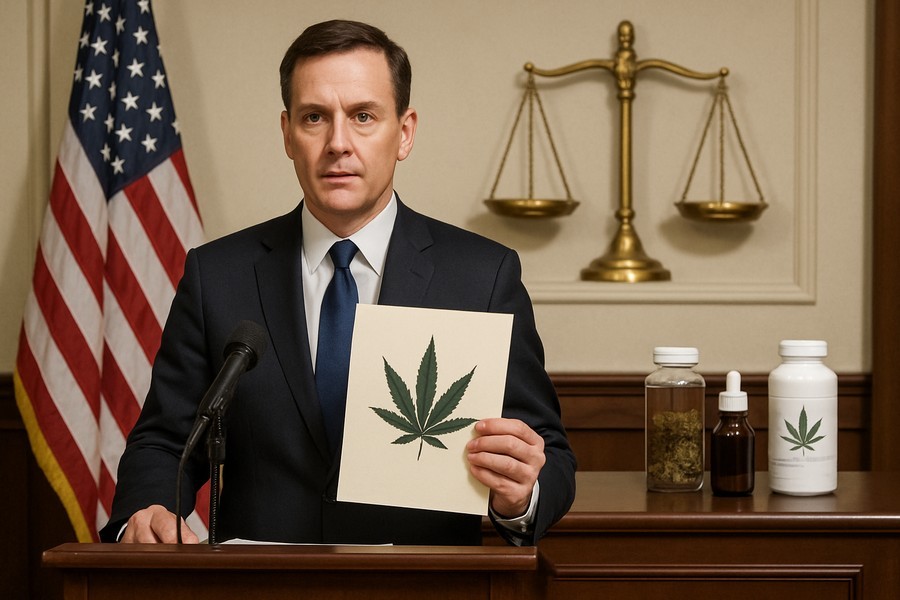
Historical Change: Medical Cannabis Now Considered Less Hazardous
The acting attorney general has made a significant policy change, reclassifying medical cannabis as a less dangerous drug. This move has been met with approval from those advocating for a more sensible approach to cannabis, arguing that it should not be grouped together with high-risk drugs like heroin.
Despite this change, it's important to note that this does not make cannabis legal for medical or recreational use on a federal level. However, it does overhaul the way it's regulated. Previously, medical cannabis was a Schedule I drug, meaning it was considered without medicinal value and highly likely to be abused. Now, it has been moved to Schedule III, a category for less strictly controlled substances. This change not only brings tax benefits for medical cannabis operators but also removes some obstacles for cannabis research.
Process for Further Reclassification
Furthermore, plans are underway to consider a broader reclassification of cannabis. The president had previously expressed his desire for a rapid reclassification of cannabis and seemed impatient with the slow progress. The recent move is seen as a significant stride towards fulfilling the president's promise of broadening the options for medical treatment for Americans.
The Impact of Reclassification
This reclassification essentially legitimizes medical cannabis programs in the 40 states that have implemented them. It establishes a fast-tracked process for state-licensed medical cannabis producers and distributors to register with the national drug enforcement authority. It also assures researchers that they won't face penalties for using state-licensed cannabis or cannabis-derived products in their studies.
Additionally, state-licensed medical cannabis companies are now able to deduct business expenses from their federal taxes. Any cannabis-derived medicine approved by the national food and drug authority is also listed in Schedule III.
Policy Shift
This order signifies a major shift in policy for the government, which has maintained a prohibition on cannabis since 1937. Despite this, almost all states have legalized some form of cannabis use. Two dozen states and the national capital have authorized adult recreational use of cannabis, 40 have medical cannabis systems, and eight others allow the use of low-THC cannabis or CBD oil for medical purposes. Only two states currently ban cannabis outright.
The regulation of medical cannabis has come a long way since the first state legalized it in 1996. The acting attorney general noted that the majority of states now have comprehensive licensing frameworks governing the cultivation, processing, distribution, and dispensing of cannabis for medical purposes.
Opposition Voices
Despite the significant move, not everyone was pleased. Critics accused the administration of giving a tax break to major cannabis companies and sending a mixed message about the dangers of cannabis to the public. They argued that policy seemed to be dictated by cannabis CEOs, psychedelics investors, and podcasters in active addiction.
It's important to note that cannabis or cannabis-derived products not distributed through a state medical cannabis program will continue to be classified in Schedule I.
Some critics have suggested that state legalization has led to more potent cannabis products, which need further research before being categorized less strictly.
Reclassification Efforts
Previous administrations had proposed to reclassify cannabis, a move that attracted almost 43,000 formal public comments. The process was still under review when the current administration took over and was ordered to expedite the process as much as legally possible. The acting attorney general bypassed the review process by using a provision in federal law that allows the attorney general to determine the appropriate classification for drugs that must be regulated under an international treaty.
The order's impact on states where licensed recreational cannabis shops also sell to medical patients remains unclear. In states that have legalized adult use of cannabis, several licensed stores are permitted to sell tax-free cannabis products to registered patients.
Despite the progress, many conservatives still oppose loosening cannabis restrictions. Last year, more than 20 conservative senators, several of them strong allies of the president, signed a letter urging him to maintain the current standards.
While the president has taken a softer stance on cannabis, he has been stringent against other drugs, particularly fentanyl, and has even ordered military attacks on vessels suspected of smuggling drugs.