
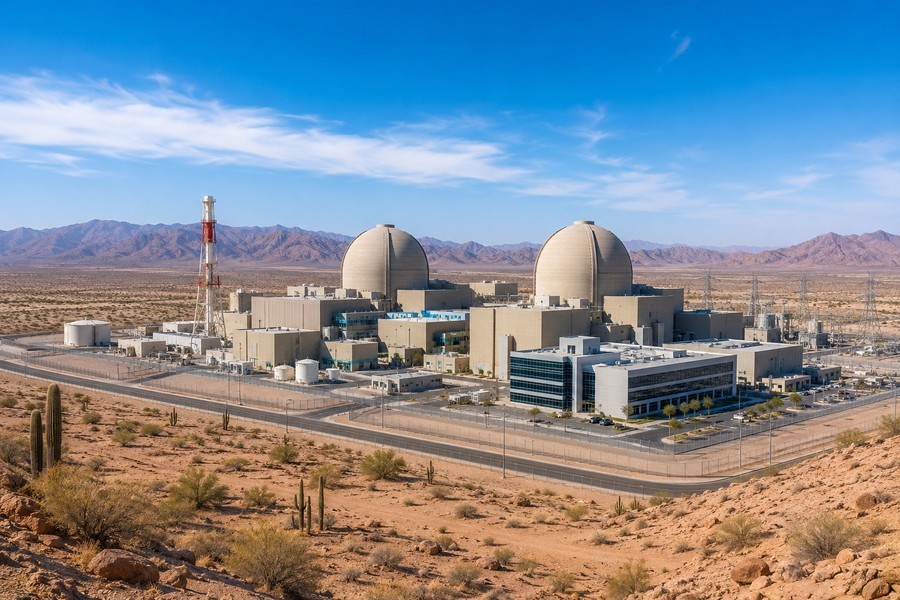
A New Nuclear Agreement Between the United States and Saudi Arabia Raises Questions
The United States has entered into a major nuclear agreement with Saudi Arabia. This new deal has sparked a lot of discussion about the future of the Middle East. Some critics worry that the agreement could lead to a dangerous nuclear arms race in the region. Others believe it is a strategic move to keep Saudi Arabia close to the United States instead of letting them partner with global rivals like China.
What is in the New Deal?
Under the new agreement, the United States will help Saudi Arabia build its civilian nuclear energy program. However, the exact details of the deal have not been made public yet. Some key points about the agreement include:
- Saudi Arabia will be allowed to enrich uranium on its own soil, which is a major concession that worries critics.
- The pact does not include the same strict rules and inspections that previous agreements had, such as a 2009 deal with the United Arab Emirates.
- It will likely take ten years or longer for Saudi Arabia to actually build and run these nuclear power plants.
President Donald Trump has stated that this deal depends on Saudi Arabia agreeing to normalize its relations with Israel. However, it remains unclear if this condition is actually written into the official contract, or if Saudi Arabia has agreed to it.
A Shift in American Foreign Policy
For a long time, American foreign policy in the Middle East focused heavily on protecting Israel and trying to find a two-state solution to the conflict between Israel and Palestine. This new nuclear deal represents a big shift away from that traditional path.
Instead, the current administration is focusing on strengthening American economic power to compete with rivals like China and Russia. Since countries in the Middle East want to build nuclear power anyway, the U.S. government decided it was better to work with them directly. This keeps Saudi Arabia from turning to China for help, even if the decision upsets other allies in the region.
Why Saudi Arabia Wanted This Deal
This agreement is a massive political victory for Saudi Arabia's leadership. For years, the nation has wanted a nuclear deal with the United States to build stronger ties with Western countries. There are several reasons why Saudi Arabia wanted this nuclear program:
- Energy Independence: Nuclear power will help the country meet its growing demand for electricity and rely less on oil.
- Security from Disruption: Oil fields and shipping routes can be attacked or blocked during conflicts. Nuclear energy is much safer and more self-contained.
- Regional Power: Having the ability to enrich uranium gives Saudi Arabia a strong defense and more influence in the region.
In the past, Saudi leaders have stated that if neighboring Iran develops nuclear weapons, Saudi Arabia must be allowed to do the same.
Concerns About Regional Safety
Many critics are highly concerned about this agreement. Some politicians in Israel argue that giving Saudi Arabia a civilian nuclear program could lead to a dangerous arms race. Israel is widely believed to have its own nuclear weapons, though it does not talk about them publicly. Avigdor Lieberman, a member of the Israeli parliament and a former defense minister, warned that a civilian nuclear program in Saudi Arabia would lead to a mad arms race across the entire Middle East.
Other lawmakers in the United States have called the deal a mistake. Representative Ro Khanna of California criticized the deal as a giveaway to the Saudis that will only fuel further ambitions from Iran and destabilize the region.
Furthermore, Saudi Arabia secured this deal without having to officially recognize Israel or drop its support for a Palestinian state. This suggests that the U.S. government does not expect a peace deal between Saudi Arabia and Israel to happen anytime soon, especially given the ongoing conflicts in the region.
The Timing and Future Benefits
The government has not fully explained why this deal was signed right now. However, ongoing tensions and conflicts with Iran likely played a big role. The United States wants to keep its relationship with Gulf allies strong during these difficult times.
In the long run, American businesses are also expected to benefit. Companies that make nuclear technology will have a new, highly valuable market to sell their equipment and services to, even if those profits are still many years away.