
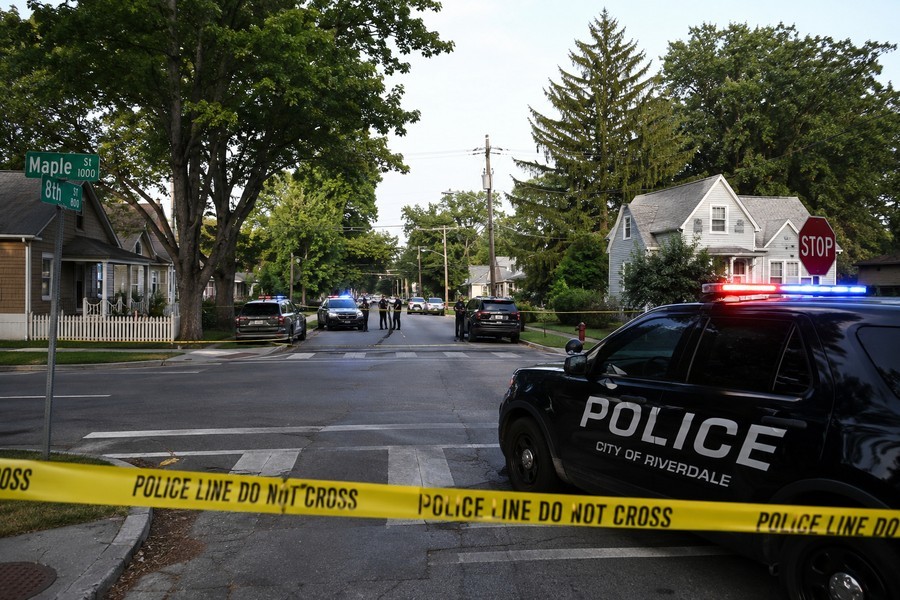
Tragic Confrontation in Wisconsin Neighborhood Leads to Fatal Officer-Involved Shooting
A quiet afternoon in a local neighborhood turned chaotic when a police officer shot and killed a man during a physical struggle. The incident has raised many questions, led to community protests, and started a major state-level investigation into what happened.
How the Incident Began
The situation started in the early afternoon in the Marquette neighborhood. Authorities received a call about someone checking the door handles of parked cars. When officers arrived, a suspect fled the area on a bicycle.
A short time later, officers caught up with the man. During this second encounter, the man either fell or was pulled off his bicycle, leading to a physical struggle in the middle of an intersection.
During the fight, the man produced a fixed-blade knife. One of the officers was hurt by the knife while trying to arrest him. To stop the threat, officers first used a stun gun, but it did not work. The officer who had been injured by the knife then fired his handgun, striking the man. The police department later released a photograph showing a knife lying on the ground at the scene.
Eyewitness Video and the Lack of Body Cameras
People nearby filmed the struggle and the shooting on their phones, and these videos quickly spread online. One video shows police officers holding the man on the ground while people yell in the background.
In the footage, voices can be heard shouting that the man has a knife. An officer yells a warning about using a stun gun. Shortly after, while the man is on the ground, an officer standing over him fires three shots. The man stops moving immediately after the gunfire.
A witness who filmed the incident explained that he was returning from a nearby grocery store when he saw police cars rushing to the scene. He observed the officers struggling to control the man on the ground before the shots were fired. Afterward, he saw an officer toss a knife away from the immediate area.
While the bystander videos offer some details, there is no official body camera footage of the shooting. The local police department does not widely use body cameras. Although a brief trial program for body cameras took place recently, the department has struggled to secure the funding needed to equip all officers with the technology. The police chief has previously called these cameras an essential tool for modern policing, but budget limits have kept them from being fully adopted.
The police chief cautioned the public about drawing final conclusions from the online videos, noting that they only show one perspective of a complicated event and do not capture everything the officers saw from their angles.
Local Reactions and Public Protest
The fatal shooting quickly drew a strong reaction from the local community. By evening, a large crowd of protesters marched through the streets to demand answers. Due to the unrest and safety concerns, a planned outdoor concert by a local orchestra had to be canceled.
Several local and state leaders shared their thoughts on the tragedy:
- The Police Chief offered his deep condolences to the family of the man who died. He described the deceased as a man in his 30s. He also asked the public for patience while the official investigation takes place.
- The Mayor expressed deep sadness and anger over the shooting, promising a thorough and transparent investigation. She emphasized that the community deserves full accountability.
- The District Representative emphasized that his main goal is to keep the neighborhood safe and ensure the public gets all the facts as quickly as possible.
- The Governor was briefed on the situation and sent his sympathies to the family.
The Next Steps in the Investigation
The officer who fired the shots is a male veteran officer. He and three other officers who were present at the scene have been placed on administrative leave. This is standard procedure after any shooting involving law enforcement.
To ensure a fair and unbiased review, the local police department will not handle the investigation. Instead, the state's Division of Criminal Investigation is leading the inquiry. They are getting help from several other regional law enforcement agencies, including the county sheriff's office and the state patrol. All involved officers are cooperating with the state investigators.
Once the investigation is complete, the local district attorney will review all the evidence to decide on the next legal steps.