
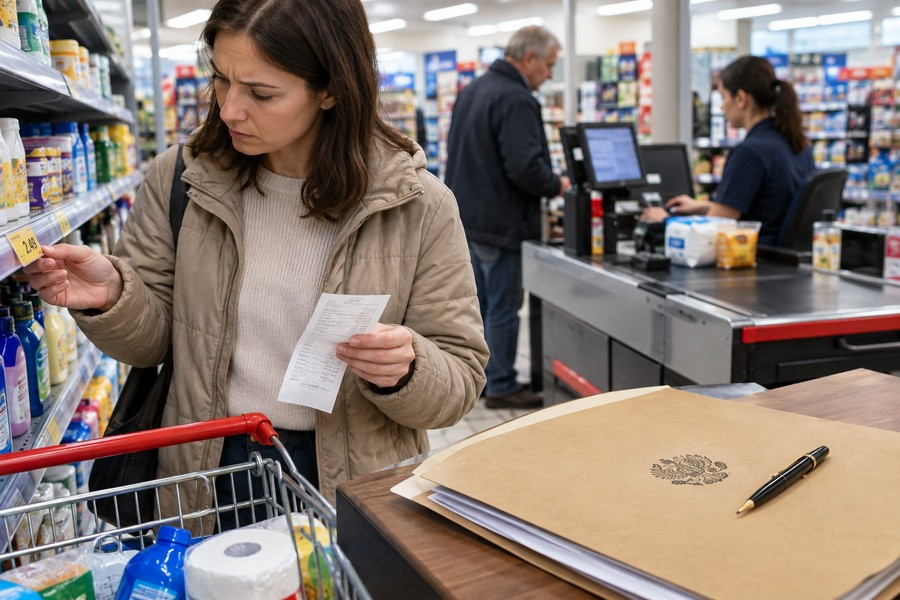
Federal Agency and 20 States Sue Discount Store Chain Over Prices
A federal consumer agency and 20 states have filed a lawsuit against the country’s largest dollar-store chain. The case accuses the company of repeatedly charging shoppers more at checkout than the prices shown on shelves, labels, and ads.
The chain operates more than 20,000 stores across the United States. The lawsuit says the pricing problem has lasted for years and affected millions of purchases. It asks the court to address what it calls widespread pricing misconduct.
What the Lawsuit Alleges
The complaint says the company promotes convenience and low prices but has often charged customers more than the listed amount. State governments from places including Mississippi, Ohio, Nebraska, and Utah joined the federal agency in bringing the case.
The federal agency is responsible for protecting consumers from unfair or misleading business practices. Its lawsuit argues that the chain’s pricing errors were not isolated mistakes, but part of a pattern that harmed shoppers across the country.
The company denies that it abandoned its focus on affordable prices. It says its goal is to make sure shelf prices and register prices match in every store.
Questions About Price Labels
The lawsuit says the chain has rules meant to keep store prices current. For example, workers are told to remove old labels and put up new ones on certain days.
But the complaint argues that having written rules does not ensure that labels are changed. It says the company does not check whether updated labels are actually placed on store shelves. Workers have described being too busy to replace labels because stores are short-staffed.
A former lead sales worker in Louisiana said that some labels were sometimes thrown away to prevent the worker or a colleague from getting into trouble. The lawsuit points to that account as an example of how the company’s written procedures may not work in practice.
Secret Shopper Checks Found Errors
Investigators made undercover purchases at stores in Ohio, Pennsylvania, Missouri, and Maryland over about two and a half months. The lawsuit says every visit found several items that cost more at checkout than the displayed prices.
At one store in Cleveland, investigators bought 58 items. Eight rang up at higher prices than those shown on the products or shelves. That meant nearly 14% of the items in that purchase had an overcharge.
The lawsuit also describes an earlier review of government price checks. It says stores in 23 states failed more than 4,300 price-accuracy inspections during a three-year period. The complaint says the company discussed that review internally.
Company Says It Will Fight the Case
The chain says it first learned of the investigation when it received a formal demand for information from the federal agency. The company called the investigation unusually fast-moving, but said it cooperated by providing more than 200,000 documents and over 350 gigabytes of data. It also made several representatives available to give sworn testimony on short notice.
The company says it disagreed with the agency’s calculations behind its request for consumer compensation. It also said it was surprised when the agency did not answer its counteroffer before filing the lawsuit. The chain says it plans to defend itself vigorously.
The company also says that occasional price differences can happen in retail stores. It says workers are expected and allowed to correct mistakes for customers. The chain says it has improved its price-checking processes in recent years and plans to keep working on them.