
Election Leaders Weigh Security, Technology, and Youth Voting
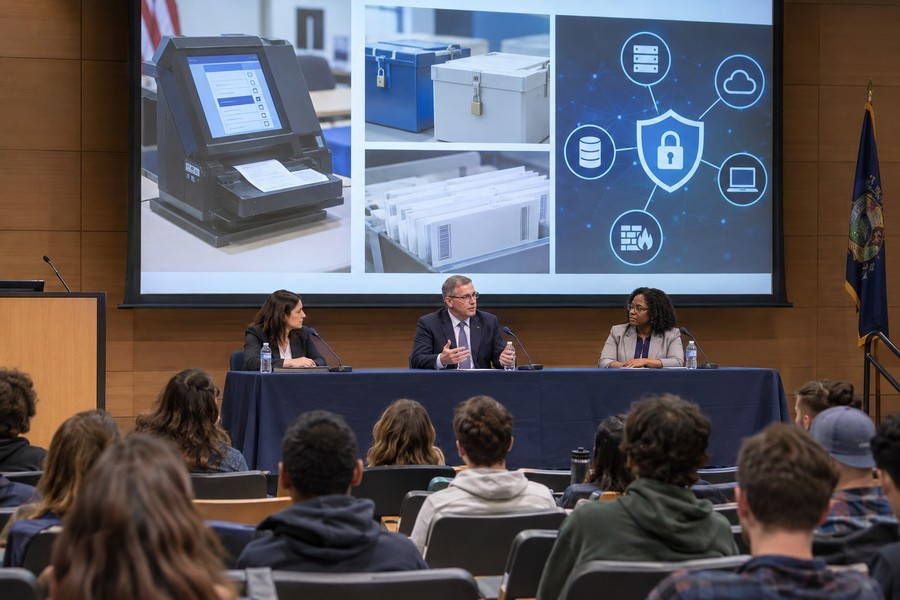
Two state election officials discussed ways to protect elections, make voting easier, and bring more young people into civic life. The officials were Iowa Secretary of State Paul Pate, a Republican, and Minnesota Secretary of State Steve Simon, a Democrat. A college civic engagement leader guided the conversation.
Pate and Simon, both seeking another term, talked about false claims about elections, voting access, election safety, and the effects of new technology. They said misleading information can spread quickly online and make it harder for voters to know what is true.
Making Elections Safe and Easy to Use
Pate called false and misleading information one of the biggest challenges facing election officials. He said the internet and social media allow a claim to spread almost at once, even when it is not true. Once a claim begins to spread, he said, it can grow quickly. Election officials then have to work to correct it.
Simon said a strong election system needs to balance access and security. Voting should be clear and simple for eligible voters, he said, rather than confusing or unnecessarily difficult. At the same time, safeguards should help ensure that only eligible voters cast ballots.
The two states have ranked among the 20 states with the strongest voter access and election security during the past five election cycles. They described programs intended to keep improving both areas.
Minnesota has added more languages to election information on its website and in printed materials. Simon said the change helps serve new residents and better reflects the languages people use in the state.
In Iowa, election officials have worked with student leaders and college staff to create toolkits for reaching students on campus. Pate said the schools help shape how those materials will be used. He said the effort is producing results, including record numbers of young people registering to vote.
Responding to Artificial Intelligence
The discussion also turned to artificial intelligence and its use in political campaigns. Pate said AI should not simply be treated as an enemy. It is a technology that will remain part of public life, he said, so people need to understand how to use it while staying alert to the harm it can cause.
He urged people to use good judgment and check claims for themselves instead of accepting everything they see. That kind of careful thinking, he said, can help limit the damage caused by false election information.
Minnesota has passed a law about AI-created material in political ads. Simon explained that a campaign or someone supporting a candidate cannot use AI to depict a person without that person's permission when the goal is to affect an election.
The rule allows a candidate to approve an AI image of themselves. But a campaign cannot create an AI depiction of an opposing candidate for election purposes unless that person has agreed to it.
Helping Voters Find Reliable Facts
Pate said election offices can help voters sort through misleading claims online. People can contact their secretaries of state to get accurate information about how elections work, he said. He also noted that many voters have doubts about the fairness of the election process.
One useful step, Pate said, is to guide people toward trusted and accurate election information. Having dependable facts available can make it easier for voters to judge claims they encounter elsewhere.
Encouraging Young People to Vote
Simon said he talks openly with young people about why some choose not to vote. He described two main reasons to take part. One is that people struggled and sacrificed to secure the right to vote. The other is that voting can serve a person's own interests.
When people in a community vote, leaders are more likely to pay attention to that community, Simon said. That attention can make it more likely that residents’ concerns and needs will be addressed.
Pate said young people should not be described only as future leaders. Many already hold leadership roles, he said. Voting is another way they can take part in the responsibilities they have already begun to carry.
The officials’ comments tied together several parts of election participation: making voting accessible, protecting the process, responding carefully to new technology, sharing reliable information, and treating young people as active members of their communities.