
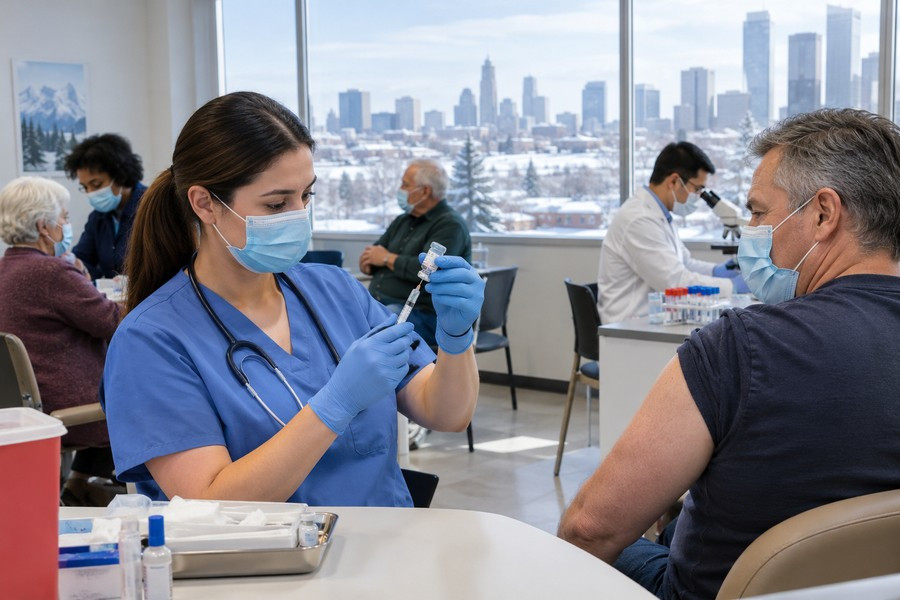
Flu Activity Starts Early Across Parts of the West
Flu cases are rising across parts of the western United States earlier than expected. The increase has led health experts to urge people to get their yearly flu vaccine as soon as possible.
Cases Climb Before the Usual Winter Surge
Flu activity usually begins to grow in December and reaches its highest level in February. This season, however, influenza cases have increased much sooner. Health laboratories have found more positive tests than they normally see this early in the season.
The early rise appears to be linked to a changed version of influenza A H1N1. This strain was responsible for the swine flu pandemic that began in 2009. It has now made up 242 of the 300 influenza viruses identified by public health laboratories so far.
Western States See Sharp Increases
California has recorded one of the clearest increases. During the previous two flu seasons, the share of flu tests that came back positive stayed just above 1% in early October. This season, the rate reached 9.65% by the middle of the month.
Utah has also seen a major jump. The state recorded 242 cases of influenza A, compared with only 10 cases at the same point during the previous year.
Some communities in central Oregon are experiencing a similar rise in influenza A infections. The increases show that flu is spreading in several western areas well before the normal winter peak.
- Flu activity is increasing earlier than usual.
- Influenza A H1N1 is the most common strain found so far.
- California’s positive test rate has climbed to nearly 10%.
- Utah has recorded far more cases than it had at the same time last year.
- Central Oregon is also reporting a rise in influenza A.
Vaccination Can Lower the Risk of Serious Illness
Flu vaccines do not prevent every infection, but they can reduce the chance of serious illness, hospital treatment, and other dangerous complications. Health professionals recommend flu vaccination for nearly everyone who is at least 6 months old, unless a medical condition makes the vaccine unsafe.
The current seasonal vaccine was designed to protect against three important flu viruses: H1N1, H3N2, and one influenza B virus. H3N2 was the main strain during the last flu season, while H1N1 is playing a larger role in the early spread seen now.
Two of the three vaccine components appear to closely match the flu viruses that are circulating. That means the vaccine may provide useful protection as cases continue to rise.
Some People May Need Protection Soon
The recent H1N1 change may affect how well antibodies work in younger people. Because flu activity is already gaining strength, getting vaccinated early may be especially helpful for people who have not received their seasonal shot.
Protection does not begin immediately after vaccination. The body needs time to build an immune response, so waiting until flu cases reach their peak could leave people unprotected during part of the season.
Older adults, young children, pregnant people, and those with long-term health problems face a greater risk of severe flu complications. Vaccination, handwashing, staying home when sick, and avoiding close contact with people who have flu symptoms can help slow the spread.
Changes to Vaccine Promotion Raise Concern
Public promotion of flu vaccination has been reduced as federal health leaders have changed long-standing recommendations and childhood vaccine policies. Health professionals remain concerned that less public attention could lead fewer people to get their seasonal flu shots.
With flu spreading earlier than expected in several western states, health officials are encouraging people to speak with a medical professional about vaccination and other ways to reduce their risk.