
When Scientists Challenged the Uses of Science
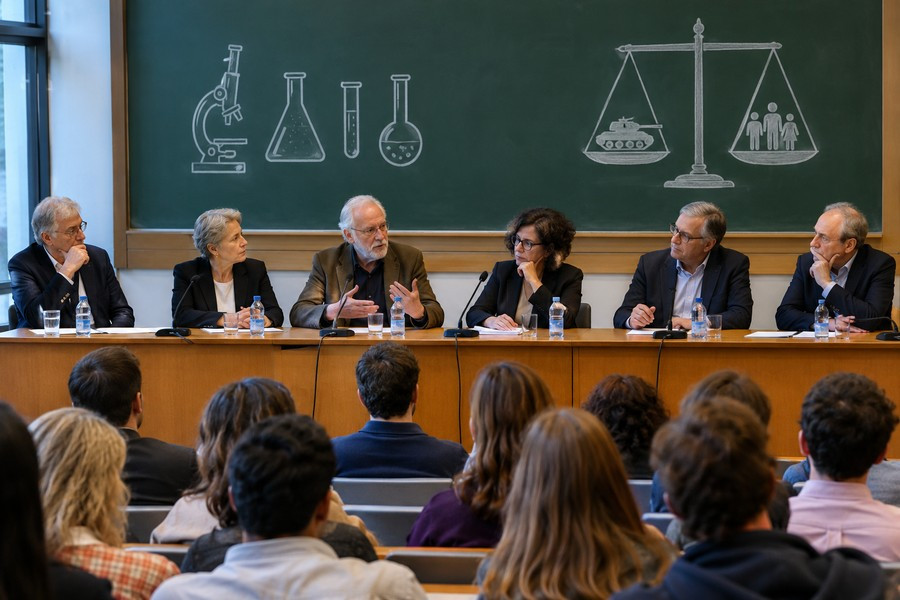
At a university gathering, six former members of a radical science group sat behind a long table and looked back on their work. They had not gathered to discuss lab research or academic careers. They came to explain why they believed science had been shaped by war, money, and political power.
The group began during the Vietnam era. Its members opposed the use of chemistry, physics, and other fields to build weapons. Over time, their criticism grew wider. They argued that science often reflected the interests of wealthy institutions instead of the needs of ordinary people.
Who Should Control Science?
One former member said the central question was simple: Who controls science, and who benefits from it? In his view, following the money often showed who science was really serving.
The group became known for loud protests and dramatic public actions. Its members wanted their concerns heard by scientists who believed research could remain separate from politics. They argued that researchers had a duty to think about the results of their work, especially when that work supported war or police violence.
The organization eventually collapsed because of internal conflict, exhaustion, poor coordination, and a tax debt of about $70,000. Even after it ended, former members believed its main concerns were still important. They felt science remained closely tied to military and business interests.
Younger activists later became interested in the same questions. Their work eventually helped bring the group back in a new form. Still, the earlier movement offered both inspiration and a warning about the problems that can arise when a radical organization cannot agree on its goals.
A Protest Among Scientists
One of the group’s earliest public actions took place at a major meeting of scientists in Boston. The gathering celebrated the success of a famous mission that had sent people to the moon.
The protesters did not join the celebration. Instead, they wore homemade space suits, carried a papier-mache moon rock, and held signs with messages such as “Rockets in Space, Slums on Earth.” They interrupted a presentation about lunar exploration led by a researcher whose laboratory had military contracts.
When the presentation began, protesters stepped in front of the cameras and placed their fake moon rock on the speaker’s podium. The homemade object cost only a small amount to make. The activists joked that it might have more value than the expensive rocks brought back from the moon.
Their message was serious. They wanted scientists to think about whether money and talent should go toward space missions and military projects while poor communities lacked housing, health care, and other basic needs.
The protest was part of a larger campaign against the war in Vietnam. The group also called for the withdrawal of American forces, greater equality for women in science, and opposition to technology used to target a Black political organization. None of these proposals passed at the scientific meeting.
Responsibility Beyond the Laboratory
Other science activists used quieter methods. They wrote statements, organized petitions, and pushed professional groups to take public positions. The radical activists believed these methods were too cautious.
A physics professor who helped form an earlier activist group said he felt personally responsible for the work done by his students. Many of them later found jobs connected to nuclear weapons. He argued that a teacher could not simply claim to have no connection to the final use of scientific knowledge.
His concerns were shaped by the development of nuclear weapons. That history led many scholars to question whether scientific discoveries always improved human life. Similar worries later surrounded biological weapons and chemical warfare.
The activists used what they called “guerilla theater” to challenge the scientific establishment. They disrupted meetings, carried unusual props, and confronted speakers in public. Their goal was to make scientists uncomfortable enough to address questions they might otherwise avoid.
A historian of science later described the movement as highly confrontational. The activists did not stop people from speaking, but they refused to let them avoid difficult issues. They believed polite disagreement had failed to change the direction of scientific research.
Arguments Over “The People”
The movement also struggled over who it was supposed to represent. Some members believed the group should focus on scientists as workers. They wanted to examine the labor conditions and economic pressures that shaped scientific careers.
Others believed scientists were part of an educated elite. One former member, who had worked with a community health program connected to a Black political group, argued that the movement should focus more directly on working-class people. She later left to support a revolutionary political organization.
These disagreements created a major split. One faction proposed a set of rules designed to give the group a clearer political direction. The faction wanted the organization to be led by working-class interests instead of professional academics.
Opponents warned that strict political rules would make the group divided and difficult to manage. They wanted it to remain open to people with different political views. The dispute showed how difficult it was to build a movement around both science and radical politics.
Lessons From China
Many members were also interested in China’s idea of “mass science.” They admired efforts to use mathematics and engineering to solve practical problems involving water systems, factories, cables, and other public needs.
A group of activists traveled to China to study this approach. They hoped the country might offer an alternative to science controlled by private wealth and a capitalist economy.
Some visitors later admitted that they had viewed China with too much optimism. They recognized that the country’s political campaign had also caused great suffering, including the exile and deaths of many intellectuals. Their experience showed both the appeal and the danger of searching for a perfect model of political science.
The movement’s history remains a debate about power, responsibility, and public needs. Its members disagreed about strategy, leadership, and political beliefs. Yet they shared one lasting question: Should science serve those with the most money and power, or should it serve society as a whole?