
Measles Outbreak Grows Across the United States as Vaccination Gaps Widen
The United States is facing its largest measles resurgence in decades. More than 4,580 cases have been recorded across the country since the start of the current reporting period, more than twice the total reported during all of the previous year.
Pennsylvania Faces the Largest Increase
Pennsylvania has become one of the hardest-hit areas as the outbreak continues to spread. At least 1,338 measles cases have been confirmed in 44 counties across the state.
The state recorded 21 additional cases in its latest update. More than 250 people have been hospitalized, and five people have died from the disease.
Two counties with especially high case numbers are Lancaster and Mifflin. Amish communities in those areas have been affected heavily because vaccination rates are low in some local communities. Three of the five people who died lived in Lancaster County.
Most Patients Were Not Vaccinated or Had Unknown Status
Health data shows that 96% of people who developed measles this year were either not vaccinated or had an unknown vaccination history. The finding highlights the strong connection between vaccination gaps and the spread of the illness.
Measles is highly contagious. It can spread when an infected person coughs, sneezes, or breathes near others. People who have not received protection are at much greater risk, especially in areas where the virus is spreading from one household or community to another.
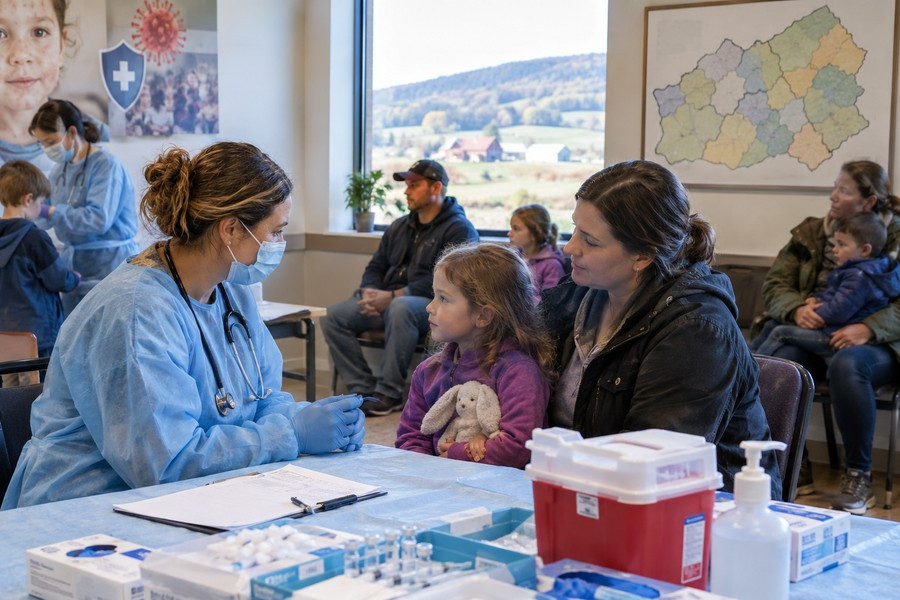
Health workers have urged residents to check their vaccination records and receive any needed doses. Parents have also been encouraged to make sure children are fully protected.
State Health Leaders Meet With Local Providers
Pennsylvania’s health secretary recently met with healthcare providers in Mifflin County to discuss the needs of communities dealing with the outbreak.
The meeting focused on the challenges facing local medical teams, including testing, treatment, vaccination access, and public education. State health leaders said information from case numbers is important, but direct conversations with doctors and other healthcare workers are also needed to shape the response.
Local providers are caring for patients in areas where the virus has continued to spread. Their experience can help identify barriers that may not appear in statewide totals, such as transportation problems, limited medical services, or concerns about vaccines.
Vaccination Offers Strong Protection
The measles, mumps, and rubella vaccine, commonly called the MMR vaccine, is one of the best ways to prevent measles.
- Two doses provide nearly 97% protection against measles.
- One dose provides about 93% protection.
- People with an unknown vaccination history should speak with a healthcare provider about whether they need a dose.
Interest in vaccination has increased in Pennsylvania as more cases have been identified. More than 39,000 measles vaccines were given across the state during the first three weeks of October. That number is higher than the average of about 25,000 doses given statewide during a typical month.
The increase suggests that more residents are taking steps to protect themselves and their families as the outbreak grows.
Other States Also Report Large Outbreaks
Pennsylvania is not the only state facing a sharp rise in measles cases. New York has confirmed more than 160 cases and declared a disaster emergency as infections increased.
Utah has also reported more than 700 measles cases this year. However, the state has not recorded a new diagnosis in three weeks.
The difference between the states shows how quickly measles can spread in areas with low vaccination coverage, while also showing that new cases can slow when the virus is contained and more people receive protection.
Why Public Health Officials Are Concerned
Measles can cause fever, cough, a runny nose, red eyes, and a widespread rash. Some patients recover without major problems, but others can develop serious complications, including pneumonia, brain swelling, or dehydration.
Infants, young children, pregnant people, and those with weakened immune systems face a higher risk of severe illness.
With cases continuing across several states, health teams are working to find infections quickly, warn people who may have been exposed, and expand access to vaccines. Residents can help slow the outbreak by checking their records, staying home when sick, and contacting a healthcare provider about MMR vaccination.