
Why the Space Shuttle Cabin Could Smell Bad After Landing
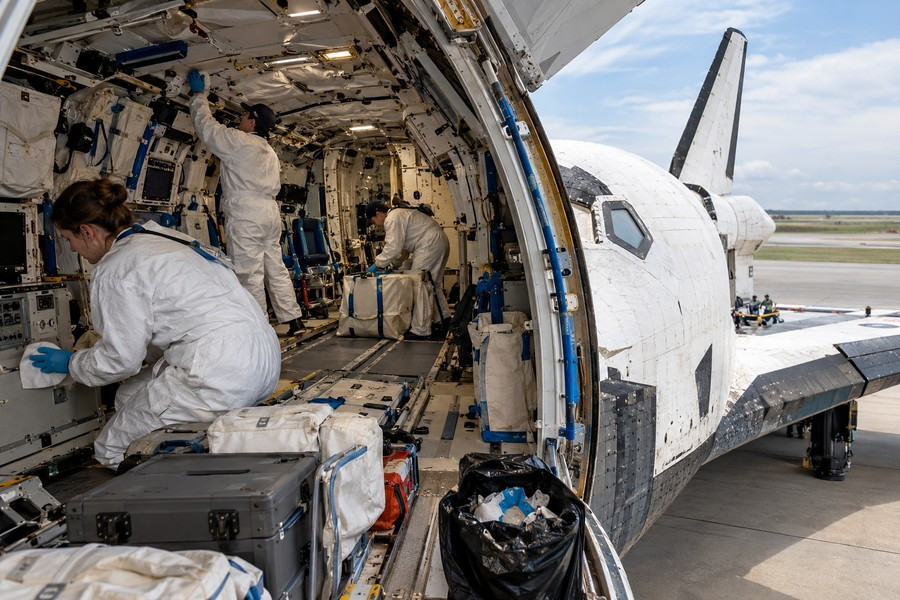
When a Space Shuttle returned from space, the work was not over. Ground crews had to enter the spacecraft, clean it, and remove its supplies and waste. The cabin could have a strong, unpleasant smell by then.
The shuttle was made of three main parts: an orbiter that carried the crew, a large fuel tank, and two solid rocket boosters. The tank held fuel for the orbiter’s main engines. The boosters helped lift the shuttle during the first two minutes of flight. The orbiter and boosters were used again, but the external tank was not. It burned up in the atmosphere after launch.
A Large Vehicle Built for Spaceflight
The full shuttle system was known as the Space Transportation System. When the orbiter, tank, and boosters were joined together, they formed a vehicle about 56 meters tall. Its total weight at launch was about 2,000 tonnes. The boosters and three main engines produced about 30.16 meganewtons of thrust.
NASA’s shuttle fleet included several orbiters. Columbia arrived at Kennedy Space Center in Florida in 1979. It and its crew were lost during re-entry in 2003. Challenger arrived in 1982 and was destroyed during launch in 1986. Discovery arrived in 1983, and Atlantis followed in 1985.
Endeavour was built to replace Challenger and reached Florida in 1991. Enterprise was an early shuttle orbiter, but it never traveled into space. It was used for flight tests that studied how the shuttle would approach and land, as well as for studies of launch pads.
Why the Cabin Air Turned Stale
The shuttle’s environmental system helped manage the air inside the crew cabin. After landing, however, the system did not work as effectively as it had during flight. The vehicle was no longer in the vacuum of space, and the system’s ability to condition the cabin air and remove odors was reduced.
Meanwhile, food and waste remained inside the vehicle. Fresh food and damp trash could become increasingly unpleasant as they sat in the cabin. With less effective air treatment and smells building up, the air could turn foul soon after the shuttle landed.
The cabin was not simply aired out right away. In the landings described by a shuttle contractor, the vehicle was usually shut down about 45 minutes to an hour after it stopped. The environmental system depended on ammonia as a coolant, and it ran until the supply was used up.
What Happened After the Shuttle Stopped
A typical landing left only about half an hour of ammonia in the system. Once the vehicle had stopped, the remaining supply could run out quickly. When the system shut down, air inside the crew module became still, and odors had less help dispersing or being removed.
Ground crews also had to check for hydrazine, a chemical used in the shuttle’s thrusters. That check was done by placing a probe into the opening of each thruster. The ammonia system did not prevent crews from carrying out this inspection.
These details help explain why the smell was not caused by one single thing. It came from several conditions inside the cabin: food and wet waste were left behind, the air system had become less effective after landing, and the cabin could become stagnant when the vehicle powered down.
A Tough Task for Ground Crews
After every mission, crews on the ground had to enter the orbiter and prepare it for the next steps. Cleaning and unloading meant working in a cabin where the air could already be unpleasant. The shuttle was a complex machine designed to carry people into space and bring them home, but its return also began a hands-on cleanup process.
So, yes: the cabin could smell very bad after a flight. The combination of stored food, wet trash, reduced air conditioning, and stagnant air made the shuttle an unpleasant place to work before it had been cleaned and prepared again.